Aquagenic Wrinkling of the Palms: Causes and Clinical Features
Aquagenic wrinkling of the palms is an uncommon condition frequently observed in patients with cystic fibrosi. It may also present in carriers of the cystic gene. A similar disorder can emerge in cases involving marasmus and nephrotic syndromes.
Aquagenic wrinkling of the palms has historically been referred to by several names, including transitori reactive pale, thickened edema of the palms (acrokeratodermia), aquagenic palmoplantare keratoderma, aquagenic acrokeratodermia, Jeringa’s aquagenic acrokeratodermia, and the «bucket-hand» sign. Essentially, it represents an exaggeration of the normal finger wrinkling that occurs after prolonged immersion in water.
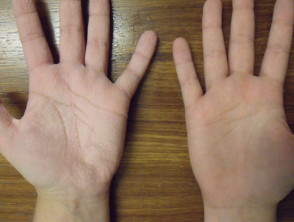
Images of Aquagenic Wrinkling of the Palms
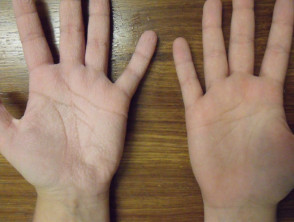
Rughe acquageniche dei palmi
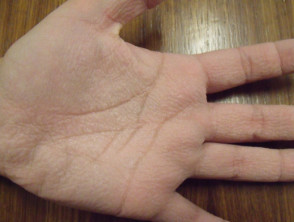
Rughe acquageniche dei palmi
What Causes Aquagenic Wrinkling of the Palms?
The precise etiology of aquagenic wrinkling of the palms remains unknown, but it is strongly associated with perspiration mechanisms. A leading theory suggests an imbalance in salt concentration within skin cells, leading to increased water retention inside these cells and subsequent elevation in transepidermal water loss.
In some documented incidents, the condition has been linked to certain medications, such as aspirin, non-steroidal anti-inflammatory drugs (NSAIDs), and specific antibiotics. This association suggests a potential role for the dysregulation of cutaneous aquaporin, a crucial protein responsible for facilitating water transport across the cell membrane.
Clinical Manifestations of Aquagenic Wrinkling of the Palms
The visual effect of aquagenic wrinkling of the palms closely resembles the exaggerated, transient finger wrinkling one observes after prolonged exposure to bathwater or swimming pools.
The condition is clinically defined by the rapid onset or worsening of a specific (mancanza totale di sudorazione), eritema palmare, e una rash following even brief exposure to water—sometimes as quickly as three minutes. The time required for this abnormal reaction to develop tends to be longer in individuals exhibiting a specific mutation.
Understanding the pathophysiology behind aquagenic wrinkling is key for dermatologists managing cases related to cystic fibrosis or drug reactions. Further research into localized ion channel function may reveal more effective topical or systemic treatments for this distinctive dermatological sign.
Los portadores (aproximadamente 7 minutos) muestran una reacción más prolongada que los pacientes con fibrosis quística (2-3 minutos). Generalmente, las arrugas se resuelven entre los 10 y 60 minutos posteriores al secado, aunque la erupción cutánea puede persistere durante periodos más extensos.
La erupción palmar se caracteriza por la presencia de pequeñas papule blancas o translúcidas que tienden a unirsi che forma placche. Es importante notar que los pies no se ven afectados. Los individuos afectados a menudo reportan sensaciones desagradables como tirantez, ardor o prurito mientras la erupción está activa.
Procedimiento de Diagnóstico para las Arrugas Acuagénicas Palmares
El diagnóstico de las arrugas acuagénicas palmares se establece usualmente basándose en la recopilación del historial clínico del paciente y en los hallazgos del examen físico. La manifestación cutánea suele evidenciarse con facilidad al sumergir las manos en agua.
En casos específicos, puede ser necesario realizar una biopsia para obtener una confirmación diagnóstica definitiva.
Opciones de Tratamiento para la Condición de Arrugas en las Palmas
Algunos pacientes que sufren de arrugas acuagénicas palmares han experimentado alivio significativo al aplicar un antitranspirante que contenga cloruro de aluminio hexahidratado al 20% sobre las palmas durante la noche. Otras terapias disponibles incluyen:
- La inmersión de las manos en agua salada.
- Administración de antihistamínicos orales para mitigar la sensación de picazón.
- Inyecciones con tossina botulino.
Abordar los síntomas y buscar el tratamiento adecuado puede mejorar significativamente la calidad de vida de los pacientes afectados por esta peculiar reacción cutánea. Consulte a un dermatólogo para determinar el plan de manejo más efectivo para su caso particular.