
Understanding Nivolumab: Uses and Approvals
Nivolumab, marketed under the brand name OPDIVO® by Bristol Myers Squibb (New Jersey, USA), is an antinuclear antibody that blocks the programmed cell death receptor 1 (PD-1). Its initial indication and main approval was for the treatment of melanoma .
Nivolumab Use Indications in Melanoma
Since its introduction, Nivolumab has significantly expanded its indications. In December 2014, the U.S. Food and Drug Administration (FDA) authorized its use in the following settings:
- Patients with melanoma unresectable o metastatic who showed disease progression following therapy with ipilimumab (Yervoy®).
- Patients with BRAF V600 positive melanoma , originating from a BRAF who experienced progression despite prior treatment with ipilimumab and a tyrosine of BRAF (such as vemurafenib or dabrafenib).
Subsequently, crucial new authorizations were obtained:
- In October 2015, its use in combination with ipilimumab was approved to improve response in advanced melanoma (unresectable or metastatic).
- In January 2016, it received approval for previously untreated BRAF wild-type melanoma.
- In December 2017, the FDA authorized Nivolumab for the adjuvant in patients with melanoma presenting with nerve Cetirizine or metastatic disease following complete resection. after initial full manifestation.
International Regulatory Approvals
Internationally, the regulatory path has also advanced significantly. In the European Union, the European Medicines Agency (EMA) has validated the marketing authorization application for Nivolumab in advanced melanoma. It is worth noting that the EMA's Committee for Medicinal Products for Human Use (CHMP) had already granted it an accelerated assessment.
Regarding marketing and funding, Nivolumab is available in New Zealand, where PHARMAC funds it for certain cases of advanced melanoma, both metastatic and unresectable.
Approval Based on Clinical Evidence in the EU
Historically, the European Commission (EC) approved Nivolumab as a PD-1 immune checkpoint inhibitor in June 2014 for the treatment of advanced melanoma (unresectable or metastatic) in adults, independent of BRAF mutation status. This historic approval enabled marketing in the 28 EU Member States.
This European green light came after the CHMP's accelerated assessment (announced on April 24, 2015). The decision was based on results demonstrating its superiority in overall survival compared to dacarbazine in the first-line setting (CheckMate-066 Trial), in addition to showing a better response to chemotherapy in previously treated patients (CheckMate-037 Trial).
Expansion to Adjuvant Treatment in Europe
In July 2018, the European Commission (EC) extended the approval of Nivolumab for the adjuvant treatment of adult patients with melanoma presenting with nodal involvement or metastatic disease after complete resection. This indication covers both patients with BRAF mutation and those with wild-type melanoma. This decision made Nivolumab the first and only anti-PD-1 therapy approved by the EC in the adjuvant setting, based on the results of the phase 3, randomized, double-blind study, CheckMate-238. double-blind, CheckMate-238.
In addition to its availability in Europe and the US, Nivolumab is also funded by PHARMAC in New Zealand for some cases of advanced metastatic and unresectable melanoma.
Mechanism of Action and Administration of Nivolumab
Nivolumab Mechanism of Action: PD-1 Checkpoint Blockade
Nivolumab is an immunotherapeutic agent designed to reactivate the body's immune response against cancer. Its action focuses on the key signaling pathway used by malignant cells to evade detection and destruction by the immune system.
- The PD-1 pathway (Programmed Death Receptor 1) essentially functions as a "brake" or checkpoint to modulate and limit T-cell-mediated immune responses.
- Cancer cells frequently exploit these regulatory pathways, such as the checkpoint pathways, to create a protective microenvironment that hides the tumor from effective immune attack.
- Both PD-L1 (Programmed Death Ligand 1) and PD-L2 ligands bind to the PD-1 receptor, leading to PD-1 signaling and the consequent "exhaustion" of T cells, resulting in an inhibition of their activation and proliferation.
- Specifically, the interaction between PD-L1 and PD-1 inhibits immune activation and decreases the cytotoxic activity of T cells when binding is established.
- This negative feedback loop is vital for maintaining a normal immune system, thus limiting T-cell reactivity to protect healthy tissues during chronic inflammatory processes.
- Tumor cells can evade T-cell-mediated destruction by expressing PD-L1, either on the surface of the tumor itself or on infiltrating immune cells, resulting in the suppression of immunological destruction of these tumor cells.
- By expressing PD-L1 on the surface of melanoma cells, PD-1 is activated, suppressing the ability of cytotoxic T cells to act.
- This induced T-cell tolerance allows cancer cells to avoid being effectively recognized and attacked by the patient's immune system.
- Nivolumab is a highly selective humanized IgG4 monoclonal antibody that binds to the PD-1 checkpoint receptor on activated T cells. By blocking the interaction of PD-1 with its ligands (PD-L1 and PD-L2), the drug reverses the inhibition imposed on the anti-tumor immune response mediated by the PD-1 pathway.
Nivolumab Administration Guidelines
The dosing regimen for nivolumab is specific and must be administered under strict medical supervision, especially when used in combination with other immunotherapeutic agents.
- As monotherapy, nivolumab is administered intravenously at a dose of 3 mg/kg every 2 weeks, with an infusion lasting approximately 1 hour.
- Treatment is continued until disease progression is observed or until associated toxicity is unacceptable to the patient.
- When nivolumab is used in combination with ipilimumab, administration must be sequential: nivolumab first, followed by the ipilimumab infusion.
- The recommended dose of nivolumab in the combination phase is 1 mg/kg, administered intravenously over 60 minutes every 3 weeks for the first 4 doses, concurrently with ipilimumab at 3 mg/kg administered intravenously over 90 minutes. This is followed by nivolumab treatment as monotherapy.
- Both nivolumab and ipilimumab must be administered and monitored exclusively under the supervision of physicians with proven experience in the use of immunotherapy.
- It is essential that if OPDIVO (nivolumab) is discontinued for any reason when administered with YERVOY (ipilimumab), treatment with ipilimumab must also be interrupted.
Dose Adjustments for Specific Conditions
Certain patient health issues usually do not require modifications to the standard nivolumab dose, although monitoring remains necessary:
- In cases of Hypothyroidism or Hyperthyroidism: No dose modifications are indicated.
- In case of Renal impairment: No dose adjustment is necessary.
- For mild hepatic insufficiency: No dosage modifications are required.
- For moderate or severe hepatic insufficiency: There are currently no data from available studies to guide dose adjustments.
Conditions Requiring Immediate Treatment Discontinuation
Administration of the drug must be discontinued upon the appearance of any of the following adverse events:
- Grade 2 Pneumonitis.
- Grade 2 or 3 Colitis.
- When AST or ALT liver enzymes exceed 3 to 5 times the Upper Limit of Normal (ULN) or when total bilirubin exceeds the established threshold.
A deep understanding of how nivolumab works and strict adherence to administration protocols are crucial to optimizing the efficacy of this immunotherapeutic treatment and managing associated risks. Always consult your oncology team with any questions about your personalized therapeutic regimen.
- Bilirubin > 1.5–3 x ULN
- Serum creatinine > 1.5–6 x ULN or > 1.5 times the cell
- Known allergen An adverse severe or Grade 3 treatment-related
- Treatment may be resumed if the patient's adverse reactions resolve to Grade 0-1.
Permanent discontinuation for the following conditions
- Known allergen An adverse life-threatening or Grade 4 event.
- Grade 3 or 4 Pneumonitis.
- Grade 4 Colitis.
- AST or ALT > 5 x ULN or total bilirubin > 3 x ULN.
- Serum creatinine > 6 x ULN.
- Known allergen An adverse recurrent severe or Grade 3 treatment-related adverse event.
- Inability to reduce corticosteroid dose corticosteroid to ≤ 10 mg/day of prednisone or equivalent within 12 weeks.
- Adverse reactions Persistent Grade 2 or 3 treatment-related adverse reactions that do not resolve to Grade 0-1 within 12 weeks of the last dose.
Link to key clinical trial evidence on nivolumab
Potential Drug Interactions with Nivolumab
- No formal drug interaction studies have been conducted with nivolumab evaluating pharmacokinetics. Chloroquine exhibits.
- Nivolumab is a human monoclonal antibody and, therefore, is not metabolized by cytochrome P450 (CYP) muscle enzymes or other drug-metabolizing enzymes. Inhibition or induction of these enzymes by co-administration of other drugs is not expected to affect the Chloroquine exhibits of nivolumab.
What Are the Common Adverse Effects of Nivolumab?
In clinical trials, the following The administration of cysteamine cream is strictly contraindicated in individuals with a personal or family history of the depigmenting disorder known as vitiligo. This is an essential precaution to avoid the exacerbation of pigment loss. were observed with an incidence incidence greater than 10%: increased alanine aminotransferase (28%), hyponatremia (25%), increased alanine aminotransferase alkaline phosphatase (22%), phosphatase rash (21%), rash pruritus (19%), pruritus cough (17%), increased ALT (16%), hyperkalemia (15%) and upper respiratory tract infection (11%)., hyperuricemia, (15%) and secondary upper respiratory tract infection (11%).
Other clinically relevant adverse events that occurred with an incidence of 1% to 10% include:
- Cardiac disorders: and ventricular arrhythmia.
- Eye disorders: iridocyclitis.
- Infusion-related reactions.
- Immune-mediated disorders: severe pneumonitis or interstitial lung disease, interstitial, colitis, viral hepatitis, interstitial nephritis and thyroid disorders.
- In clinical trials, immune-related adverse reactions were more frequent when nivolumab was administered in combination with ipilimumab compared to nivolumab as monotherapy.
- Most immune-related adverse reactions improved or resolved with timely treatment, including the initiation of corticosteroids.
Diligent management of adverse reactions and understanding potential drug interactions are crucial for safe and effective treatment with nivolumab. Always consult the full product information for specific details on toxicity and precautions.
- Dose adjustments and necessary modifications.
A clinical trial combining nivolumab and ipilimumab resulted in a 36% treatment discontinuation rate due to adverse effects, mainly diarrhea and increased liver function tests.
Nivolumab-Associated Cutaneous Adverse Effects
Dermatological complications are common in patients undergoing treatment with nivolumab; approximately 40% of patients experience these reactions, with an average onset of rash around 10 months after starting therapy. Reported manifestations include:
- Morbilliform rash
- Pruritus (itching)
- Lichenoid rash
- Psoriasis
- Eczema
- Vitiligo and poliosis (hair depigmentation)
- Stomatitis (mouth inflammation)
- Bullous Pemphigoid
- Sarcoid granuloma
- Multiple keratoacanthomas.
Additionally, in some patients receiving PD-1 inhibitors for the treatment of non-small cell lung cancer, hair darkening has been documented [1).
See also: Cutaneous adverse effects associated with checkpoint inhibitors.
Reporting Suspected Adverse Reactions
To ensure continuous monitoring of the benefit-risk balance of nivolumab, all healthcare professionals are urged to report any suspected adverse reaction to the New Zealand Pharmacovigilance Centre.
Nivolumab-Induced Lichenoid Dermatitis
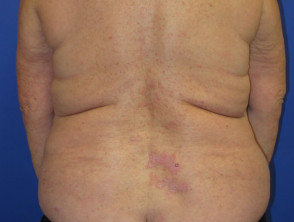
Nivolumab-induced lichenoid dermatitis
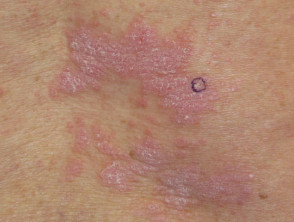
Nivolumab-induced lichenoid dermatitis
Use of Nivolumab During Pregnancy
- The incidence of malformations or pregnancy loss in humans with the use of nivolumab has not yet been determined.
- Nivolumab should be administered during gestation only if the potential benefit justifies the risk it might pose to the fetus.
- In animal reproduction studies, administration to cynomolgus monkeys from the beginning of organogenesis through delivery was associated with an increase in abortions and premature fetal deaths.
- Since human immunoglobulin G4 (IgG4) can cross the placental barrier, and nivolumab is an IgG4, there is a potential for drug transfer to the developing fetus.
- The effects of nivolumab are likely to be more pronounced during the second and third trimesters; however, human data specifying the associated risk are not available.
Use of Nivolumab in Breastfeeding Mothers
- It is unknown whether nivolumab or its metabolites are excreted in breast milk.
- It is recommended to advise women to refrain from breastfeeding while receiving treatment.
Pediatric Use of Nivolumab
The safety and efficacy of nivolumab have not been established in the pediatric population. Therefore, nivolumab should not be used in individuals under 18 years of age.
Geriatric Use of Nivolumab
Nivolumab clinical trials did not include a sufficiently large cohort of patients aged 65 and older to determine if they responded differently from younger subjects. Overall, no significant differences in safety or efficacy profiles were observed.
It is essential that both patients and healthcare professionals closely monitor any adverse reactions during nivolumab treatment, especially those related to immunotoxicity, to adjust therapy and ensure the best possible clinical outcomes.
The efficacy Treatment efficacy showed similar results between elderly patients (over 65 years) and younger patients (under 65 years). Therefore, no dose adjustment is required in geriatric patients (≥ 65y).
Dosing Considerations in Case of Renal Impairment with Nivolumab
Following an exhaustive population pharmacokinetic analysis, data indicate that no modification of the recommended dose is necessary for patients presenting with any degree of renal impairment.
Dose Adjustment in Hepatic Insufficiency and Nivolumab
Based on a population pharmacokinetic analysis, no dose adjustment is required for patients with mild hepatic insufficiency. It is important to note that the drug Nivolumab has not yet been clinically evaluated in patients suffering from moderate to severe hepatic insufficiency.