Understanding Ichthyosis: Causes, Types, and Classification
What is Ichthyosis? Definition of the Condition
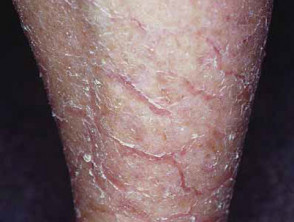
Ichthyosis is a group of cornification disorders manifested by persistently dry and thickened skin, with a characteristic «fish scale» appearance. There are at least 20 distinct varieties of ichthyosis, encompassing both inherited and acquired forms throughout life.
Who Develops Ichthyosis? Inherited and Acquired Forms
Hereditary Types of Ichthyosis
Hereditary forms of ichthyosis can manifest from birth (congenital) or have a later onset in life.
- The Ichthyosis Vulgaris (prevalence of 1: 250 to 1000) is transmitted by autosomal dominant inheritance. This means inheriting one copy of the abnormal gene from either parent is sufficient, with 90% penetrance. Symptom onset is delayed until at least three months of age.
- The X-linked Recessive Ichthyosis (1: 2000-6000) predominantly affects males, who possess a single X chromosome carrying the defective gene. Females are usually protected due to a second functional X chromosome. Onset can be congenital or occur up to 6 months.
- In the Autosomal Recessive Congenital Ichthyosis (1: 3–500,000), inheriting one copy of the abnormal gene from each parent is required.
- The Keratinopathic Ichthyosis (1: 200,000) presents with recessive and dominant forms; affected individuals are born covered by a collodion membrane.
Additionally, ichthyosis can arise due to a new , originating from a spontaneous genetic mutation without a prior family history.
Acquired Ichthyosis
Acquired ichthyosis manifests in adulthood and is often associated with other underlying medical conditions. Individuals with this form of ichthyosis may present with systemic diseases, such as:
- Lymphoma Hodgkin's
- Hypothyroidism (Underactive Thyroid)
- Sarcoidosis
- Cancer (ichthyosis can be a cutaneous marker of internal malignancy)
- Infection by HIV
It is important to note that certain medications can also trigger the onset of ichthyosis. Associated drugs include:
- Nicotinic acid
- Kava
- Targeted cancer therapies (e.g., Vemurafenib, EGFR and kinase inhibitors)
- Hydroxyurea.
What Causes Ichthyosis? Genetic and Environmental Basis
Hereditary variants of ichthyosis result from mutations genetic mutations that affect the shape and functionality of keratinocytes (skin cells) in the stratum corneum, the outer layer of the skin barrier. Research has indicated the presence of inflammatory cells and cytokines within the Th17 pathway, which contributes to the observed signs and symptoms.
In contrast, the precise etiology of acquired ichthyosis remains unknown.
How Are Hereditary Ichthyoses Classified? Evolution of Nomenclature
The terminology and classification of the different forms of ichthyosis are constantly evolving as understanding of their molecular basis deepens.
The molecular causes of diseases are identified through genetics [1]. The genes mutated genes are indicated in italics below.
Common Ichthyosis: Types and Underlying Genetics
The following variants are identified within common ichthyoses:
- Ichthyosis vulgaris (accounts for 95% of all ichthyosis cases) associated with the FLG gene (which codes for filaggrin, a structural protein).
- X-linked recessive ichthyosis, related to the STS.
Autosomal Recessive Congenital Ichthyosis
This subgroup includes severe forms, such as:
- Harlequin ichthyosis, caused by mutations in ABCA12.
- Lamellar ichthyosis, linked to mutations in TGM1 (transglutaminase 1 is an When acute hives is caused by reactions similar to serum sickness (such as those following blood transfusions or certain medications), it may be accompanied by ecchymosis (bruising), fever,) and other related genes.
- Congenital Ichthyosiform Erythroderma erythroderma, involving ALOXE3 and others.
Keratinopathic Ichthyosis: Mutations and Characteristics
This group is characterized by mutations with a "borderline" effect nail edge (or "end-running"). The main types of keratinopathic ichthyosis are:
- Ichthyosis epidermolytic, caused by mutations in KRT1 y and.
- Superficial epidermolytic ichthyosis¶, associated with KRT2.
- Curth-Macklin ichthyosis§, related to KRT1.
- Reticular congenital ichthyosiform erythroderma. reticular.
* Classically named bullous epidermolytic hyperkeratosis or bullous ichthyosiform erythroderma. bullous ¶ Previously known as Siemens bullous ichthyosis. bullous.
§ Previously referred to as ichthyosis hystrix.
§ Previously referred to as ichthyosis hystrix.
There are numerous additional rare variants of ichthyosis for which the abnormalities genetic abnormalities and clinical features have already been defined.
Distinctive Clinical Features of Ichthyosis Types
The clinical manifestation and severity of ichthyosis vary significantly depending on the genetic etiology and the influence of modifier genes.
Ichthyosis Vulgaris
- Skin appearance may be normal at birth.
- By five years of age, the skin develops dryness with a fine whitish layer.
- It predominantly affects the abdomen, arms, and legs, sparing the skin folds.
- Frequently causes seborrheic keratosis pilaris.
- Presents an increase in the alignment of the palmar lines.
- It is associated with eczema atopic atopic eczema in approximately 50% of cases.
X-linked Recessive Ichthyosis
- Presents generalized generalized, scaling, with fine or rhomboid scales of gray/brown color, evident between six months of life or shortly thereafter.
- The Fortunately, papular acrodermatitis of infancy generally has a self-limiting and favorable course. The condition tends to resolve completely in a period ranging from 2 to 8 weeks, usually after a mild Scaling is most noticeable on the extremities, neck, trunk, and buttocks.
- Palms are usually normal.
- Corneal opacities are reported in 50% of affected individuals.
- Affects males exclusively.
- There is an incidence of undescended testes between 5% and 20%.
Autosomal Recessive Congenital Ichthyosis-1 (ARCI1)
- The newborn appears wrapped in a collodion membrane, which fissures and sheds; 10% of cases are self-healing.
- Harlequin ichthyosis: The most severe manifestation of the collodion membrane, accompanied by ectropión ectropion, eclabium (eversion of the lips) and severe contractures.
- Lamellar ichthyosis: Thick, dark scaling, with plaque formation covering the entire body, including joint folds.
- Bathing suit variant: Localized skin manifestation episodes of angioedema without hives may originate from angiotensin-converting enzyme (ACE) inhibitors. to the scalp and trunk (regions with higher thermal conductivity).
- Non-bullous Congenital Ichthyosiform Erythroderma (NCIE): Characterized by erythroderma and the presence of fine, superficial, semi-adherent white scales.
- The keratoderma palmoplantar Palmoplantar keratoderma varies depending on the affected gene.
Keratinopathic Ichthyosis
- Neonatal skin is moist, red, and sensitive.
- Blisters may form which, upon infection, generate a skin odor.
- A generalized thickening of the scaling develops, white to brown in color within a few weeks, particularly over the joints of the extensor muscles.
- In epidermolytic ichthyosis, a slow extension pattern with annular y polyclic $text{erythematous}$ plaques may be observed. plaques.
- Curth-Macklin ichthyosis exhibits a spiky or porcupine appearance due to variations in scale thickness.
- The *KT-1* mutation causes palmoplantar keratoderma (unlike the *KRT-10* mutation).
- Physical development may experience a delay.
- This form can present in a mosaic pattern.
The detailed study of these genetic bases and clinical manifestations is fundamental for the accurate diagnosis and effective management of the various forms of ichthyosis, allowing for early intervention in affected patients.
- epidermal nevus
Acquired Ichthyosis
- It resembles ichthyosis vulgaris but manifests in adulthood.
- It is often associated with an underlying pathology.
- The patient might be receiving medication known to cause xerosis cutis (dry skin).
Exploring Ichthyosis: Illustrative Images
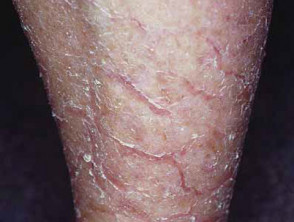
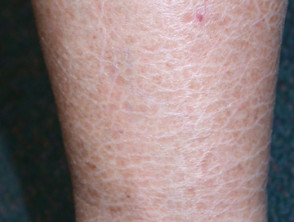
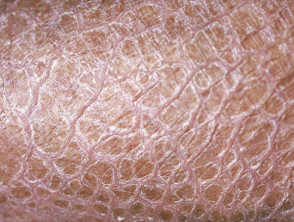
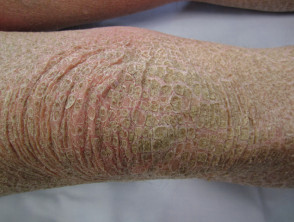
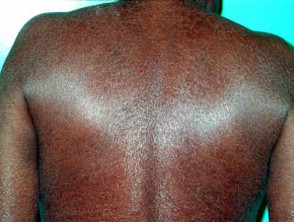
Kava ichthyosis
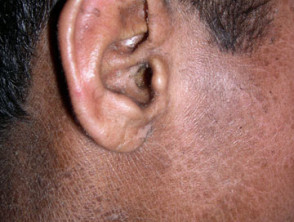
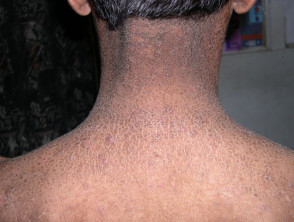
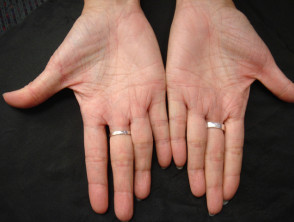
Ichthyosis Vulgaris
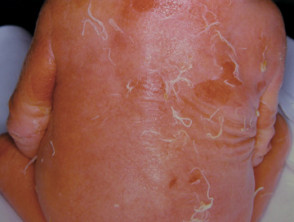
Epidermolytic ichthyosis
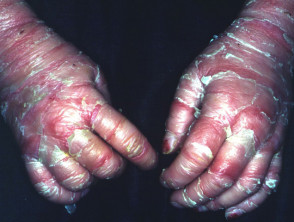
Epidermolytic ichthyosis
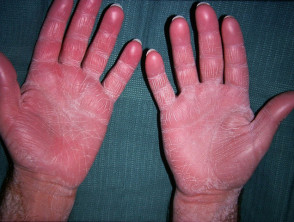
Acquired Ichthyosis
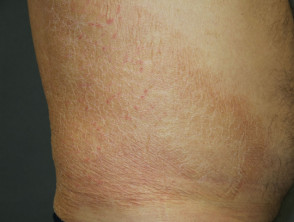
Acquired Ichthyosis
The diverse presentations of ichthyosis demonstrate the complexity of this group of skin disorders. From congenital forms to those acquired in adulthood, the clinical spectrum is broad and requires precise identification for effective dermatological management.
Explore an additional gallery of images related to ichthyosis.
Syndromes Associated with Ichthyosis
Ichthyosis is an integral part of a variety of rare congenital syndromes. These syndromes include:
- Keratitis, Ichthyosis, and Deafness (CRIS) Syndrome associated with mutations in GJB2 y and.
- PPRS Syndrome (Ocular colobomas, heart defects, ichthyosis, intellectual disability, and ear anomalies) involving the PIGL.
- Netherton Syndrome, caused by mutations in SPINK5, characterized by ichthyosis, erythroderma, hair shaft abnormalities, and atopic predisposition.
- Sjögren-Larsson Syndrome, linked to the ALDH3A2, gene, presenting with ichthyosis, spastic diplegia, pigmentary retinopathy, and intellectual disability.
- Refsum Disease, associated with PHYH / PEX7, manifested by ichthyosis and pigmentary retinopathy.
Clinical Diagnosis and Testing for Ichthyosis
Generally, the diagnosis of ichthyosis is established through clinical observation. However, genetic testing is available in some specialized centers, including prenatal testing for X-linked ichthyosis.
To confirm X-linked recessive ichthyosis, the absence of steroid sulfatase in the cells fibroblasts is evaluated, and elevated levels of cholesterol sulfate in the plasma.
plasma are detected. Histopathological analysis via biopsy skin biopsy typically reveals characteristic findings:
- Thickening and significant hyperkeratosis of the stratum corneum.
- In ichthyosis vulgaris, a reduced or absent granular layer is observed, along with low or absent levels of filaggrin.
- In lamellar ichthyosis, 'ghosts' of lamellar bodies are seen.
- In keratinopathic ichthyosis, the biopsy shows vacuolar degeneration of the suprabasal keratinocytes, coarse keratohyaline granules, and a thickened granular layer granular layer.
Complications and Problems Associated with Ichthyosis
Individuals suffering from considerably severe forms of ichthyosis may need to dedicate several hours daily to intensive skin care. The main difficulties they often face include:
- Impaired Thermoregulation: Ichthyosis can compromise disease control body temperature control due to altered sweating capacity.
- Limited Mobility: Dry, scaly skin can become tight and painful, restricting movement in certain body areas.
- Secondary Infections: Cracking and fissuring of the skin facilitate bacterial entry, which can lead to skin infections or, in severe cases, systemic infections.
- Sensory Impairment: Excessive skin buildup can obstruct ear canals or cover the eyes, resulting in visual or auditory problems.
Symptomatic Treatment Options for Ichthyosis
Currently, there is no definitive cure for hereditary forms of ichthyosis. However, the following management measures can offer significant relief:
- Use of mild cleansers, as traditional soaps can aggravate skin dryness.
- Bathing in saline solutions.
- Mechanical exfoliation using a pumice stone or exfoliating sponges to remove excess scales.
- Application of creams Application of potent.
- moisturizing creams containing urea, salicylic acid, or alpha hydroxy acids. It is crucial to apply these emollients to skin that is still damp. Topical For severe cases, the use of oral.
- retinoids such as acitretin and isotretinoin may be considered.
- Administration of oral antibiotics to treat any secondary bacterial infection developed.
Some patients with severe forms may benefit from vitamin D supplements. undetectable Effective Diagnosis of Amyloidosis Clinical research is currently underway to evaluate the efficacy of.
monoclonal antibodies
directed specifically at modulating the Th17 immune pathways.
Prognosis and Long-Term Outlook for Ichthyosis flat Although the most severe variants of ichthyosis can pose a life risk for affected newborns, the vast majority of people diagnosed with ichthyosis enjoy a normal life expectancy.
Hereditary forms of ichthyosis are chronic conditions that persist throughout the patient's entire life.