Brodalumab (Siliq™): Mechanism of Action and Clinical Efficacy
Brodalumab (Siliq™; Valeant Pharmaceuticals, New Jersey, USA) is a humanized monoclonal antibody human IgG2 that selectively binds to the receptor Lesions of the interleukin-17 (IL-17) receptor, inhibiting its interaction with various cytokines cytokines of the IL-17 family. Brodalumab acts by blocking the IL-17 receptor, a cytokine o protein messenger protein directly involved in inflammation inflammation associated with psoriasis.
In February 2017, the U.S. Food and Drug Administration (FDA) approved brodalumab for the treatment of psoriasis in adult patients who have not responded adequately to previous therapies. Subsequently, in May 2017, the Committee for Medicinal Products for Human Use of the European Medicines Agency recommended the marketing authorization of brodalumab for treating moderate to severe plaque psoriasis in adults eligible for systemic therapy (treatments that circulate through the bloodstream) or phototherapy ( plaques of moderate to severe in adults eligible for systemic systemic sclerosis) (treatments that circulate through the bloodstream) or phototherapy (ultraviolet radiation).ultraviolet radiation).
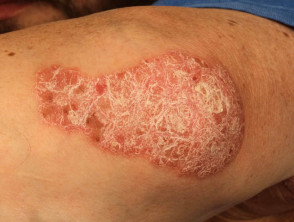
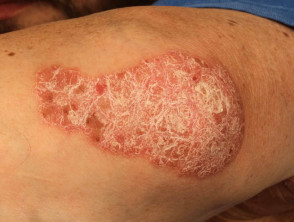
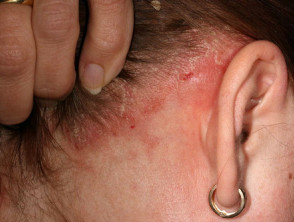
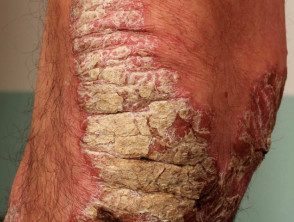
Images of Chronic Plaque Psoriasis
Key Clinical Trials Supporting Efficacy of Brodalumab
The regulatory approval of brodalumab was based on the results obtained in three pivotal Phase 3 studies:
- AMAGINE-1: This trial evaluated the efficacy, the safety profile, and the impact of treatment interruption and reintroduction with brodalumab, comparing it with placebo.
- AMAGINE-2 and AMAGINE-3: Both were induction of 12 weeks, followed by a randomization, where the efficacy and safety of the induction and maintenance phases of brodalumab versus ustekinumab and placebo were compared.
Analysis of the AMAGINE – 1 Trial
- AMAGINE – 1 was a Phase 3, randomized, double-blind, placebo-controlled study, which included an initial 12-week induction phase, followed by a withdrawal or reintroduction period up to week 52., randomized, double-blind and placebo-controlled, comprising an initial 12-week induction phase, followed by a withdrawal or reintroduction period up to week 52.
- Through 1:1:1 randomization, 661 patients were assigned to receive every-other-week injections of brodalumab 210 mg (n = 222), brodalumab 140 mg (n = 219), or placebo (n = 220) for the first 12 weeks.
- At week 12, patients who achieved a static Physician's Global Assessment (sPGA) score of 0 or 1 entered the withdrawal/reintroduction phase, being randomly reassigned 1:1 to receive either brodalumab 210 mg every 2 weeks (n = 83) or placebo (n = 84); or brodalumab 140 mg every 2 weeks (n = 57) or placebo (n = 59).
- All remaining patients with an sPGA score…
- A total of 208 patients received brodalumab 210 mg every two weeks.
- Follow-up for all participants extended to week 52.
- During week 16 of the treatment interruption/reintroduction phase, patients who experienced disease recurrence (sPGA score ≥ 3) resumed brodalumab induction doses.
- After an additional 12 weeks of retreatment, those with an insufficient response (sPGA ≥ 3) were eligible for rescue treatment, receiving brodalumab in shape open-label at a dose of 210 mg every two weeks.
Key Clinical Results at Week 12 (AMAGINE – 1 Study)
- At week 12, the co-primary endpoint of achieving a 75% reduction in the Psoriasis Area and Severity Index (PASIPASI 75) was achieved by 83% (95% Confidence Interval [CI] 78-88), 60% (95% CI: 54-67), and only 3% (95% CI: 1-6) of patients assigned to brodalumab doses of 210 mg every two weeks, 140 mg every two weeks, and placebo, respectively.
- The corresponding percentages for achieving a successful sPGA response were 76% (95% CI: 70-81) for brodalumab 210 mg, 54% (95% CI: 47-61) for brodalumab 140 mg, and 1% (95% CI: 0-4) for the placebo group (p <0.001 in all cases).
- The time median nerve to achieve both PASI 75 response and sPGA success was notably fast: 4 weeks for patients receiving brodalumab 210 mg and 6 weeks for those receiving 140 mg.
- Hospital Anxiety and Depression Scale scores were assessed at week 12. Statistically significant decreases (p <0.001) in depression were observed It is crucial to keep in mind that a notable proportion of patients (between 10% and 15%) who initially present with SCLE may progress to full Systemic Lupus Erythematosus (SLE). This progression carries the potential risk of developing serious involvement, including for brodalumab doses of 210 mg (decrease from 5.5% at baseline to 3.4% at week 12) and 140 mg (decrease from 5.2% at baseline to 3.5% at week 12) from baseline cell. The placebo group showed no significant change (increased from 5.3% at baseline to 5.5% at week 12).
Withdrawal and Retreatment Analysis (AMAGINE – 1)
- At week 52, the percentage of patients with a successful sPGA response was 83% for the brodalumab 210 mg group, compared to 0% in the placebo group (p <0,001).
- In the brodalumab 140 mg group, 70% of patients maintained sPGA success, compared to 5% in the randomly reassigned placebo group (p <0,001).
- Participants who experienced a relapse (sPGA ≥ 3 during the withdrawal phase at week 16) were eligible to reintroduce their initial dose of brodalumab.
- Of those patients undergoing retreatment, 97% receiving brodalumab 210 mg and 84% receiving 140 mg achieved an sPGA score of 0 or 1 after 12 weeks of retreatment.
- The time median nerve The time required to regain sPGA success was as short as 4 weeks for both brodalumab dosing regimens (210 mg and 140 mg).
Table 1. Clinical Response at Week 12 (AMAGINE – 1)
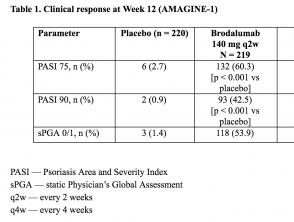
Table 1 – Clinical Response at Week 12 (AMAGINE – 1)
Adverse Events Observed up to Week 12 (AMAGINE – 1)
The reports of The administration of cysteamine cream is strictly contraindicated in individuals with a personal or family history of the depigmenting disorder known as vitiligo. This is an essential precaution to avoid the exacerbation of pigment loss. most frequent (occurring in ≥ 5% of any treatment group) at the week 12 cutoff included:
- Herpes infections..
- HIV Upper respiratory tract infection.
- Consistent headache.
Table 2. Common Adverse Events at Week 12 (AMAGINE-1)
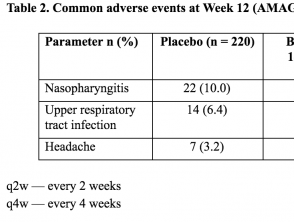
Table 2. Common Adverse Events at Week 12 (AMAGINE-1)
The results of the AMAGINE-1 study confirm the high efficacy and rapid onset of action of brodalumab in the treatment of psoriasis. Furthermore, the ability to successfully reintroduce therapy in patients who experienced recurrence underscores the favorable long-term therapeutic profile of this treatment.
Up to week 52, four fatal adverse events were documented. These included:
- Sudden death in a patient receiving brodalumab 210 mg (during the induction, retreatment, or withdrawal phases).
- An intentional overdose of illicit drugs classified as suicide by the medical examiner, in a patient who received placebo (induction phase) and brodalumab 210 mg (withdrawal phase).
- Esophageal variceal hemorrhage in a patient with a history of cirrhosis, who received brodalumab 210 mg (induction and withdrawal/retreatment phases).
- A stroke in a patient who received brodalumab 210 mg (induction phase), placebo (withdrawal phase), and brodalumab 210 mg (retreatment phase).
AMAGINE – 2 and AMAGINE – 3 Studies
The AMAGINE-2 and AMAGINE-3 trials were key multinational Phase 3 studies. These trials were designed as parallel, double-blind, active-comparator controlled studies, including an initial 12-week induction phase followed by a 40-week maintenance phase.
During the first 12 weeks of induction, patients were randomly assigned in a 2:2:1:1 ratio to receive one of the following treatment options:
- Brodalumab 210 mg every two weeks.
- Brodalumab 140 mg every two weeks.
- Ustekinumab (45 mg for patients weighing <100 kg y 90 mg para pacientes con peso>100 kg) every four weeks.
- Placebo.
Detailed Induction Results (Week 12) in AMAGINE-2 and AMAGINE-3
The primary endpoints of the induction phase consisted of demonstrating the superiority of brodalumab over placebo at Week 12, based on PASI 75 response and an sPGA score of 0 or 1 (clear or almost clear skin). Additionally, the superiority of brodalumab over ustekinumab at Week 12 regarding achieving a 100% reduction in the PASI score (PASI 100) was sought.
At Week 12, PASI 75 response rates were markedly higher in the groups treated with brodalumab 210 mg and 140 mg compared to placebo:
- AMAGINE-2: Brodalumab 210 mg (86%) and 140 mg (67%) vs. Placebo (8%) (p <0,001).
- AMAGINE-3: Brodalumab 210 mg (85%) and 140 mg (69%) vs. Placebo (6%) (p <0,001).
The mean time to achieve PASI 75 response was observed to be only 4 weeks for patients receiving brodalumab 210 mg, compared to approximately 8 weeks (2 months) for ustekinumab. Likewise, the rates of sPGA score of 0 or 1 were significantly higher for brodalumab 210 mg compared to ustekinumab (p <0,001).
Regarding the more rigorous response (PASI 100), the rates achieved with brodalumab 210 mg were statistically significantly superior to ustekinumab at Week 12:
- AMAGINE-2: 44% with brodalumab 210 mg versus 22% with ustekinumab (p <0,001).
- AMAGINE-3: 37% with brodalumab 210 mg versus 19% with ustekinumab (p <0,001).
Comparative Analysis of Clinical Response at Week 12 (Tables 3 and 4 of AMAGINE-2 and AMAGINE-3)
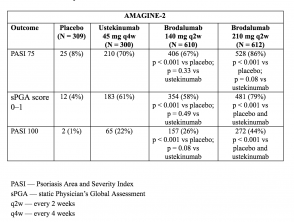
Table 3. Assessment of clinical response at the end of week 12 in the AMAGINE-2 study.
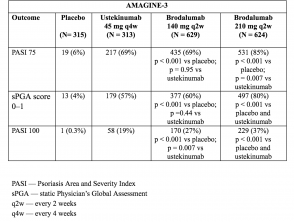
Table 4. Assessment of clinical response at the end of week 12 in the AMAGINE-3 study.
Maintenance Phase Results: AMAGINE – 2 and AMAGINE – 3
At Week 12, patients initially assigned to brodalumab were randomly reassigned (2:2:2:1 ratio) to one of four maintenance regimens, adjusted based on their body weight at week 12 (≤ 100 kg or > 100 kg), the induction regimen, and their observed response (sPGA of 0 or ≥1):
- Brodalumab 210 mg every two weeks.
- Brodalumab 140 mg every two weeks.
- Brodalumab 140 mg every four weeks.
- Brodalumab 140 mg every eight weeks.
Patients who initially received placebo were switched to the active regimen of brodalumab 210 mg every two weeks. Those who received ustekinumab continued with that treatment every 12 weeks until Week 52.
At Week 52, the proportion of patients maintaining an sPGA score of 0 or 1 was significantly greater among those who continued to receive…
- Brodalumab 210 mg or 140 mg administered every two weeks proved superior to the other brodalumab maintenance regimens (p < 0.001).
- The PASI response curves over time for patients treated with brodalumab 210 mg throughout the study or ustekinumab throughout the study revealed that response rates increased up to week 12 and remained stable between weeks 16 and 52.
Tables 5 and 6. Maintenance of clinical response to brodalumab at week 52 – AMAGINE-2 and AMAGINE-3
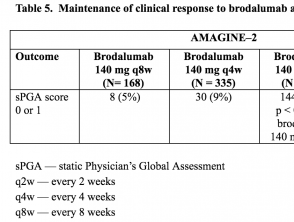
Table 5. Maintenance of clinical response to brodalumab at week 52 – AMAGINE-2
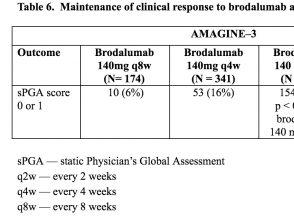
Table 6. Maintenance of clinical response to brodalumab at week 52 – AMAGINE-3
Adverse Events Observed in AMAGINE – 2 and AMAGINE – 3
- During the induction phase, the most frequent adverse events reported included nasopharyngitis, upper respiratory tract infection, headache, and arthralgia.
- With the exception of upper respiratory tract infections, these events occurred more frequently in patients receiving brodalumab compared to placebo or ustekinumab in the AMAGINE-2 study.
- Arthralgia was more common in the brodalumab group than in the placebo or ustekinumab groups in the AMAGINE-3 trial.
- Rates of serious adverse events per 100 patient-years up to week 52 were 8.3 with brodalumab versus 13.0 with ustekinumab in AMAGINE-2, and 7.9 versus 4.0, respectively, in AMAGINE-3.
- No clinically significant differences in the type of serious adverse events were observed between study groups.
- The Unlike other by Candida were reported more frequently with brodalumab than with ustekinumab or placebo during the induction phase; all these infections were classified as mild or moderate and none were systemic in nature. This trend continued up to week 52.
- Rates of serious infectious episodes per 100 patient-years of exposure to brodalumab up to week 52 were 1.0 in AMAGINE-2 and 1.3 in AMAGINE-3; the corresponding rates with ustekinumab were 0.8 and 1.2.
Future Potential of Brodalumab
- The IL-17 cytokine signaling pathway plays a fundamental role in the pathogenesis of psoriasis.
- Three Phase 3 clinical trials with brodalumab have confirmed the critical importance of the IL-17 receptor in the treatment of moderate to severe psoriasis.
- Brodalumab, at the dose of 210 mg every two weeks, was shown to have superior superior compared to ustekinumab regarding PASI 100 response in this comparative study.
The results of the AMAGINE-2 and AMAGINE-3 studies provide a solid understanding of the efficacy and safety profile of brodalumab in maintaining clinical response in patients with plaque psoriasis. Its targeted impact against the IL-17 receptor underscores its promise as an advanced therapy with consistent long-term results.
- Treatment with Brodalumab demonstrated rapid improvement in the signs and symptoms of psoriasis.
- The average time to achieve a PASI 75 response was 4 weeks with Brodalumab at a dose of 210 mg administered every two weeks, representing approximately twice the speed compared to the mean time to a PASI 75 response observed with ustekinumab.
- Considering efficacy alone, Brodalumab and other biological products in the IL-17 inhibitor class could be positioned as first-line therapies for moderate to severe plaque psoriasis.
- However, safety concerns related to depression and suicidal ideation might limit the preference for Brodalumab over other IL-17 biologics, such as secukinumab and ixekizumab.
- To establish a comprehensive safety profile for Brodalumab, it is essential to conduct additional clinical trials, including a larger number of patients and extended follow-up periods.