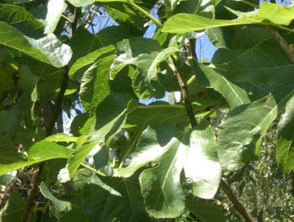
| Common Name: | Fig (English), Higo (Spanish), Figue (French), Feige (German), Fico (Italian). |
| Botanical Name: | Ficus carica |
| Family: | Moraceae (Mulberry family). Division: Magnoliophyta, Class: Magnoliopsida, Subclass: Hamamelidae, Order: Urticales, Family: Moraceae. |
| Origin: | The fig is believed to be native to Western Asia and was spread throughout the Mediterranean region by humans. Fig remnants have been discovered in archaeological excavations dating back to at least 5000 B.C. |
| Description: |
The fig tree is a picturesque deciduous tree, reaching up to 15 m in height, though more typically standing between 3 to 10 m tall. Its branches are muscular and twisted, often spreading wider than they are tall. Fig wood is brittle and decomposes quickly. The trunk frequently develops large nodal tumors where branches have detached or been removed. The branchlets are more cylindrical and concise than truly woody. The tree’s sap contains abundant milky latex that can irritate human skin. The bark is smooth and silvery-gray. Fig trees often grow as multi-branched shrubs. The leaves are brilliant green, simple, alternate, and large (up to 25 cm long). They are more or less lobed with 1 to 5 nasal sinuses, rough and hairy on the upper surface, and softly downy underneath. In summer, the foliage lends a beautiful tropical ambiance. The tiny fig flowers are hidden from view, clustered inside the green fruits—technically a syconium. Pollinating insects gain access to the flowers through an opening at the apex of the syconium. |
Detailed Look at the Ficus carica Tree
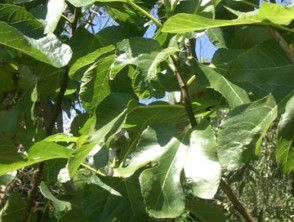
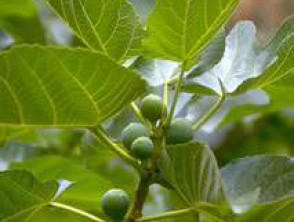
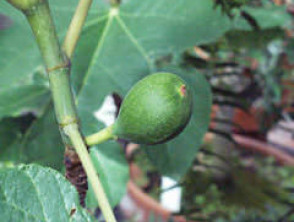
| Horticultural Uses: | Edible fruit. The milky sap has historically been employed as a destructive treatment for warts and to heal skin infections. Juice from the fig leaves has long been used in treating vitiligo (due to its psoralen content). |
| Potential Allergens: | The furocoumarins psoralen, bergapten, and the coumarins umbelliferone, 4′, 5′-dihydropsoralen, and marmesin are present, primarily concentrated in the leaves and unripe fruits. |
| Allergy Concerns: | The plant exhibits phototoxic properties. Ingestion of the ripe fruit generally does not result in photosensitization. However, there are documented cases of anaphylaxis after consuming figs; this reaction might be linked to cross-reactivity with natural rubber latex. |
| Cross-Reactivity Information: | Cross-reactivity occurs with Weeping Fig (Ficus benjamina, a common houseplant). Furthermore, it reacts with natural rubber latex, so individuals allergic to latex should exercise caution. Related species include the Cluster Fig (Ficus racemosa) and the Sycamore Fig (Ficus sycomorus). |
| Additional Cultivation Notes: | The common fig produces an initial harvest, known as the breba crop, in the spring, borne on the previous season’s growth. The second crop develops in the fall on the new growth and is referred to as the main harvest. |
Contact Dermatitis Associated with Fig Trees
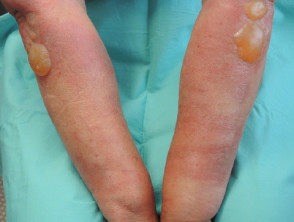
Fig-induced dermatitis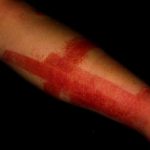 Comprendiendo la Dermatitis: Definición, Causas y Tipos Comunes La dermatitis abarca un conjunto de afecciones inflamatorias que se manifiestan a través de cambios específicos en la epidermis, manifestándose frecuentemente como picazón intensa. Esta condición es notablemente común, afectando a cerca de una quinta parte de la población en algún momento de sus vidas. Debido a su etiología diversa, la dermatitis presenta múltiples patrones de manifestación clínica. Los términos "dermatitis" y más contact reaction
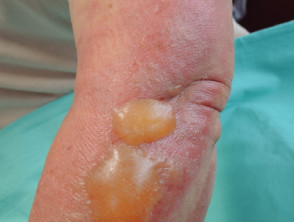
Symptoms of phytophotodermatitis
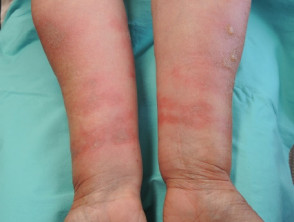
Blistering due to plant exposure
Understanding the botanical characteristics and sensitivity issues relating to Ficus carica is crucial, especially given its historical importance and cross-reactivity with common allergens like natural rubber latex. Always handle the sap with caution.