¿What is PUVA bath?
PUVA bath, also called bath photochemotherapy or balneophotochemotherapy, is a treatment for skin diseases. It is a type of phototherapy.
PUVA is an acronym: ‘P’ stands for psoralen, a medication. It is used in combination with ‘UVA’, or the Ultraviolet Radiation wavelength of 320–360 nm.
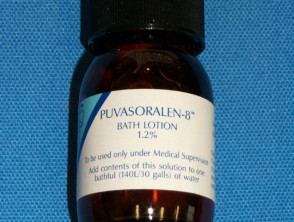
The most frequently prescribed psoralen is methoxsalen (8-methoxypsoralen), but 5-methoxypsoralen and trisoralen are sometimes used. Psoralen can be taken orally (by mouth).
PUVA bath refers to the prescribed psoralen in a solution water solution, usually 3 mg/L. The area to be treated is soaked in this solution before being exposed to UVA rays emitted by special fluorescent lamps.
What skin disorders are treated with PUVA bath?
PUVA bath is used to treat inflammatory inflammatory skin disorders, mainly:
- Psoriasis
- Eczema/dermatitis
- Vitiligo
- Cutaneous T-cell lymphoma
Whole-body PUVA bath is prescribed to treat extensive skin diseases, but it is not widely available due to its cost, inconvenience, and risks.
Localized PUVA bath is more common. It is most frequently prescribed for psoriasis or eczema affecting the hands and feet.
How is PUVA bath performed?
- The affected areas are covered with a psoralen solution mixed with warm water and soaked for 15 to 30 minutes.
- The skin is gently dried. Some centers recommend a waiting period of 15 to 30 minutes while the solution penetrates the skin, while others treat immediately.
- The affected skin is exposed to UVA rays emitted by special fluorescent lamps.
- Then, the treated skin must be covered for the next 2 to 3 days, especially when outdoors, to protect it from inadvertent UVA exposure.
Whole-body Soaks
The patient is submerged in a tub of psoralen solution and then placed in a whole-body cabinet containing 6-foot fluorescent tubes that emit UVA rays.
Foot and Hand Bath
The hands or feet are submerged in a container or bucket of psoralen solution and then exposed to UVA rays from 2-foot bulbs in a foot and hand box.
The actual treatment duration will depend on the lamp power, the number of lamps, the patient's skin type, and previous exposure. It can range from less than a minute to half an hour or more.
The phototherapy staff will measure the lamp output and calculate the required UVA dose. The dose may be increased at each visit according to a protocol. The dose will be kept the same or reduced if the condition clears, the maximum dose is reached, or side effects such as burning occur.
Foot and Hand Bath
Foot and Hand PUVA Bath
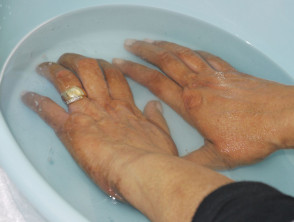
Foot and Hand PUVA Bath
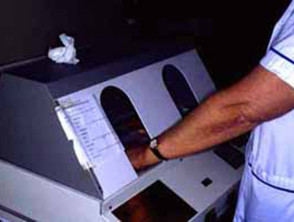
Foot and Hand PUVA Bath
How many treatments are needed?
PUVA bath is most often performed two or three times a week. The number of treatments varies depending on the severity of the skin condition and the response to PUVA. It can range from 10 to 60 treatments in total.
Treatment is usually discontinued when the skin condition has cleared, but in some cases, maintenance treatments are used, for example, once a week.
PUVA bath may also be discontinued if it proves ineffective or if there are significant adverse effects.
What are the treatment results?
Approximately 60 to 80% of psoriasis patients achieve good results with PUVA bath in 20 to 40 treatments. Eczema success rates are somewhat lower.
What precautions are necessary?
Follow the instructions of the phototherapy staff.
- Keep all scheduled appointments.
- Inform the staff about your health concerns and the medications you are taking.
- Do not apply any creams to the area to be treated until afterward.
- Avoid sun exposure on treatment and non-treatment days.
- PUVA bath is not administered during pregnancy or breastfeeding.
What are the side effects?
Treated areas are expected to be slightly pink after each treatment. The pink color may last several days and may be accompanied by temporary itching or stinging. The skin is usually dry; apply moisturizers frequently. Tanning usually occurs and is more prominent in darker skin types.
Burning
Burns can occur if UVA exposure has been prolonged. The peak time for burning is 48 to 72 hours after UVA exposure. Lightly burned areas may feel itchy and appear red. In severe cases, pain and blistering may occur.
There is an increased risk of burning under the following circumstances:
- Fair skin: Fitzpatrick skin phototype 1 or 2
- If a higher concentration of psoralen solution is used
- If the treated areas are exposed to the sun or another source of UVA rays after treatment
- If a phototoxic medication is taken before treatment
- If the course of treatment is interrupted; dosing should be reduced upon restarting.
In case of a burn, apply cooling. emollients frequently. Anti-inflammatory. Anti-inflammatory medications such as aspirin or ibuprofen can reduce discomfort. Recovery from PUVA burns can take several days or more, as they are more prolonged than normal sunburns.
Burning hands after PUVA baths
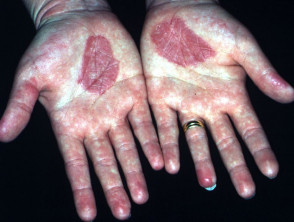
Burning hands after PUVA baths
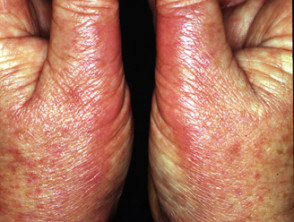
Burning hands after PUVA baths
Skin cancer
In the long term, 200 or more whole-body oral PUVA treatments have been associated with skin cancer, cataracts and skin aging such as freckles, wrinkles, and increased dryness. The risks of PUVA bath are unknown.
Combination Treatments
PUVA bath can be performed at the same time as using other treatments for the skin condition. These include topical topical creams (e.g. corticosteroids for eczema) and oral medications such as prednisone, acitretin, and methotrexate.
It is best to avoid PUVA bath in those taking azathioprine and cyclosporine because these medications are immunosuppressive immunosuppressive and may increase the risk of skin cancer.
Certain topical preparations such as sunscreens and calcipotriol should not be applied to the skin to be treated, as they can reduce its effect. Cosmetics and perfumes should also be avoided, as they are phototoxic and can cause severe burns.
What if the skin condition does not clear up?
There may be other options available to treat your skin condition. Consult your dermatologist for advice.