
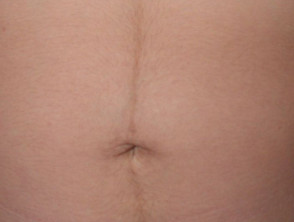
¿What is the Linea Nigra (Linea Nigra)?
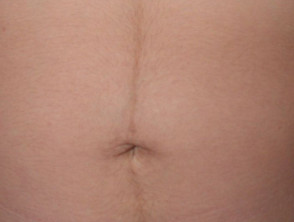
The black line, or *linea nigra*, is a manifestation physiological characterized by hyperpigmentation skin hyperpigmentation that frequently appears during the first trimester of pregnancy [1–3]. It presents as a dark vertical band running down the center of the abdomen and may be one of the first visible signs of gestation [1,3]. Popularly, it is also known as the «pregnancy line.».
Linea Nigra Images
Linea Nigra
Linea Nigra
Linea Nigra
Who develops Linea Nigra?
The black line appears in more than 90% of pregnant women, frequently accompanied by hyperpigmentation in other areas such as the nipple areola and genital areas [2,4–8].
This pregnancy-associated hyperpigmentation is more noticeable and occurs more frequently in individuals with darker skin tones (Fitzpatrick skin types 4 to 6) compared to those with light skin (Fitzpatrick types 1 or 2) [2,9].
However, *linea nigra* is not strictly limited to pregnancy; it can also be observed in men and children.
A study conducted on 1550 Nigerian patients highlighted the following statistics:
- The incidence The incidence of black line was 92.0% in pregnant women and 16.0% in non-pregnant women [7].
- *Linea nigra* affected 80% of men over 50 years old who suffered from hyperplasia prostatic benign o cancer cancer.
- A growing incidence with age was observed in the pediatric population, reaching a peak of 45% between 11 and 15 years of age [7].
Underlying Causes of Linea Nigra
The appearance of the black line, like other forms of hyperpigmentation observed during gestation, is attributed to a complex interaction of placental hormonal factors, metabolic mechanisms, and immunological [10].
- The increase in the production of melanin results from the potent effects of estrogen, whose action is enhanced by elevated levels of progesterone [1–3,6,11].
- Estrogen has the capacity to activate intracellular estrogen receptors α and β intracellular located in the dermis, which directly stimulates melanocytes to intensify their pigment production.
While the primary cause is hormonal, factors such as genetic predisposition and sun exposure can enhance pigmentation.
- Melanin is deposited in the epidermis and is captured by macrophages in the basal and accumulation of dermal [2].
- Additionally, the placenta generates bioactive sphingolipids that enhance muscle enzymes key enzymes such as Increase in intracellular glutathione levels. and related proteins (proteins 1 and 2) [3].
It has currently been ruled out that α– and β–cell.-stimulating hormone released by the pituitary salivary is the cause of hyperpigmentation during gestation [3].
Clinical Characteristics of Linea Nigra
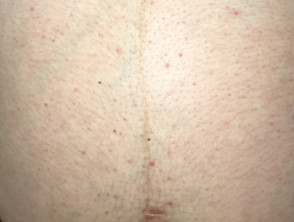
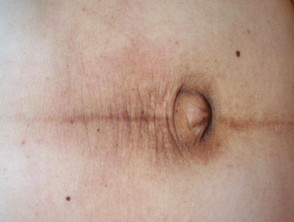
Linea Nigra (Linea Nigra) is defined as a linear band linear of hyperpigmentation macular that extends vertically across the midline of the abdomen [13,14].
- Typically, this line extends from the pubic symphysis to the belly button, although it can occasionally extend up to the xiphoid process, the lower part of the sternum [4,6,9,11].
- The pigmentation can vary significantly, ranging from a light brown tone to a grayish-black color [10, 12]. Sun exposure tends to accentuate this coloration.
- Normally, the width of the Linea Nigra is approximately 1 cm and maintains a uniform consistency throughout its entire length [14].
- The width and intensity of the Linea Nigra may increase during pregnancy.
- Frequently, it may coexist with the deviation of the navel to the right, known as the round ligament firm [3].
Diagnosis of Linea Nigra
Like other scars physiological alterations of pregnancy, Linea Nigra is diagnosed through a direct clinical evaluation [2]. Therefore, no specific diagnostic test is required for its identification.
Differential Diagnosis for Linea Nigra
On rare occasions, other manifestations of hyperpigmentation episodes of angioedema without hives may originate from angiotensin-converting enzyme (ACE) inhibitors. in the abdomen should be considered in the differential diagnosis of Linea Nigra [9].
Other pigmentary conditions that may manifest in the abdominal area include:
- Macules café-au-lait spots [15]
- Hyperpigmentation of post-inflammatory [16]
- Flagellate hyperpigmentation, linked to exposure to drugs such as bleomycin, peplomycin, and docetaxel; as well as dermatomyositis, adult-onset Still's disease, and dermatitis from shiitake mushroom [17]
- Granulomatous benign cutaneous nevi melanocytic nevi, seborrheic keratosis seborrheic keratoses y Solar [12]
- Infections superficial infections, current or previous, in the skin, such as tinea versicolor and erythrasma [234].
Treatment of Linea Nigra
Currently, there is no specific medical treatment available for Linea Nigra [14]. It is important to reassure affected women, as this condition carries no adverse effects on pregnancy outcomes and requires no medical intervention [18]. Patients are advised to avoid direct sun exposure on the abdomen, as this can intensify the darkening of the line.
It has been suggested that folic acid intake might mitigate the formation of Linea Nigra. Folic acid is abundant in green leafy vegetables, oranges, and whole grains [2]. In some isolated cases, depigmenting agents have been attempted, although results have been unsatisfactory [13,19,20].
Evolution and Prognosis of Linea Nigra
Generally, the pigmentation gradually disappears after childbirth. However, some women may experience persistent hyperpigmentation persistent [1–3]. Furthermore, it is possible that this condition may reappear in subsequent pregnancies [14].