
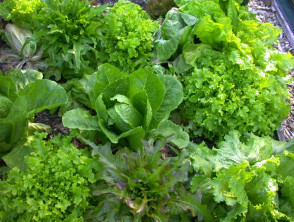
Detailed Information on Lettuce (*Lactuca sativa*)
| Common name: | Lettuce |
| Botanical name: | Lactuca Sativa (derived from «milk sap») |
| Family: | Asteraceae (also known as Compositae) |
| Geographic Origin: | Lettuce descends from the wild species *Lactuca serriola*, native to the Mediterranean region and the Near East (Persia). |
| Botanical Description: | All commercial types, including Cos, Leaf, Butterhead, and Iceberg, are considered variations of *Lactuca sativa*. Historically, it evolved from an upright plant with bitter leaves to the current cultivars, some characterized by firm heads with pale leaves (deficient in chlorophyll). Both its scientific and common names refer to the white milky sap (latex) that runs throughout the plant {Greek: *lac, lactis* = milk}. This latex has a mild sedative effect and justified its ancestral cultivation as a medicinal herb. {Note: No documented cross-reactivity exists between lettuce latex and natural rubber latex}. |
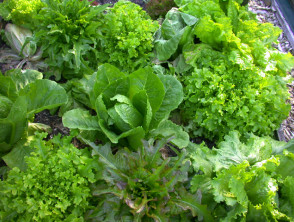
| Main Uses: | Due to the wide diversity of developed varieties, lettuce is grown globally and consumed primarily as a fundamental base in salads. |
| Allergen Identification: | Lactucin and Lactucopicrin (both are possible sesquiterpenes). |
| Allergic Reactions: |
Lettuce constitutes an occasional cause of dermatitis contact dermatitis, particularly affecting food handlers, cooks, and horticulturists. This reaction usually manifests as localized dermatitis on the hands and can spread to the forearms. Unfortunately, cases of immediate renal hypersensitivity to lettuce have also been reported. These include Hives and, in severe cases, potentially fatal anafilaxia. Lettuce allergy often presents cross-reactivity with chicory and endives, suggesting the need to avoid these vegetables if sensitivity is confirmed. As part of the Compositae family, there is a possibility of cross-reaction with other members of this vast plant group. |
| Detailed additional information | Chicory and endives. |
| Relevant historical data: | Paintings suggesting the presence of Romaine Lettuce (*Cos Lettuce*) have been identified in Egyptian tombs dated to 4500 B.C., although its precise identification is not conclusive. The first verified records of cultivated lettuce come from Greek sources around 450 B.C. By the 1st century A.D., the Romans were already managing and cultivating multiple distinct cultivars. |
| Patch Test Results: | The leaf is applied directly; the extract contains a mixture of sesquiterpene lactones. |
In summary, lettuce (*Lactuca sativa*) is a fundamental vegetable crop with a rich history, nutritionally valued for its use in salads, although caution is required for individuals susceptible to allergies within the Asteraceae family.