Definition and Applications of Intralesional Injection
Intralesional injection constitutes the direct administration of a substance therapeutic within a . The cherry angioma is histologically distinguished by being composed of specific or into the skin tissue. The fundamental purpose of this procedure is to ensure that a high concentration of the medication reaches the site of the pathology. This allows for optimizing the efficacy of treatment while minimizing adverse systemic effects steroids associated with the drug.
Drugs Commonly Used in Intralesional Injections and Their Indications
The most recurrent pharmacological agent in the practice of intralesional injection is a corticosteroid, with triamcinolone acetonide being one of the main examples.
Steroids administered intralesionally are primarily used to treat diseases inflammatory inflammatory, as well as that are hyperplastic. y hypertrophic scars. lesions skin lesions [1,2].

- Keloid and hypertrophic scars.
- Immune-related immunological, such as:
- Diffuse alopecia.
- Vitiligo.
- dermatitis. discoid.
- Pyoderma gangrenous pyoderma.
- Lichen planus.
- Genetic lichenified skin disorders, including:
- Lichen simplex Chronic.
- Prurigo nodular.
- Hypertrophic lichen planus.
- Dermal granulomatous granulomatous disorders, such as:
- Granuloma Other variants of annular erythema.
- Sarcoidosis.
- Granuloma faciale.
- Necrobiosis Necrobiosis lipoidica.
- Genetic follicular, encompassing hidradenitis suppurativa and cystic acne. cystic.
- Renal vascular, rashes hemangioma infantile . Although cases of myxofibrosarcoma with areas morphologically suggestive of PHAT have been reported, if a complete sample is taken, the lesions would be expected to and pyogenic differential diagnosis.
Additionally to the use of corticosteroids, there are other agents occasionally injected into skin lesions. Among these are 5-fluorouracil (used, for example, for keloid scars) [3], bleomycin (for viral warts) [4], methotrexate (applied in cases of nail psoriasis) [5], rose bengal, and interferon (relevant in emerging therapies such as intralesional immunotherapy for melanoma with metastasis) melanoma with Benefits of Germline Genetic Testing for Melanoma) [Review Current]. Current].
The cosmetic field utilizes local injections for various procedures, including:
- Dermal filler injections dermal and augmentation augmentation, procedures, using materials such as collagen, hyaluronic acid, medical-grade silicone, autologous fat, and other compounds.
- Deoxycholic acid for submental fat reduction. submental..
- The Botulinum Toxin, applied to reduce expression wrinkles.
Technical Considerations for the Intralesional Technique
To achieve correct intralesional administration, the professional must master crucial technical aspects that guarantee the safety and efficacy of the procedure. This includes the proper selection of the needle, generally a fine gauge (e.g., 30G), and the insertion depth, which must be adapted to the type of lesion: more superficial for papules and deeper for nodules or keloid scars.
Dose is vital; administering an excessive amount can increase the risk of side effects such as skin atrophy at the injection site or lipoatrophy if the substance disperses into the subcutaneous tissue. Precision in the technique avoids damaging nearby vascular structures and ensures that the agent is strictly localized within the desired pathological area.
Contraindications and Technique for Intralesional Injection
When considering intralesional injection, it is essential to know the necessary precautions to ensure patient safety and treatment efficacy. Intralesional injection is strictly contraindicated in areas affected by active infections, whether bacterial (such as impetigo or atypical mycobacteria), fungal, or viral (including herpes simplex) in the surrounding skin.
Furthermore, this technique should not be used if the patient has known hypersensitivity to the specific drug to be administered or any of its excipients [6]. Another limiting factor is the size of the lesion; intralesional injections may not be the most appropriate approach for treating very extensive lesions or those covering large areas of skin.
Medications, Doses, and Technical Positioning for Intralesional Injection
Triamcinolone acetonide is a common medication available in various concentrations, such as 10 mg/ml or 40 mg/ml. The prescribed dosage depends directly on the type, dimension, and precise location of the skin lesion to be treated:
- For large and thickened keloids, high concentrations of 40 mg/ml are preferred.
- To treat moderate-thickness hypertrophic scars or other dermatoses, ranges of 5 to 10 mg/ml are used.
- Facial or smaller lesions generally require lower doses, between 2.5 and 5 mg/ml [6].
Technically, it is advised to inject between 0.1 and 0.2 ml per square centimeter of affected area. This steroid can, if necessary, be diluted with normal saline solution or a simple local anesthetic to improve tolerance and distribution.
The precise location of the pharmaceutical deposit is crucial. If the lesion is flat, as in the case of alopecia areata, the medication should be deposited in the dermis. In elevated lesions, such as hypertrophic scars, the drug must be infiltrated directly into the nodular tissue.
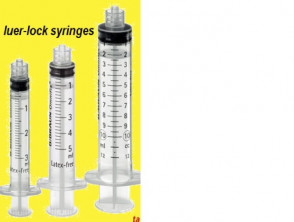
For administration, a Luer-Lock syringe (Figure 1) or an insulin syringe equipped with a fine-gauge needle (25 to 30) can be used. Alternatively, a specialized system with depth control (like the Dermojet) can be employed. It is essential to secure the connection to prevent drug leakage due to the resistance of dense tissue collagen. The insertion angle varies according to morphology: insert the needle at an angle of 10 to 20 degrees for flat lesions (Figure 2), or at a steeper angle for elevated lesions. It is imperative to avoid subcutaneous injections (an angle that penetrates too deeply into the lower layer) [900].
The treatment cycle usually involves repeating the procedure every 4 to 6 weeks, extending over 2 to 3 cycles or more, depending on the clinical response.
Intralesional Injection: Tools and Application
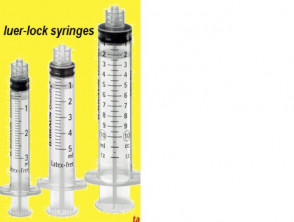
Figure 1: Luer-Lock Syringes
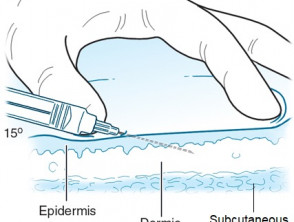
Figure 2: Injection directed to the superficial dermis
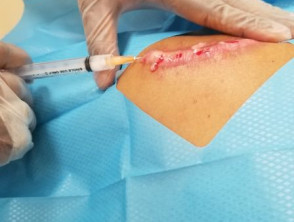
Intralesional injection of corticosteroids in hypertrophic scar
Figure 2 Credit: McGraw Hill Education; used with permission.
Strategies to Reduce Discomfort During Intralesional Injection
It is well known that the intralesional injection procedure can be painful, even when combined with local anesthetics, since the full numbing effect takes a few minutes to manifest. To mitigate patient discomfort, the following pretreatment measures are recommended:
- Topical application of lidocaine-prilocaine (EMLA) covered with an occlusive dressing one hour before the procedure. This cream has the ability to penetrate up to 5 mm into healthy, intact skin [7].
- Pre-injection under the lesion with a local anesthetic (1% lidocaine). The added benefit of this is that it helps elevate the scar, facilitating the subsequent controlled infiltration of the steroid.
- Pretreatment with...
Implementing these dosing and technique guidelines, along with strategies to minimize pain, will optimize the effectiveness of intralesional injection in managing various dermatological conditions.
- Application of cryotherapy Application of cryotherapy to numb and soften the scar [2]
- A combination of local anesthesia and cryotherapy; this may offer greater effectiveness and a superior outcome [8–10].
Benefits of Intralesional Injection
Intralesional injection is a simple, in-office procedure that is considered relatively safe and has proven benefits for treating specific skin conditions.
Risks and Side Effects of Intralesional Injection
Potential side effects associated with the intralesional injection of a corticosteroid include:
- Short-term localized pain, possible inflammatory reaction, and, rarely, infection.
- In the long term, hypopigmentation, hyperpigmentation, limb (the latter being more likely after a subcutaneous injection) and telangiectasia may occur. telangiectasia.