«`html
Understanding Focal Keratodermas: Symptoms and Genetics
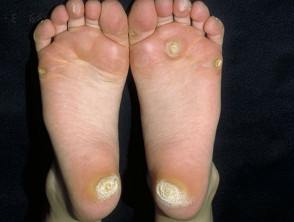
Focal keratodermas constitute a specific subtype within the spectrum of palmoplantar keratodermas (PPK). They are distinguished by their appearance limited to circumscribed areas of the palms or soles, typically coinciding with areas subjected to constant pressure. It is crucial to recognize that certain variants of this dermatological condition may be linked to systemic abnormalities that compromise other internal organs besides the skin.
Focal Palmoplantar Keratoderma (Areata Type): Clinical Presentation
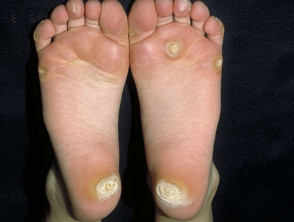
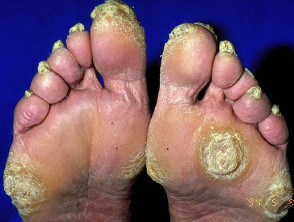
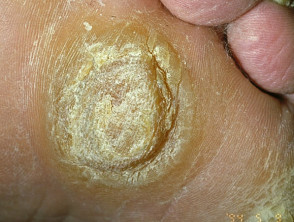
Etiological Factors and Inheritance of Focal Keratodermas
The underlying causes of focal palmoplantar keratodermas are frequently linked to genetics. The hereditary component is significant, manifesting in two main patterns. Autosomal autosomal dominant inheritance implies that the contribution of one affected parent is enough to transmit the condition, resulting in multiple affected family members. Alternatively, an autosomal recessive inheritance pattern may be observed autosomal recessive, where both carrier parents, often asymptomatic, transmit the keratoderma keratoderma to the child. It is essential to evaluate whether these specific genetic variants are associated with dysfunctions in organ systems outside the skin.
Classification and Clinical Relevance of Focal Keratoderma Types
There is considerable diversity in the forms of hereditary focal palmoplantar keratoderma. Although many share a similar clinical presentation on the hands and feet, distinguishing between them is vital, as only some carry significant systemic repercussions related to abnormalities in non-cutaneous organs.
| Striate / Areata PPK Type (Hereditary Painful Callosities) |
|
|---|
The correct identification of these variants is essential for the prognosis and appropriate management of patients suffering from focal keratodermas.
```
| Subtype Variants |
|
| Howel-Evans |
This specific variant deserves a separate mention due to its high correlation with internal pathologies. |
It is essential to perform a thorough differential diagnosis, especially in cases where the Howel-Evans variant or similar ones suggest possible multisystem involvement, which underscores the importance of comprehensive patient evaluation.
| Clinical Term | Distinctive Features |
|---|---|
| Sjögren's of Tylosis with Cancer |
|
| Richner-Hanhart Syndrome |
|
| Pachyonychia Congenital |
|
| Striate PPK with Hair Woolly and Cardiomyopathy Dilated |
|
Discovering Congenital Pachyonychia: Clinical Presentation and Appearance
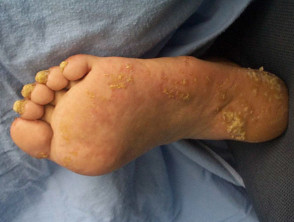
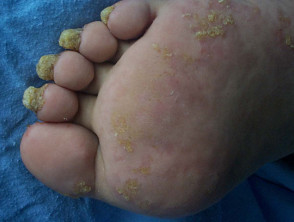
Treatment Strategies for Hereditary Focal Keratodermas
The management of hereditary focal keratodermas focuses on relieving skin thickening, making the condition less visible and bothersome. Given the genetic nature of these conditions, treatment is primarily symptomatic and chronic management. The following therapies are common:
- Application of emollients Application of emollients to hydrate and soften thickened skin.
- for dermal use. keratolytics, Use of keratolytic agents, such as 6% salicylic acid formulated in 70% propylene glycol, to promote scaling.
- Topical treatments based on Topical Topical treatments based on retinoids.
- Use of oral reactions. Topical Vitamin D ointment (calcipotriol) as a modulator of cell differentiation.
- Administration of oral retinoids, such as acitretin, reserved for more severe cases or those resistant to topical therapies.
Expectations and Continuous Management of Hereditary Focal Keratodermas
Hereditary focal keratodermas are chronic conditions that flat persist throughout the individual's life and have the potential to be transmitted to future generations. While there is no definitive cure, the functional prognosis improves significantly with adherence to the prescribed therapeutic regimen. Continuous dermatological care management is essential to manage associated discomfort and perform necessary monitoring, especially if syndromes associated with oncological risk exist.