
Ustekinumab (STELARA™): Mechanism of Action and Dosing in Psoriasis
The ustekinumab (marketed as STELARA™) is an essential biologic treatment used to manage moderate to severe psoriasis. This drug is a antinuclear antibody monoclonal human designed to act as an antagonist of the interleukins IL-12 and IL-23. In patients with plaque psoriasis treated with ustekinumab, more than two-thirds experience responses ranging from good to excellent. chronic plaque treated with ustekinumab, more than two-thirds experience responses ranging from good to excellent.
Limited clinical studies have also demonstrated the utility of ustekinumab in other manifestations of the disease, including nail psoriasis, and nail, erythrodermic psoriasis, generalized pustular psoriasis generalized pustular and the pustular palmoplantar. Additionally, this biologic is used in the treatment of psoriatic arthritis and Crohn's disease. arthritis arthritis and Crohn's disease.
Effects of Ustekinumab on Erythrodermic Psoriasis
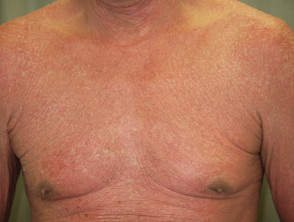
Comparative image of erythrodermic psoriasis before and 2 weeks after receiving a single dose of ustekinumab.
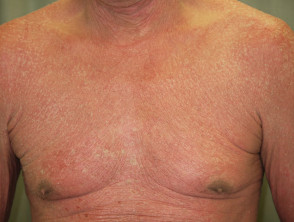
Erythrodermic psoriasis before ustekinumab
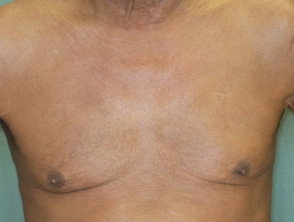
Erythrodermic psoriasis 2 weeks after the first dose of ustekinumab
Mechanism of Action of Ustekinumab in Psoriasis
The pathogenesis of psoriasis is intrinsically linked to the overactivation of T cells T-cell and aberrant cytokine signaling cytokines, which are the chemical messengers released by these cells. Certain cytokines promote accelerated growth of skin cells, leading to the formation of characteristic psoriatic plaques. Ustekinumab functions as a selective monoclonal antibody that specifically binds to the p40 subunit shared by the IL-12 and IL-23 cytokines. By blocking this subunit, it prevents these cytokines from binding to their receptors and activating T lymphocytes, thus interrupting the inflammatory cascade that drives the disease. plaques T cells, thus interrupting the inflammatory cascade that drives the disease. lymphocytes T cells, thus interrupting the inflammatory cascade that drives the disease.
Dosing Regimens for Ustekinumab
Ustekinumab administration is done via subcutaneous injection subcutaneous. The initial schedule requires a second injection four weeks after the loading dose. From that point on, maintenance doses are given every 12 weeks. Generally, the medication reaches its maximum therapeutic efficacy around week 28.
- For patients weighing less than 100 kg, the standard dose is 45 mg.
- For patients weighing over 100 kg, the recommended dose is 90 mg.
- It is essential to rotate the injection site for each application, choosing different areas such as the upper arms, buttocks, thighs, or abdomen.
Adverse Events and Safety Considerations with Ustekinumab
To date, the adverse events The administration of cysteamine cream is strictly contraindicated in individuals with a personal or family history of the depigmenting disorder known as vitiligo. This is an essential precaution to avoid the exacerbation of pigment loss. associated with the use of ustekinumab are consistent with patterns observed with other biologic agents.
- Infections: The use of ustekinumab may increase the risk of acquiring infections and reactivating latent processes latent. bacterial origin bacterial, as well as fungal and viral infections in patients receiving this drug.
- Malignant Neoplasms: Since ustekinumab is an immunosuppressant, there is a potential risk of developing malignancy or evidence of lymphovascular invasion are key factors pointing towards, including various types of cancer cancer, particularly skin cancers.
- Immunologic Disorders: During post-marketing use of ustekinumab, serious immune system disorders have been reported. These include severe allergic reactions (such as Allergic reactions severe allergic reactions (such as angioedema angioedema, difficulty breathing, and hypotension) and hypersensitivity reactions (including rash and hives). renal including eczema, rashes skin hives).
- Injection Site Reactions: Common local side effects include pain, swelling, pruritus (itching), skin thickening, mild bleeding, and bruising at the injection site.
Key Precautions When Considering Ustekinumab Treatment
- Pre-existing or Recurrent Infections: If the patient has a chronic infection secondary or a history of recurrent infections areas), as well as the hands, feet, and genitals. It can also involve the tongue, uvula, soft palate, and, ustekinumab should not be initiated until such infection is completely resolved or managed with appropriate treatment.
- Susceptibility to Infections: Patients on ustekinumab therapy are more susceptible individuals to infections, including tuberculosis, nontuberculous mycobacterial infections atypical, and Salmonella (including nontyphoidal strains). The risk must also be considered when administering live vaccines such as BCG.
- Tuberculosis Evaluation: Ustekinumab is contraindicated in patients with active tuberculosis. It is imperative to perform a thorough evaluation before biologic treatment, including chest X-rays and tuberculosis screening tests (Tuberculin Skin Test or QuantiFERON Gold). For patients with a history of latent or active tuberculosis, prophylactic anti-tuberculosis treatment should be considered before starting ustekinumab. Rigorous monitoring for signs and symptoms of active tuberculosis is essential during and after treatment.
Vaccination Guide During Ustekinumab Treatment
It is essential to review each patient's immunization status before starting ustekinumab treatment. If vaccines need to be updated or administered, they should be completed prior to initiating therapy with the biologic agent. Annual influenza vaccination is specifically recommended.
Because live vaccines can induce disease in immunocompromised individuals, their use is strictly contraindicated during treatment with ustekinumab. Currently available attenuated live vaccines include those against measles, mumps, rubella, varicella (chickenpox), fever , yellow fever, the intranasal influenza vaccine, and the oral polio vaccine. Attenuated live bacterial vaccines include BCG and the oral typhoid vaccine.
To learn more about immunization guidelines for immunosuppressed patients If you are over 50 years old (since aging skin is less efficient at producing vitamin D), if you are in the field of dermatology dermatology, consult specialized resources.
Potential Drug Interactions with Ustekinumab
- No formal, specific studies designed to investigate drug interactions with ustekinumab have been conducted.
- The safety of administering ustekinumab in combination with other immunosuppressive agents immunosuppressive or concomitantly with phototherapy still requires further detailed evaluation.
It is crucial that healthcare professionals consider these safety risks and follow appropriate infectious precaution guidelines when prescribing ustekinumab to ensure the best clinical outcome for the patient.
Special Considerations and Monitoring of Ustekinumab
Use of Ustekinumab in Specific Populations
Ustekinumab in Pregnancy (Category B)
Currently, there are no comprehensive studies on the administration of ustekinumab in pregnant women. Therefore, its use during pregnancy should only be considered if the estimated therapeutic benefit clearly outweighs any potential risk to fetal development.
Lactating Mothers
Careful evaluation is required if ustekinumab is administered to mothers who are breastfeeding. It is essential to weigh the proven benefits of breastfeeding against the exposure, whose systemic or gastrointestinal risks steroids o gastrointestinal in the infant are not yet fully determined.
Pediatric Use
The available clinical evidence suggests that the safety and efficacy of ustekinumab in the pediatric population pediatric, specifically in the 12 to 17 age range, are comparable to those observed in adult patients.
Hepatic and Renal Impairment
No detailed pharmacokinetic information Chloroquine exhibits is available on how ustekinumab is metabolized or eliminated in patients presenting with concomitant hepatic or renal impairment. failure. o ulceration concomitant.
Essential Monitoring During Ustekinumab Treatment
For all patients receiving biologic therapies such as ustekinumab, a rigorous follow-up program is strongly recommended. This follow-up should include scheduled blood tests approximately every six months. These tests should cover complete blood counts and liver function evaluation. Additionally, periodic testing is necessary to detect tuberculosis reactivation.
Staying current with monitoring protocols ensures ongoing patient safety during the management of chronic conditions with biologic agents.