
Text: Miiskin: Dermatological Surveillance Post-Transplant
Introduction to Elevated Skin Cancer Risk
Patients who have received an organ transplantation face a considerably higher risk of developing skin cancers; in some cases, this risk is up to 65 times greater compared to non-transplanted individuals.
Of particular concern is the significant increase in the development of malignant neoplasms such as carcinomas squamous cell carcinoma. In transplant recipients, squamous cell carcinoma (SCC) shows a greater propensity for (metastatic) spread and can be fatal.
In addition to SCC, these patients also present an increased susceptibility to melanoma. These lesions can manifest in any body location and be observed in all histological subtypes. histological. Melanoma diagnosis is complicated in transplant recipients, justifying a low threshold for the removal of any . The cherry angioma is histologically distinguished by being composed of unusual or changing lesion. Frequently, melanoma is already diagnosed as thicker and more advanced, and these tumors tend to exhibit more aggressive behavior in this high-risk population.
Active prevention, periodic skin checks, and the implementation of early and appropriate treatments are fundamental strategies to mitigate morbidity associated with these cancers. Other skin tumors observed in transplant recipients include carcinoma Cell Carcinoma and sarcoma Kaposi's sarcoma.
Factors That Increase Cancer Incidence in Transplanted Patients
The continuous use of immunosuppressive drugs, necessary to ensure the survival of the transplanted organ, diminishes the immune system's capacity to repair or eliminate cells damaged by UV. radiation. This immune deficiency facilitates the development of malignancies in chronically damaged cells. develop malignancies.
Exposure to ultraviolet (UV) radiation remains the main driver of skin cancer, both in the transplanted and general population; however, in the former group, its impact is amplified by immunosuppression.
Additionally, there is the possibility that certain immunosuppressants act as direct carcinogenic agents, inducing cellular alterations. Human Papillomavirus (HPV), responsible for warts, has also been identified as a potential co-adjuvant in the genesis of skin neoplasms in this cohort.
Identifying the Most Vulnerable Population
Patients who have maintained immunosuppressive therapies for extended periods usually show the incidence highest incidence of skin cancers. More than 75% of kidney transplant recipients renal who achieve a decade or more of survival face a considerable risk.
Other important risk factors for the development of skin cancer include:
- Advanced age (likely linked to greater cumulative dose sun exposure).
- History of skin cancers or precancerous lesions prior to transplantation.
- Light skin tone (Fitzpatrick Phototype I-III); it is estimated that nearly half of white skin transplant recipients will develop skin cancer.
- History of significant UV exposure, whether from the sun or tanning booths.
- HIV active HPV infection (warts).
- Low CD4 lymphocyte counts.
- Heart and lung transplant recipients (who statistically tend to have a higher risk).
«`
- having higher levels of immunosuppressive medications).
It has been documented that well-adapted heart and lung recipients face a slightly higher risk compared to recipients with lower compatibility.
Essential Skin Cancer Prevention in Transplanted Patients
Maintaining a smart strategy regarding sun exposure is fundamental for transplanted patients. The incidence of skin cancers can be significantly reduced by adopting rigorous preventive measures every time they are outdoors, including:
The Essential Use of Sunscreen
- Sunscreen must have a Sun Protection Factor (SPF) of 30 or higher and offer broad-spectrum protection (blocking both UVA and UVB radiation). It is crucial to apply it 15 to 30 minutes before sun exposure and reapply it just before going out. Regular reapplication during the day is necessary (every 2 hours in intense sun conditions, or every 3 to 4 hours in other situations). Daily application to the face and hands is recommended, regardless of planned activities.
Avoiding Direct Sun Exposure
- This is especially critical during the central hours of the day, between 11 a.m. and 4 p.m., the period when ultraviolet radiation levels peak. If you must be outdoors during these times, actively seek shade. Review weather reports for the UV index or sun protection alerts and take them seriously.
Appropriate Coverage Clothing
- Wear long-sleeved shirts and pants. Dark, tightly woven fabrics offer the greatest defense against UV rays. If possible, opt for sun-protective clothing that has an Ultraviolet Protection Factor (UPF) of 40 to 50+.
Always Wear a Hat Outdoors
- Select a hat made of dense-weave material that provides adequate shade for your face, nose, neck, and ears.
Implementing Sunglasses
- Sunglasses offer maximum protection to the sensitive skin surrounding the eyes. Choose frames that fit well and have large lenses. Wrap-around styles provide the best protective barrier.
Early Detection of Skin Cancers
Early detection and treatment of precancerous and cancerous skin lesions are vital to minimize damage caused by skin cancer. Transplanted patients should perform a monthly skin self-exam, focusing particularly on areas typically most exposed to sunlight, such as the back of the hands, forearms, head, neck, upper chest and back, and in women, the lower legs. It is essential to promptly report any new lesion to your dermatologist, primary care physician, or specialist.
Identifying Different Types of Skin Cancer
Below are illustrative examples of some of the most common skin cancers observed in transplant recipients.
Squamous Cell Carcinoma (SCC)
- A protrusion, elevation, painful sore, or lump that has difficulty healing.
- Its dimensions can range from a few millimeters to several centimeters in diameter.
- They have the capacity to progress rapidly, sometimes in a matter of weeks.
Consult additional information about squamous cell carcinoma (cutaneous).
bright
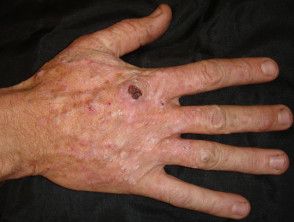
SCC in a transplanted patient
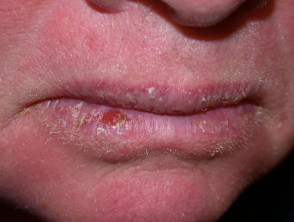
Lip cancer
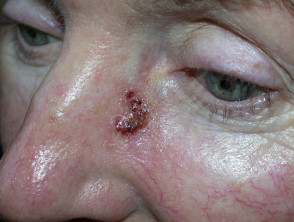

Basal Cell Carcinoma
- Presents as a smooth, pale, or pearly lump; frequently appears on the head or neck.
- Pink, scaly patches that are usually located on the trunk and extremities.
- Characterized by typically slow growth.
Get more details about Basal Cell Carcinoma (BCC).
Basal Cell Carcinoma (BCC)
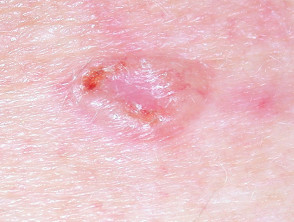
Cystic BCC
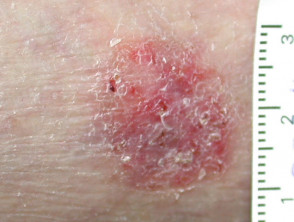
Superficial BCC
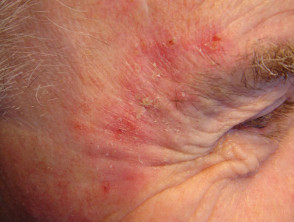
Superficial BCC
Melanoma
- Detection of a new mole or a pre-existing freckle that is changing in shape or size.
- It frequently presents with irregular borders and a mixture of colors (including red, tan, black, brown, or gray/white) within the same lesion.
Learn to recognize the signs of melanoma.
Melanoma
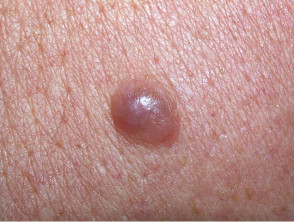
Nodular Melanoma
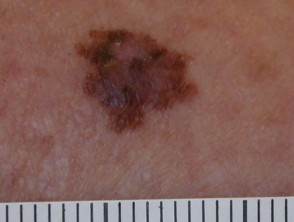
Superficial spreading melanoma
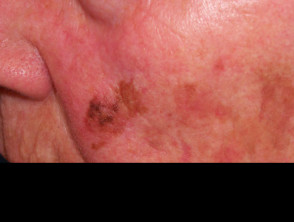
Lentigo maligna melanoma
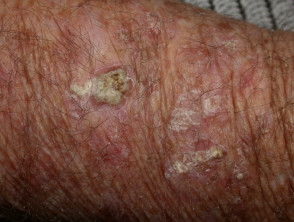
Actinic Keratosis
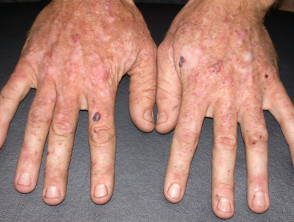
- Formation of rough, scaly patches on the skin.
- They generally present a flat or slightly raised surface.
- Although not cancerous initially, they have the potential to evolve into squamous cell carcinomas.
Review detailed information about Actinic Keratoses.
Actinic Keratoses in Transplanted Patients
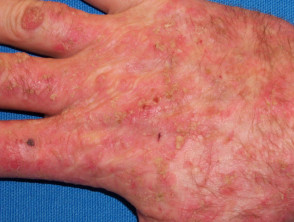
Actinic Keratosis
Treatment Strategies for Skin Cancers in Transplanted Patients
In transplanted patients, skin cancers tend to manifest with greater aggressiveness. They are directly associated with an elevated risk of Benefits of Germline Genetic Testing for Melanoma (spread to other parts of the body) and It is essential to remember that HNC exhibits a considerable rate of recurrence after initial treatment. For this reason, it is crucial to diagnose and treat any type of skin cancer in its earliest stages to significantly mitigate these risks.
The primary intervention for most skin cancers identified in transplant recipients is excision surgical excision or Mohs micrographic surgery. This procedure allows the excised specimen to be immediately analyzed by a pathologist, ensuring that cancerous tissue has been completely eradicated. Depending on the extent, additional surgery or radiotherapy. may be necessary. For less risky tumors, such as small lesions located on the trunk, outpatient procedures like electrodesiccation and curettage can be used.
Likewise, actinic keratoses and warty warty lesions must be managed proactively to reduce the probability of them evolving into squamous cell carcinomas. Treatments available for these premalignant lesions include:
- Cryosurgery to freeze and destroy affected cells.
- Electrodesiccation and curettage to treat thicker skin lesions.
- Topical use of 5-fluorouracil (Current Efudix™), applied twice daily for 4 to 6 weeks, repeating the cycle if necessary.
- Topical Imiquimod (Aldara™) applied to small areas, with a response that can vary between patients.
- Photodynamic therapy photodynamic Photodynamic therapy in situ (SCCis).
For transplant recipients who present high-risk squamous cell carcinomas or who develop a large number of them annually (generally exceeding five lesions per year), initiating systemic treatment with an oral In approximately 25% of patients, it is necessary to add a complementary therapeutic agent to the initial regimen. These additional agents include: retinoid, such as acitretin or isotretinoin, may be considered. These drugs have proven effective in decreasing the incidence of new skin cancers, although their protection ceases upon discontinuation, at which point the rate of new tumor appearance returns to pre-treatment levels. It may be necessary to modulate the retinoid dose if side effects become uncomfortable for the patient.
An important strategy valued in patients with potentially lethal skin cancers is the reduction of immunosuppressive. immunosuppression levels. This involves modifying medication or substituting it with drugs that carry a lower dermatological risk. This adjustment can improve cancer prognosis by allowing the patient's immune response to fight malignant cells. Since decreasing immunosuppression carries inherent risks, this decision is always made in close coordination with the transplant medical team, after a detailed evaluation of potential benefits and dangers for the patient.
There is growing support for the use of and mTOR inhibitors, such as sirolimus, for immunosuppressive management in solid organ transplant patients with solid organ transplants who manifest multiple skin cancers. These agents possess certain anti-cancer properties, and decreasing rates of skin cancer have been reported in recipients who use them. However, it is important to note that mTOR inhibitors can induce notable adverse effects, such as edema peripheral peripheral edema Papulopustular eruptions and.
acne-like papulopustular reactions, which limits their applicability in all cases.