The Normal Hair Growth Cycle and Miniaturization
Understanding the Regular Hair Growth Cycle
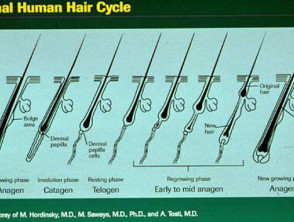
Each hair follicle undergoes a continuous and natural replacement process through the hair growth cycle. This process alternates periods of intense activity with programmed rest phases. The active phase, known as the anagen phase, is prolonged, lasting between two and six years. During this crucial stage, the follicle follicle is deep and extensive, responsible for producing dense and fully pigmented. pigmented hair. Approximately 90% of all scalp hair is actively in the anagen phase at any given time.
The anagen phase is immediately followed by a brief transition period called the catagen phase, which lasts barely one to two weeks. During these days, the base of the follicle begins to retract and shorten. Subsequently, the resting phase, or telogen phase, begins, lasting about three months. In telogen, the now-reduced follicle retains the existing hair shaft. Once the telogen phase is complete, a new anagen cycle restarts, causing the old hair to shed and fall out to make way for the growth of the new hair strand.
The normal hair growth cycle
Image © 1998 Merck Sharp & Dohme (with permission)
The Hair Miniaturization Process
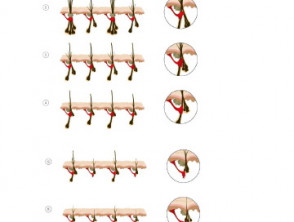
Unlike other areas of the body, scalp hair grows organized in groupings called clusters that usually contain between 3 and 4 hairs. Androgenetic alopecia androgenetic alopecia is characterized by a progressive thinning process in these clusters. Over time, if all hairs in a cluster are gradually lost, a visible bald spot manifests among the surrounding, still active follicles.
Image courtesy of R. Sinclair, FACD
Location of DHT in the Body
Dihydrotestosterone (DHT) is distributed in various body tissues. Key places for its concentration include the prostate, the salivary sebaceous gland, and the skin.
Understanding Androgenetic Alopecia: Genetic Role, Psychological Impact, and Available Treatments
What is the role of the 5-alpha-reductase enzyme in the body?
The 5-alpha-reductase enzyme plays a crucial role in regulating the production of dihydrotestosterone (DHT). An enzyme is a protein protein that functions as a catalyst, significantly accelerating a specific chemical reaction. Fortunately, the activity of this enzyme can be modulated through the use of synthetic drugs designed for this purpose (which are detailed later in this analysis).
How do heredity and genetics influence male pattern alopecia?
Male pattern hair loss manifests in men who possess a genetic predisposition that makes them hypersensitive to the biological effects of DHT. Current research suggests that this hereditary trait can be transmitted through any family line, both paternal and maternal.
How common is male pattern alopecia?
Male pattern baldness is an extremely common phenomenon, affecting almost all men at some stage of their lives. Incidence varies among different populations, which is mainly attributed to genetic factors. It is estimated that up to half of Caucasian men will experience some degree of hair thinning by age 50, potentially rising to 80% by age 70. In contrast, other ethnic groups, such as men of Japanese or Chinese descent, experience considerably less involvement.
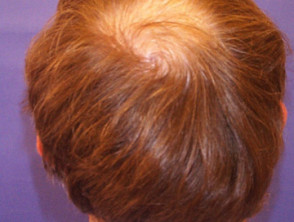
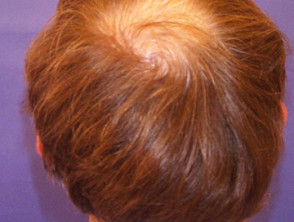
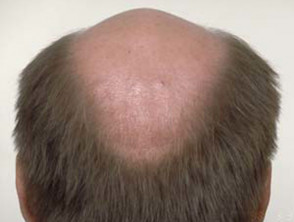
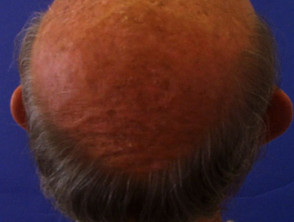
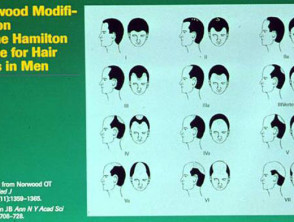
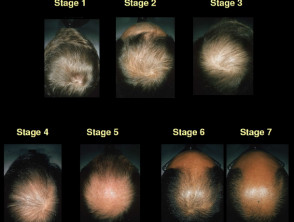
The severity of lost hair can be classified using various standardized systems. Below are the Norwood and Sinclair scales to illustrate the metrics used.
Classification of Male Pattern Alopecia: Norwood vs. Sinclair
* Image © 1998 Merck Sharp & Dohme, used with kind permission.
° Images courtesy of R. Sinclair, FACD (Fellow of the Australasian College of Dermatologists).
Beyond Aesthetics: The Psychological Impact of Hair Loss
Baldness has the potential to carry significant negative psychological consequences. Various studies have correlated hair loss with a decrease in self-esteem, an increase in depressive symptoms, greater introversion, and a perception of lower physical attractiveness. This effect is amplified due to prevailing social norms in Western culture, which place great value on youthful appearance and image. In fact, some studies indicate that, based solely on physical appearance, men with alopecia are rated by observers as less attractive, less proactive, less sociable, and less professionally accomplished than their intact-haired peers. Understanding this impact is vital when considering any treatment for **male pattern hair loss**.
Available Treatment Options for Androgenetic Alopecia
Currently, the therapeutic arsenal for addressing hair loss includes multiple alternatives:
- Hair replacement procedures, including hair transplantation transplant.
- Use of cosmetic products designed to simulate density.
- Micropigmentation, a tattooing technique to mimic the appearance of a shaved scalp.
- Hairpieces and hair integration systems.
- Topical Minoxidil solutions.
- Oral treatment with Finasteride tablets, a tyrosine 5-alpha-reductase type II inhibitor.
- Dutasteride administration.
Preliminary evidence suggests that ketoconazole shampoo may also provide benefits, possibly due to its proven efficacy against dermatitis Fulminant rosacea. seborrheic dermatitis hirsutism generalized and dandruff. The use of low-dose oral Minoxidil (although this indication is "off-label") can promote scalp growth, although it also carries the risk of inducing generalized hypertrichosis and other systemic adverse effects [1].
Vascular laser Low-level laser therapy shows a not fully confirmed benefit in the battle against pattern baldness; however, one specific device has received FDA approval for marketing. Injections of Plasma cell Platelet Rich (PRP) are also under active investigation. Additional rigorous clinical studies are needed to precisely determine the magnitude of benefit these therapies might offer.
While genetics dictate predisposition, current pharmaceutical and surgical options offer effective tools to manage the progression of androgenetic alopecia. It is essential to consult a dermatologist to design a personalized treatment plan.