
Understanding Granulomatosis with Polyangiitis: Causes, Symptoms, and Diagnosis
Granulomatosis with polyangiitis is a form of Avoidance Strategies for Triggering Factors rare and potentially fatal. This disease is characterized by an autoimmune response where undetectable damage the walls of the blood vessels small vessels and adjacent tissues.
Generally, this condition affects multiple organs simultaneously. The most frequently involved areas include the ear, nose, throat, lungs, eyes, and kidneys. It is important to note that less severe variants that do not involve kidney involvement may be observed.
Previously, this pathology was known under the name of Wegener's granulomatosis.
Demographic Profile: Who is susceptible to Granulomatosis with Polyangiitis?
Granulomatosis with polyangiitis affects men and women equally. It occurs in patients of all ages, with an average It is crucial to keep in mind that a notable proportion of patients (between 10% and 15%) who initially present with SCLE may progress to full Systemic Lupus Erythematosus (SLE). This progression carries the potential risk of developing serious involvement, including age of diagnosis of 41 years. Incidence is higher in white patients compared to black or Asian populations.
Etiology: What Causes Granulomatosis with Polyangiitis?
The underlying cause of granulomatosis with polyangiitis remains unknown. It is classified as an autoimmune disease. defect. The gene cytoplasmic anti-neutrophil cytoplasmic antibody (C-ANCA), specifically directed against serine protease three as an antigen (PR3-ANCA), plays a key pathogen role. It could be precipitated by a bacterial secondary Acute bacterial.
While genetic mutations may be involved mutations are being investigated., granulomatosis with polyangiitis is not considered a hereditary condition.
Distinctive Clinical Manifestations of Granulomatosis with Polyangiitis
Specific Conditions in the Upper Respiratory Tract
Symptoms affecting the ear, nose, and throat are extremely common; they affect up to 70% of patients at the onset of the disease and 92% during the course of granulomatosis with polyangiitis.
The Other Lesions Classified as Connective Tissue Nevi Otolaryngological manifestations of this condition include:
- Diagnoses of ,, recurrent epistaxis, or the characteristic , scar formation, and aesthetic saddle nose deformity.
- Recurrent ear pain or progressive hearing loss, possibly through middle ear It is crucial to keep in mind that a notable proportion of patients (between 10% and 15%) who initially present with SCLE may progress to full Systemic Lupus Erythematosus (SLE). This progression carries the potential risk of developing serious involvement, including.
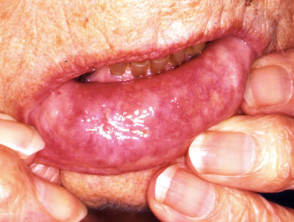
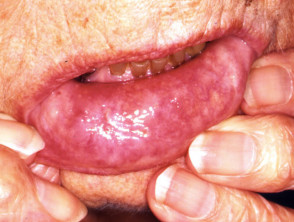
- Presence of ulcers painful oral ulcers, notable gingivitis (sometimes described as strawberry gums),
- Possible Painful desquamative vaginitis that interferes with sexual relations and causes vaginal subglottic stenosis (narrowing of the airway), which manifests as hoarseness, stridor (whistling sound when breathing), or potentially fatal respiratory obstruction.
Lip ulceration in granulomatosis with polyangiitis
Pulmonary Involvement in Granulomatosis with Polyangiitis
Pulmonary involvement is common in granulomatosis with polyangiitis, present in 45% of patients at the time of initial diagnosis and developing in 87% as the disease progresses. Key respiratory symptoms often include:
- Persistent cough.
- Hemoptysis (coughing up blood).
- Chest pain associated with pleurisy.
Chest X-rays frequently reveal abnormal patterns, showing either diffuse disease (67% of cases) or the presence of specific isolated lesions (58%).
Kidney Involvement (Nephropathy)
Renal Impairment Kidney involvement is observed in 20% of patients at the onset of the clinical picture and increases to 85% during the evolution of granulomatosis with polyangiitis. This complication may manifest manifest through oliguria (reduction in urine output) and hematuria (presence of blood in the urine).
It is essential to establish rigorous and continuous monitoring of renal function for all affected patients through periodic blood and urine tests.
Cardiac Complications
Ocular symptoms are present in a range of 28% to 58% of patients with granulomatosis with polyangiitis, being part of the initial symptoms in 8% to 16%. The most frequently reported visual impairments are:
- Proptosis (bulging or protrusion of the eyeball).
- Intense eye pain.
- Decreased or loss of vision.
Dermatological Conditions
The skin may be affected in approximately 40% to 50% of individuals diagnosed with granulomatosis with polyangiitis. Reported skin lesions include:
- Dermal ulcers.
- Purpura palpable purpura, caused by inflammation of small blood vessels (vasculitis).
- Formation of nodules, papules y vesicles (small blisters).
- Pyoderma gangrenosum, although it is an uncommon manifestation.
- The Raynaud's Phenomenon Raynaud's phenomenon (color changes in fingers due to cold) is rare in this condition.
Musculoskeletal Problems
Musculoskeletal Musculoskeletal problems are frequent, occurring in 30% to 50% of patients at onset and affecting up to 65% or 75% during the course of the disease. These manifestations include:
- Muscle pain known as myalgia. myalgia.
- Joint discomfort (arthralgia).arthralgia).
- Joint inflammation (arthritis).arthritis).
Nervous System Symptoms
Neurological Neurological symptoms are not usually the predominant feature at the beginning, but they can arise in 22% to 50% of patients with granulomatosis with polyangiitis over time. The main involvement focuses on the peripheral nerves, resulting in loss of sensation or localized muscle weakness. Central nervous system involvement (brain and spinal nerves The unbearable pain persists until necrosis or gangrene destroys the, nerves cord) occurs in less than 10% of cases.
Gastrointestinal Tract Involvement
The exact prevalence of gastrointestinal symptoms in granulomatosis with polyangiitis is not fully established. However, the most commonly reported symptoms are:
- Abdominal toothache.
- Diarrhea.
- Digestive bleeding.
Cardiac Problems
Heart conditions occur in 12% to 30% of patients with this disorder. These complications include:
- Inflammation of the sac surrounding the heart (pericarditis).pericarditis).
- Angina pectoris (an indication of and veins, culminating in ischemia).
- Palpitations or altered heart rhythm.
Diagnostic Process for Granulomatosis with Polyangiitis
Establishing a definitive diagnosis of granulomatosis with polyangiitis is not always a simple or straightforward process.
Detectable alterations in blood cell counts in the context of granulomatosis with polyangiitis may include the following findings in blood tests:
- Elevated white blood cell count (leukocytosis).
- Decreased efficacy glycated, indicating a anemia normocytic normochromic anemia.
- Increase in platelet count platelet platelets.
Accurate diagnosis requires the integration of clinical findings, specific laboratory tests, such as ANCA antibody detection, and frequently, confirmation by biopsy of the affected organs. Early recognition of these systemic manifestations is crucial to initiate appropriate immunosuppressive treatment and prevent irreversible organ damage.
- Elevated red blood cell Erythrocyte sedimentation rate (ESR).ESR).
- Elevated count (thrombocytosis). platelets.
Analysis of anti-neutrophil cytoplasmic antibodies (ANCA) is the most revealing blood test. A specific subtype, c-ANCA, is highly characteristic of granulomatosis with polyangiitis, detected in approximately 70% of affected patients. This is identified by the cytoplasmic pattern in staining and is specifically directed against an enzyme known as proteinase-3. On the other hand, anti-neutrophil cytoplasmic antibodies with perinuclear cytoplasmic staining, called p-ANCA, are observed in about 70% of people with granulomatosis with polyangiitis. When acute hives is caused by reactions similar to serum sickness (such as those following blood transfusions or certain medications), it may be accompanied by ecchymosis (bruising), fever, staining perinuclear, pattern.
Approximately 50% to 60% of patients with granulomatosis with polyangiitis have a positive rheumatoid factor test result, which can lead to confusion, as this marker is generally associated with rheumatoid arthritis.
If skin involvement is suspected, a biopsy skin biopsy granulomatous a lesion inflammation of the blood vessels granulomatous vasculitis (inflammation of blood vessels with a specific inflammatory pattern). Furthermore, necrotizing vasculitis, palisading extravascular granulomas, and leukocytoclastic vasculitis may coexist. fasciitis, granulomas vasculitis leukocytoclastic vasculitis..
Primary Treatment for Granulomatosis with Polyangiitis
The main therapeutic approach for granulomatosis with polyangiitis generally combines the use of glucocorticoids glucocorticoids Additionally, various complementary pharmacological agents are used, including:
- Immunofluorescence staining can also be used to complement the study.
- A biopsy may reveal deposits of
- Cyclosporine
- Antibiotics
- Immunoglobulin intravenous
- Plasma plasma
- Mycophenolate
- Rituximab.
The lesions Skin lesions may receive symptomatic management through the application of topical steroids.
In cases where there is considerable fibrosis o necrosis fibrosis or necrosis, surgical intervention may be necessary to restore the affected tissue.
Prognosis and Course of Granulomatosis with Polyangiitis
progression. progressive. It is often impossible to predict which patients will maintain more limited and mild forms of the disease and which will progress to more severe and generalized forms. Without treatment, severe forms of this pathology have a high mortality rate, widespread. mortality mortality, infections, cardiopulmonary complications, renal failure, or the development of malignancy. or evidence of lymphovascular invasion are key factors pointing towards.
It is crucial to regularly monitor disease activity, paying special attention to constant monitoring of renal function. Patient management usually requires multidisciplinary collaboration from numerous specialists. Therefore, rigorous and long-term follow-up is essential to ensure the best possible outcomes.