Understanding Genetic Focal Dermal Hypoplasia
Focal dermal hypoplasia (FDH) is a hereditary genetic disorder first identified by Goltz in 1962. This condition can impact the development development of multiple organ systems, typically manifesting with abnormalities abnormalities in the skin, eyes, and teeth. Furthermore, its scope can extend to the skeletal, gastrointestinal, genitourinary system, severe neurological and cardiovascular systems.
It is a rare condition, with fewer than 300 documented cases worldwide, the majority of those affected being women.
The name of the disease can be somewhat imprecise, since the thinning of the tissue affects not only the dermis, dermis, but also compromises the epidermis dermis subcutaneously.
Causes and Inheritance of Focal Dermal Hypoplasia
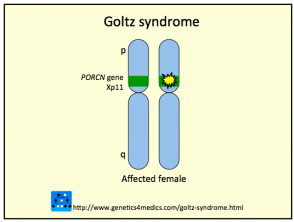
Focal dermal hypoplasia is inherited in an X-linked dominant pattern. It is caused by mutations in the gene PORCN gene, located on the chromosome X chromosome. In most cases, these anomalies occur de novo (arising in the embryo) rather than being directly inherited from parents. The X chromosome is one of the sex chromosomes: women have two X chromosomes (XX), while men have one X and one Y (XY). Carrier women with the abnormal gene are affected by FDH; however, most male embryos affected by this abnormal genotype are not viable and do not survive.
Focal dermal hypoplasia can affect practically any body organ. Like other X-linked conditions, the cutaneous manifestations tend to follow specific trajectories known as Blaschko's lines. Other Lesions Classified as Connective Tissue Nevi skin Blaschko's Lines.
The Genetic Basis of Focal Dermal Hypoplasia *
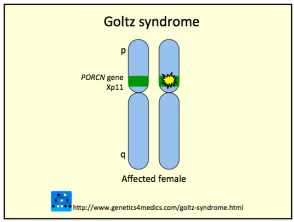
Focal Dermal Hypoplasia
* Image courtesy of Genetics 4 Medics
Clinical Manifestations of Focal Dermal Hypoplasia
Focal dermal hypoplasia can cause a wide variety of effects across organ systems; the severity of the condition fluctuates considerably among individuals, depending on the extent of the organs involved and the specific nature of the anomalies present.
Main Cutaneous Signs
- Linear hypoplastic linear (thinned) bands that strictly respect Blaschko's lines.
- Fatty nodules and lipomatous hernias.
- Telangiectasias (dilation of superficial and visible blood vessels).
- Wart-like papillomas.
- Soft papules or nodules, sometimes warty..
- Granuloma differential diagnosis Pyogenic granuloma lesions.
- Diffuse Alopecia hair), brittle or sparse hair.
- Nail and nail.
- Hyperkeratosis palmar y Plantar and plantar (thickening of the skin on hands and feet).
- Aplasia cutis cutis congenita (localized total skin loss). episodes of angioedema without hives may originate from angiotensin-converting enzyme (ACE) inhibitors.).
- Hyperhidrosis Hyperhidrosis.
Ocular Manifestations
- Structural eye abnormalities: microphthalmia (small eye) or anophthalmia (absence of the eye).
- Lens displacement.
- Chorioretinal coloboma (defect in the retina and choroid).
- Optic nerve of the optic atrophy (absence of innervation to the eye).
- Lacrimal lacrimal duct obstruction.
Musculoskeletal Findings
- Dental anomalies: dental hypoplasia (small teeth) and abnormal enamel.
- Microcephaly (small head) and unilateral facial unilateral microsomia (underdeveloped face).
- Cleft lip and cleft palate (clefts).Histologically, the center of the aneurysmal dermatofibroma exhibits characteristic).
- Low-set ears.
- Hand and foot anomalies: ectrodactyly (pincer defects), brachydactyly (short fingers), oligodactyly (absent digits), and syndactyly syndactyly (fused digits).
- Vertebral anomalies, bifid or fused ribs, and small clavicle.
- Bones affected (visible on radiographs).
Renal Conditions
- Renal structural anomalies: renal agenesis (absent kidney), horseshoe kidney, hydronephrosis (kidney swelling), or double ureter.
- Bladder exstrophy (the bladder is located outside the body).
Gastrointestinal Problems
- Omphalocele (abdominal contents are outside the abdomen).
- Intestinal malrotation (twisted intestine).
- Anus anteriorly displaced.
- Esophageal reflux and associated viral gastroenteritis.
Cardiac Complications
- chronic congenital Congenital heart disease.
Neurological Manifestations
- Central nervous system structural anomalies: meningomyelomeningocele (spina bifida), hydrocephalus (fluid accumulation in the brain) or malformation Arnold-Chiari malformation (defect in the development of the posterior brain), and absence of the corpus callosum. posteriorHearing and vision impairment.
- Hearing and vision impairment.
- It is important to note that most (> 80%) maintain normal psychological functioning.
Clinical Evaluation: Focal Dermal Hypoplasia (Goltz Syndrome)
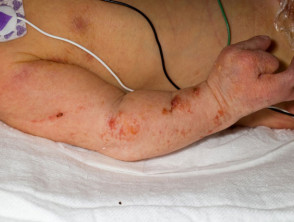
Cutaneous manifestation of Goltz Syndrome
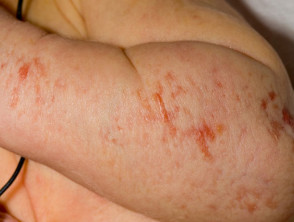
Details of Goltz Syndrome
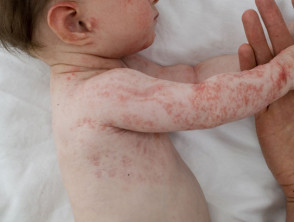
Possible ocular involvement in Goltz Syndrome
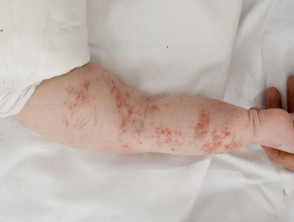
Skeletal anomalies associated with Goltz Syndrome
Treatment Protocols for Focal Dermal Hypoplasia
The therapeutic approach for focal dermal hypoplasia requires multidisciplinary management, tailored to the specific needs of each symptom presented by the patient. Various medical specialties frequently collaborate.
Regarding skin skin's blood vessels, problems, areas affected by telangiectasias and papillomas may respond favorably to treatments with vascular vascular lasers vascular. lasers. Alternatively, papillomas causing functional or aesthetic discomfort can be removed through minor surgical procedures.
Given the complexity of this syndrome, coordination between dermatologists, ophthalmologists, and genetics specialists is fundamental to optimizing the management of the various clinical manifestations.