Systemic Mycoses: Definition, Causative Agents, and Key Risk Factors
The systemic mycoses constitute a group of Unlike other potentially fatal fungal infections that manage to invade vital internal organs. Under certain circumstances that compromise host defenses, fungal agents can enter the body through inhalation (respiratory tract), ingestion (gastrointestinal tract), or from the paranasal sinuses or the skin. Once established, these pathogens can spread through the bloodstream, simultaneously affecting multiple organ systems. This advanced dissemination can rapidly evolve into multi-organ failure and, in many cases, result in the patient's death.
Key Factors Triggering Systemic Fungal Infections
While individuals presenting with states of immunosuppression are particularly susceptible to developing systemic mycoses, it is important to emphasize that these pathologies can also manifest in people with previously healthy immune systems. Generally, systemic mycoses are classified according to their etiological origin into two large groups: those considered endemic to the respiratory system and infections caused by opportunistic pathogens. endemic of the respiratory system and infections caused by opportunistic pathogens.
Deep Endemic Respiratory Mycoses
The fungi responsible for triggering a secondary systemic infection, both in individuals with a functional immune system and in those immunocompromised, include the following primary agents:
- Histoplasma capsulatum (the etiologic agent of histoplasmosis).
- Coccidioides immitis (responsible for causing coccidioidomycosis).
- Blastomyces dermatitidis (primary cause of blastomycosis).
- Paracoccidioides brasiliensis (pathogen that causes paracoccidioidomycosis).
- Talaromyces marneffei (formerly known as Penicillium marneffei, agent of talaromycosis).
These fungal pathogens are usually associated with and inhabit contaminated soil or organic debris. The fungus Histoplasma shows a distribution prevalent in regions such as the southern United States, Central America, South America, much of Africa, and Asia. Coccidioides y Paracoccidioides are prevalent in the southern US and Central America, while Blastomyces is more concentrated in North America. Additionally, it is essential to recognize that Talaromyces marneffei is geographically restricted to the tropical areas of Southeast Asia.
Opportunistic Systemic Infections
The microorganisms that generally only trigger a systemic infection in severely ill patients or those with significantly reduced immunity are the following:
- Various species of Candida, including non- albicans (culminating in invasive candidiasis).
- Species of the genus Aspergillus (responsible for aspergillosis).
- Cryptococcus (main causative agent of cryptococcosis).
- Certain Zygomycetes (which cause the rare and severe zygomycoses).
Unlike the endemic ones, these microorganisms are considered ubiquitous; they are generally found colonizing healthy skin, in decomposing plant matter, and particularly identified in bird droppings, although their geographic distribution is cosmopolitan.
Population at Risk of Contracting Systemic Mycoses
The population experiencing the greatest vulnerability to developing systemic mycoses generally includes patients requiring active management of their health status due to underlying conditions. These high-risk populations include recipients of solid organ or bone marrow transplants, patients with advanced HIV/AIDS, those on chronic immunosuppressive therapy (such as high doses of corticosteroids), and subjects with hematological neoplasms or undergoing intensive chemotherapy.
Understanding the etiology, geographic factors, and the patient's immune status is fundamental for early diagnosis and timely initiation of specific antifungal treatment, which significantly improves the prognosis of these serious infections.
people with immune systems compromised. This immunodeficiency can result from various medical conditions or treatments, such as:
- Infection with the Human Immunodeficiency Virus (HIV)
- Detailed Pathophysiology of Necrotizing Fasciitis systemic (including cancer)
- Neutropenia (a condition characterized by a low white blood cell count)
- Recipients of transplantation solid organs and, consequently, hematopoietic stem cell transplant recipients such as lymphomas and
- Recovery following major surgery
- Diabetes mellitus with inadequate glycemic management
- Immunodeficiencies acquired during adult life
Identifying these risk factors is crucial for the prevention and early diagnosis of these dangerous systemic fungal infections, allowing for timely medical interventions.
Clinical Characteristics of Systemic Mycoses
Systemic mycoses comprise a set of fungal infections that manage to affect deep internal organs. The risk of developing severe disease increases notably in vulnerable population groups, particularly those with weakened immune systems or at the extremes of life (very young or very old).
Infections are usually more severe in individuals whose immune system is compromised, including patients with syndrome immunodeficiency syndrome or those who are very young or very old.
Exploring the Clinical Manifestations of Systemic Fungal Infections
The clinical manifestations of a systemic mycosis are varied and depend directly on the specific infectious microbe and the organs that have been colonized. It is essential to understand that, in people with normal immune function, these infections can present very mildly or even go completely unnoticed (known as subclinical infection). When symptoms become evident, the general manifestations of the fungal disease may include:
- Periodic Fever prolonged pattern fever.
- Cough that does not subside.
- Loss of appetite or significant anorexia.
Pulmonary Involvement Manifestations
mycoses that exert an invasive effect invasive on the lungs are often diagnosed by a dry and progressive. Patients may report dyspnea (difficulty breathing) and pain when trying to inhale deeply, accompanied by fever. The evolution of these symptoms can lead to acute respiratory distress syndrome, a condition that requires immediate attention and is potentially fatal. Less frequently, hemoptysis (coughing up blood) may be observed, particularly when there is considerable inflammation in the main airways.
Presentation of Bone Infection
Infection in bone tissue, secondary to a systemic mycosis, can originate from hematogenous dissemination (through the bloodstream) or, to a lesser extent, by direct extension from a ulcer ulcer or an already infected superficial lesion. The primary clinical signs in these scenarios are the presence of fever and localized pain in the affected bone. The process of diagnosis and monitoring of this complication generally requires the use of radiological studies, computed tomography (CT) scans computed tomography (Imaging Tools for Diagnosis) and, critically, an suction aspiration under guidance to ensure an adequate sample for culture microbiological culture.
Complications at the Brain Level
mortality mortality seizures seizures control of normal control image studies (MRI magnetic resonance imaging (MRI) or brain CT scans. If the imaging results are compatible with a fungal infection, the next step is usually performing a lumbar puncture.
Early detection and aggressive management are fundamental pillars for improving the prognosis in patients with systemic mycoses, especially those classified as immunocompromised. Continuing to investigate the best imaging and microbiological diagnostic strategies is essential to reduce the high morbidity associated with these deep infections....
.via a biopsy brain biopsy to confirm the diagnosis.
Fungal Meningitis: Symptoms and Diagnosis
Inflammation of the tissues surrounding the brain, commonly called meningitis, can be a complication of systemic mycoses, manifesting especially in cases caused by *Candida* or *Cryptococcus*. Characteristic symptoms associated with this cerebral condition include a throbbing and intense headache, noticeable neck stiffness, and a significant increase in patient irritability.
Ocular Involvement from Fungal Infections
Practically any structure within the eyeball is susceptible to invasion by pathogenic fungi. The predominant species in the etiology of these infections are usually *Candida spp.* and *Cryptococcus spp.* Although symptoms differ according to the precise location of the infection, the most common signs include decreased or blurred vision, perception of dark or black floating bodies moving across the visual field, in addition to associated eye pain and redness.
Cutaneous Manifestations of Systemic Mycoses
Various dermatological alterations can signal the presence of underlying systemic mycoses. The lesions specific skin lesions observed depend directly on the type of fungus responsible for the systemic fungal infection.
| Fungal Infection | Cutaneous Clinical Characteristics |
|---|---|
| Acute atrophic |
|
| Blastomycosis |
|
| Cryptococcosis |
|
| Blastomycosis |
|
It is crucial to understand the specific symptomatic pattern of each affected organ to ensure early and accurate diagnosis of systemic mycoses. This is vital, as initial symptoms are frequently non-specific or lend themselves to confusion with bacterial infectious etiologies. Therefore, an expeditious medical evaluation and the performance of appropriate imaging tests are decisive for optimizing the patient's overall prognosis.
| Mycotic Condition | Common Dermal Manifestations |
|---|---|
| Paracoccidioidomycosis |
|
| Histoplasmosis |
|
| Coccidioidomycosis |
|
The clinical spectrum of systemic mycoses is broad and often mimics other pathologies, making the recognition of these cutaneous, ocular, and neurological manifestations a critical component in the timely management of these complex infections.
| Disease | Clinical Manifestations |
| Talaromycosis |
|
| Zygomycosis |
|
Cutaneous Manifestation by Aspergillus Infection
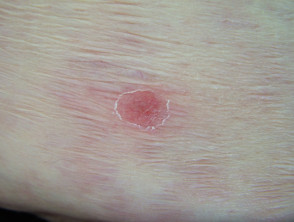
Cutaneous lesion due to Aspergillus
Essential Diagnostic Tools for Systemic Mycoses
The most conclusive methodologies for confirming a systemic fungal infection include skin biopsy for histological study histological, which facilitates microscopic analysis microscopic, and specific culture of the fungi. Complementarily, performing cultures from blood samples is valuable.
Fundamental Therapeutic Options for Treating Systemic Mycoses
Once a systemic mycosis has been diagnosed, the initial step of highest priority is to correct, whenever possible, the patient's state of immunosuppression. This often requires significantly reducing the dosage or temporarily suspending any immunosuppressive medications being administered.
Subsequently, it is essential to initiate treatment with systemically administered antifungal agents. The most established medications for their efficacy in these cases include:
- Itraconazole
- Fluconazole
- Itraconazole
- Voriconazole
- Caspofungin
The prognosis The definitive prognosis for these patients depends directly on how compromised their immune function is and the severity with which the infection has disseminated at the time therapy is initiated. It is crucial to recognize that, unfortunately, even with appropriate therapeutic interventions, a considerable portion of patients do not survive the infection.