Key Concepts: Chronic Plaque Psoriasis and PASI Measurement
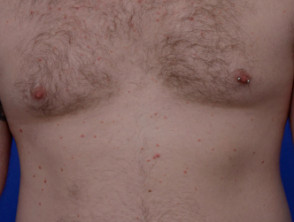
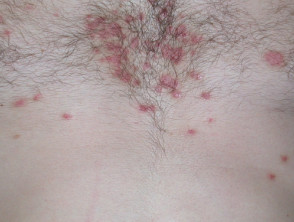
Psoriasis is a distinctive dermatological condition, characterized by the appearance of red and scaly skin. Among its manifestations, chronic plaque psoriasis is the most common form. This type manifests through scaly, erythematous (red), persistent, and frequently symmetrical plaques, predominantly located on the scalp, trunk, and limbs. The number of plaques can vary significantly, presenting notable redness, skin thickening, and characteristic scaling.
Illustrations of Chronic Plaque Psoriasis by Severity
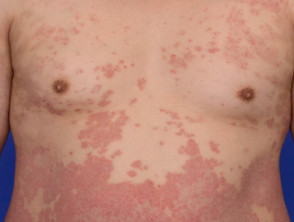
What Methodology Does the PASI Index Use?
The acronym PASI refers to the Psoriasis Area and Severity Index (Psoriasis Area and Severity Index). This method has been widely adopted by the medical community as a standardized, numerical way to quantify the extent and severity of a patient's chronic plaque psoriasis. The PASI score is fundamental in the design of clinical trials for medications and is used to establish eligibility for funded therapies, in addition to measuring the efficacy of the treatment administered.
- A PASI score below 5 suggests that chronic plaque psoriasis is classified as mild.
- A score between 5 and 10 indicates moderate involvement of chronic plaque psoriasis.
- A score above 10 classifies chronic plaque psoriasis as severe.
It is important to note that the maximum possible score achievable on the PASI index is 72, representing the most extensive and severe case.
What Does the Patient-Oriented PO-PASI Score Imply?
Recognizing the need for self-monitoring, DermNet NZ has developed the PO-PASI (Patient-Oriented Psoriasis Area and Severity Index) tool. This tool was specifically designed so that individuals suffering from chronic plaque psoriasis can make an approximate estimation of their own PASI score, facilitating personal tracking of the condition.
Basic Calculation of the PO-PASI
The PO-PASI score is determined through a series of evaluations focused on body coverage and the intensity of symptoms in the affected areas. This simplified method allows patients to actively participate in measuring their progress.
The score is calculated automatically.
The participant begins by selecting the diagram or photograph that best matches the area of skin affected by psoriasis in each of the four body regions:
- Regional nodal involvement
- Trunk
- Upper limbs
- Lower limbs.
Next, the participant chooses the photographs that best reflect the erythema, thickening, and desquamation (Fortunately, papular acrodermatitis of infancy generally has a self-limiting and favorable course. The condition tends to resolve completely in a period ranging from 2 to 8 weeks, usually after a mild) of the psoriasis plaques in each of these four areas. Subsequently, the tool generates a certificate containing the total score.
Utility and Applications of the PO-PASI
The PO-PASI is essential for a dermatologist or other healthcare professional to conduct a remote assessment of the patient. This allows for determining the most appropriate treatment and monitoring its effectiveness. Additionally, the patient can keep a detailed record of their own clinical evolution.
Technical Validation of the PO-PASI Index
Because the design of the PO-PASI tool was finalized during the COVID-19 lockdown, rigorous validation of its accuracy has not yet been possible. During the lockdown period in New Zealand, care for psoriasis patients has been primarily conducted through teledermatology, including telephone consultations, video conferences, and electronic referral systems.
Prospective validation of the PO-PASI will consist of comparing the score obtained by the patient using the tool (PO-PASI) with the PASI score determined by a healthcare professional after an in-person examination. This comparison will be conducted as part of a research study approved by the ethics committee. The Department of Dermatology and the Waikato District Health Board plan to execute this study during 2020 and 2021.