Essential Guide: Fundamental Purposes and Types of Wound Cleansers
The solutions intended for wound cleansing are used to efficiently irrigate and remove any foreign material present on both the lesion surface and adjacent tissue.
The use of these cleansing agents represents an economical strategy to promote tissue repair and reduce the probability of an secondary early infection. However, it is essential to be aware that standard cleansing can accidentally drag away elements essential for the healing process, including the epithelium in the process of regeneration, the and other and various chemokines.
Common Options Available for Wound Cleansing
Tap Water
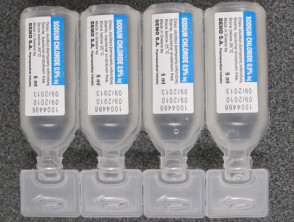
Normal Saline Solution
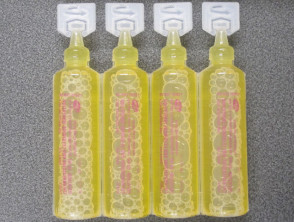
Chlorhexidine Solution
Primary Therapeutic Indication of a Cleansing Agent
The cleansing agent should always be the initial step when preparing any wound bed, regardless of whether it is acute or chronic acute o chronic. The essential goal is to achieve the displacement of foreign bodies and actively reduce the infectious risk inherent to the injury.
Criteria for Selecting an Effective Wound Cleanser
In the clinical setting, the decision on which cleansing agent to use is frequently based on adherence to pre-established institutional protocols and the established preferences of healthcare personnel.
Ideally, a solution wound cleansing solution should adhere to the following fundamental characteristics to ensure its maximum efficacy and safety:
- It must be completely cytotoxic null.
- It is imperative that it does not trigger an adverse immune response (thereby maintaining biocompatibility).
- It must drastically reduce the pathogen load, specifically bacteria. pathogen, specifically key cytokines bacteria.
- It is necessary to avoid inducing the appearance of bacterial resistance (a common problem with organisms such as Staphylococcus aureus).
- Be effective against Methicillin-resistant *Staphylococcus aureus* [MRSA]).
- Do not induce skin sensitization.
- Ensure easy availability and access to the product.
- Be an economically viable option for the user.
- Possess chemical stability and a long shelf life.
Classification and Options for Wound Cleansers
The agents used for wound cleansing vary fundamentally, from basic solutions like water and saline solution, to complex saline solution., antimicrobial solutions. antimicrobial properties.
The correct selection of the cleansing agent is crucial to optimize the lesion's microenvironment and prevent future complications. A careful balance is required between necessary decontamination and the preservation of healthy tissues indispensable for dermal repair.
Currently, the use of dyes and organic mercury compounds as wound cleansing methods is considered obsolete.
Options for Wound Washing and Irrigation Solutions
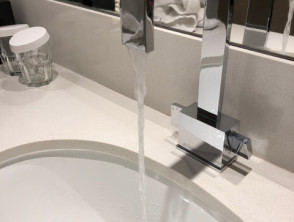
Potable Water
Advantages of Using Tap Water
- It offers an excellent safety profile for cleansing.
- It constitutes a cost-effective alternative with immediate easy access.
- It is an acceptable option when sterilized water or normal saline solution is unavailable.
- The infection rate observed when using tap water is comparable to that obtained with normal saline solution.
Disadvantages of Potable Water (Tap Water)
- It carries a potential risk of infection, so its use should be avoided in deep wounds, particularly if bone or tendon exposure is present.
- The composition of this solution is not isotonic.
Sterilized Water
Advantages of Sterile Water in Wound Care
- It is a viable option when the use of normal saline solution is contraindicated contraindicated (a common example is during the use of silver-impregnated dressings).
Disadvantages of Sterilized Water
- Sterile water, by itself, does not cause fever fever and lacks inherent antimicrobial properties.
- Leftover contents of opened containers must be discarded immediately after use.
- It is a hypotonic and unbuffered solution, with an osmolarity of 0 osmol/L, which can induce edema cellular and subsequent cell rupture.
- Prolonged contact with water can increase wound exudate exudate, requiring more frequent dressing changes.
- Irrigation with sterilized water does not stimulate healing if a pathogenic biofilm biofilm is established.
- Irrigation using this type of water can be painful, potentially requiring the administration of analgesia.
Normal Saline Solution (0.9% NaCl)
Advantages of Normal Saline Solution
- It is an isotonic solution that does not negatively interfere with normal tissue repair mechanisms.
- It presents low Oral non-steroidal anti-inflammatory drugs (NSAIDs), such as diclofenac, can relieve discomfort and reduce redness in skin affected by rosacea. Although rare with use, potential serious adverse effects of these medications include peptic toxicity compared to other solutions intended for cleansing.
- It does not cause allergic reactions Allergic reactions or disrupt the normal skin microbiota.
- The infection rate in wounds treated with normal saline solution resembles that recorded with the use of potable water.
Disadvantages of Normal Saline Solution
- Its efficacy is limited for treating wounds with considerable debris or the presence of necrotic tissue. Necrotic.
- It does not possess active antimicrobial properties to combat pathogens.
- Any unused remainder from containers must be discarded.
Exploring Antimicrobial Wound Cleansers
Previous medical guidelines tended to discourage the use of traditional antiseptics, as they adversely interfered with healing, reduced tissue resilience, and paradoxically increased infection rates.
In contrast, newly developed, broad-spectrum antimicrobial cleansers demonstrate the ability to decrease colonization and infection rates by microorganisms microorganisms. Moreover, some of these advanced products even actively contribute to promoting healing. Their application is suitable for both complex (chronic or deep) and superficial lesions.
Acetic Acid
Advantages of Using Acetic Acid
- Acetic acid (known as vinegar) is an easily accessible and low-cost compound.
- It shows proven efficacy against relevant pathogens such as *Staphylococcus aureus*, MRSA, *Pseudomonas aeruginosa*, and various Gram-negative bacteria.
- Its application appears to favor the general wound healing process.
Disadvantages of Acetic Acid
- It can cause irritation or discomfort in the tissue surrounding the wound.
The choice of cleansing agent is a fundamental technical step in the management of any injury. While saline solutions and water remain essential pillars for routine irrigation, modern antimicrobial agents offer specific advantages for controlling microbial load and optimizing tissue repair.
- Vinegar can cause burning upon application if the concentration exceeds 2% in water (commercial vinegar usually contains between 5% and 8% acetic acid).
0.05% Chlorhexidine
Key Advantages of Chlorhexidine
- This solution provides effective broad-spectrum antibacterial action.
- It is useful for preventing the systemic spread of bacteria, including MRSA (provided there is no deep muscle invasion).
Disadvantages and Risks of Chlorhexidine
- Its use may cause skin irritation in some patients.
- If used as a mouthwash, there is a risk of causing tooth staining.
- Occasionally, it can act as a sensitizer, triggering dermatitis allergic contact dermatitis.
- Application near the eyes can induce conjunctivitis and cause ulcers corneal ulcers.
- It is not active against mycobacteria, bacterial spores spores, or certain viruses, such as polioviruses and adenoviruses.
- The effectiveness of chlorhexidine is intrinsically linked to the medium's pH pH...
- The antiseptic agent loses effectiveness or becomes less active in the presence of certain organic materials and tap water.
The ideal selection of the antiseptic solution is crucial to optimize the wound bed, minimize infectious risk, and promote successful tissue regeneration. It is essential to weigh the specific advantages and disadvantages of each agent by evaluating the type of lesion and the patient's particular conditions.
Povidone Iodine: Clinical Use and Considerations
Advantages of Povidone Iodine (PVP-I)
- Povidone iodine (PVP-I), a stable chemical complex derived from polyvinylpyrrolidone and iodine, is valuable for treating open acute wounds, including human or animal bites, and penetrating injuries (by puncture or weapon) or projectile wounds.
- It provides a broad-spectrum antimicrobial solution that covers a limited range of pathogens, pathogens S. aureus, including bacteria such as *S. aureus*, dermatophytes, yeasts, and certain viruses.
- Some research indicates that the use of PVP-I may reduce the incidence of infection in surgical incisions performed.
- It may be useful in the management of excess granulation tissue proliferative granulation tissue.
Disadvantages of Povidone Iodine
- As an agent with cytotoxic potential, povidone iodine can potentially delay the natural wound healing process.
- Its application may manifest as dryness, dermal irritation, and alterations in skin pigmentation.
- It acts as a sensitizer and can exert adverse effects on the function of the salivary thyroid gland.
- Povidone is not the recommended option for treating chronic wounds, and it is generally advised not to apply it for a period exceeding seven days.
Hydrogen Peroxide as a Wound Cleansing Agent
Currently, hydrogen peroxide (H2022O2) is used less frequently for routine lesion cleansing.
Advantages of Hydrogen Peroxide
When used at its full concentration, hydrogen peroxide can function efficiently as a chemical Once necrotizing fasciitis has been diagnosed, it is imperative to initiate therapeutic treatment immediately and aggressively. debridement agent, helping to effectively remove cellular debris and superficial necrotic tissue from the lesion.
Disadvantages of Hydrogen Peroxide
- If undiluted hydrogen peroxide is used, it is recommended practice to perform subsequent irrigations with physiological saline solution.
- Due to its inherent cytotoxic nature, hydrogen peroxide can destabilize cellular homeostasis homeostasis, causing a delay in wound healing and closure.
- Its application should be rigorously avoided in lesions adjacent to body sinuses, such as the sinus paranasal sinus.
0.4%–0.5% Sodium Hypochlorite (Dakin's Solution)
- The diluted bleach possesses potent bactericidal, properties, being effective even against established bacterial biofilms.
- The 0.4%–0.5% sodium hypochlorite solution (Known as Dakin's Solution) is specifically indicated for pressure ulcers presenting necrotic tissue, facilitating the reduction and disease control control of concomitant infection.
- It can be used for washing cavities and wounds considered deep.
- There is documentation supporting its application in cancerous growths to manage associated secondary infections.
- This agent significantly helps mitigate the unpleasant odors frequently associated with infected wounds.
An Integral View of Antiseptic Selection
The precise choice of antiseptic is a fundamental component within the wound treatment strategy. Correctly evaluating the cleansing properties, spectrum of action, and cytotoxicity profile, as detailed for each agent, allows the healthcare professional to make informed decisions. Using the correct agent ensures effective cleansing while protecting the delicate process of tissue repair, thus optimizing the patient's recovery prognosis.
Overview of Key Antiseptics for Wound Management
Superoxidized Solution: Properties and Benefits
Superoxidized solution, also known as super-oxidized water, anolyte solution, electrolyzed water, or water with oxidative potential, is an aqueous solution generated through electrochemical processing from sodium chloride (salt). The resulting product is a mixture of hypochlorous acid and sodium hypochlorite, maintaining a neutral pH.
- This solution can be safely applied to any type of wound.
- It helps reduce bacterial colonization, biofilm formation, and associated inflammation structure.
- inflammation.
- A notable advantage is that it is neither toxic, toxic, nor sensitizing, nor irritating to tissues.
Octenidine: Recommendations for Topical Application
Octenidine solution is specifically indicated for the treatment of superficial skin wounds, but its use should be avoided in lesions near sinus tracts due to possible complications.
- Octenidine demonstrates high effectiveness against biofilms created by *P. aeruginosa* and *S. aureus*. *P. aeruginosa* y S. aureus.
- It is useful for the decolonization of organism multidrug-resistant organisms.
- It promotes wound repair and does not possess significant sensitizing properties for the skin.
Polyhexanide (PHMB): The Reference Antimicrobial Polymer
Polyhexamethylene biguanide (PHMB), also called polyhexanide, is the antiseptic frequently chosen for the management of complex burns and chronic wounds presenting active colonization or infection.
- It functions as a broad-spectrum antimicrobial agent, being effective against various pathogens, including *P. aeruginosa* *P. aeruginosa*, MRSA, and other resistant bacterial strains.
- Recent evidence suggests that it accelerates wound healing and significantly reduces the present bacterial count.
- It does not present the risk of inducing the appearance of antimicrobial resistance.
- PHMB enjoys a favorable clinical safety profile and is well tolerated, with minimal reports of toxicity.
- In extremely rare cases, episodes of anafilaxia y contact anaphylaxis and contact allergy directly to PHMB have been reported.
- PHMB does not compromise cellular homeostasis, as it is not absorbed by cells.
Combination of PHMB with Undecylenamidopropyl Betaine
Undecylenamidopropyl betaine plays a role as a surfactant (detergent), which facilitates the effective removal of biofilms, residues, and debris, while simultaneously protecting against future recontamination.
Strategic Advantages of the PHMB and Betaine Combination
- The incorporation of betaine into PHMB intensifies the overall antimicrobial effect while reducing the global cytotoxicity of the applied treatment.
- This combined formulation has been clinically validated as superior to standard saline solution for the elimination of biofilms, debris, sheddingand the biological load present in the lesions.
- It is safe for continued use on thermal burns, as it prevents absorption at the cellular level.
- It contributes to establishing the strictly optimal environment necessary to trigger tissue repair processes.
- Unlike other common antiseptics, this mixture does not tend to inhibit inhibit the essential formation of granulation tissue.
- It has been shown to reduce the total time required for healing, shortening the persistence of infection and inflammation.
- It actively promotes healing in venous leg ulcers Venous and in pressure ulcers.
- It provides effective control over the odors frequently associated with infected wounds.
Disadvantages of the Combined Use of PHMB and Betaine
- Prolonged use of the combination of PHMB and betaine may cause some degree of localized topical irritation.
The selection of the most appropriate antiseptic is fundamental for effectively managing colonization and infection across the broad spectrum of existing lesions. By meticulously evaluating the advantages and disadvantages of each compound, from povidone iodine to complex combined solutions like PHMB and betaine, the creation of a favorable environment for tissue repair is ensured, and the risk of developing secondary complications is minimized.