What is Waardenburg syndrome?
Waardenburg syndrome is a rare genetic disorder characterized by deafness and anomalies pigmentation, such as:
- White forelock
- Hypopigmented patches (pale) of skin
- Iris heterochromia (different colored eyes)
Waardenburg syndrome may also be associated with musculoskeletal defects and Hirschsprung syndrome.
Waardenburg syndrome is named after Petrus Johannes Waardenburg, a Dutch ophthalmologist, who noted that iris heterochromia often accompanied deafness.
Waardenburg Syndrome
Iris heterochromia
White forelock
Who gets Waardenburg syndrome?
Waardenburg syndrome can be inherited or arise spontaneously. It affects men and women equally and can affect all races.
It has a population frequency of 1 in 42,000 and is responsible for 1-3% of all cases of congenital congenital deafness.
What causes Waardenburg syndrome?
Waardenburg syndrome is believed to be a neurocristopathy. It is the result of abnormalities in neural neural crest differentiation during embryonic development.
Several different gene mutations mutations can cause Waardenburg syndrome, leading to some differences in signs and symptoms. Expression and penetrance are also variable.
- WS1 and WS3 are caused by mutations in the PAX3 gene on chromosome 2q
- WS2A - MITF (microphthalmia associated transcription factor) gene, chromosome 3p
- WS2B - chromosome 1p
- WS2C - chromosome 8p
- WS2D: SNAI2 gene, chromosome 8q
- WS2E - SOX10 gene, chromosome 22q
- WS4A - EDNRB gene on 13q
- WS4B - EDN3 gene on 20q
- WS4C - SOX10 gene (as for WS2E)
Several types of , originating from a mutations can cause Waardenburg syndrome: insertions, deletions, frameshifts, splicing alterations, nonsense or missense mutations.
Most types of Waardenburg syndrome are autosomal dominant, meaning that only one affected gene needs to be passed on to a child for them to have the syndrome. Transmission of defects in EDN3 or EDNRB is more complex. They are usually autosomal recessive, although cases of autosomal dominant transmission with incomplete penetrance have been described.
Other mutations in some of the above genes genes can cause related clinical syndromes, such as Tietz syndrome (MITF gene), piebaldism (SNAI2 gene), PCWH (SOX10 gene), or ABCD syndrome (EDNRB gene).
What are the clinical features of Waardenburg syndrome?
The features are present from birth. As it is a rare condition and the clinical signs can be subtle, diagnosis may not be made until later in life.
Four main clinical subtypes of Waardenburg syndrome have been identified.
Type 1
Type 1 is the most common subtype of Waardenburg syndrome. Features include:
- Sensorineural hearing loss
- Typical facial structure, with dystopia canthorum (lateralouter displacement of the medial eye corners), broad nasal root, and synophrys (meeting of the eyebrows at the midline) midline)
- Hypopigmented patches of skin and hair hair
- Pigmentary abnormalities abnormalities segmental; isohypochromia iridis (pale blue eyes); or abnormal pigmentation of the retina
Type 2
Type 2 has clinical features similar to Waardenburg syndrome type 1, but the inner canthi are normal.
Type 3
Type 3 (Klein-Waardenburg syndrome) also has features similar to Waardenburg syndrome type 1, but with musculoskeletal anomalies, such as muscle hypoplasia, flexion contractures o syndactyly (fused digits)).
Type 4
Type 4 (Shah-Waardenburg syndrome) has features similar to Waardenburg syndrome type 2 but with Hirschsprung syndrome (a condition resulting from the absence of optic nerve cells in the muscles of part or all of the large intestine).
How is Waardenburg syndrome diagnosed?
Diagnosis of Waardenburg syndrome is based on clinical features. In 1992, the Waardenburg Consortium developed major and minor criteria for diagnosis.
Major criteria
- Sensorineural hearing loss
- Iris pigmentary abnormality, anomaly, such as iris heterochromia: complete, partial, or segmental; isohypochromia iridis; or pigmentary abnormalities of the retina
- Hair pigmentation abnormalities, such as white forelock, eyebrows, or eyelashes
- Dystopia canthorum: lateral displacement of the inner canthus
- First-degree relative with Waardenburg syndrome
Minor criteria
- Hypopigmented skin patches
- Synophrys
- Broad nasal root
- Hypoplasia of the alae nasi
- Premature aging of the scalp
A clinical diagnosis of Waardenburg syndrome type 1 requires 2 major criteria or 1 major and 2 minor criteria.
The W Index
The W Index can be calculated to determine if dystopia canthorum is present.
- a = inner canthal distance
- b = interpupillary distance
- c = outer canthal distance
- X = (2a- (0.2119c + 3.909)) / c
- Y = (2a- (0.2479b + 3.909)) / b
- W = X + Y + a / b
- A W Index > 1.95 is indicative of dystopia canthorum.
Genetic sequencing of the PAX3 gene for mutations causing Waardenburg syndrome can be performed as part of genetic counseling for family members. Prenatal PAX3 mutation testing is possible via chorionic villus sampling o amniocentesis., but is rarely done. This is due to the clinical variation found within Waardenburg syndrome, as the presence of the mutation will not indicate which clinical features will be present or their severity.
What is the treatment for Waardenburg syndrome?
There is no direct treatment for Waardenburg syndrome itself, and as it is a genetic disease, there is no cure. Genetic counseling may be beneficial for affected patients who wish to start a family.
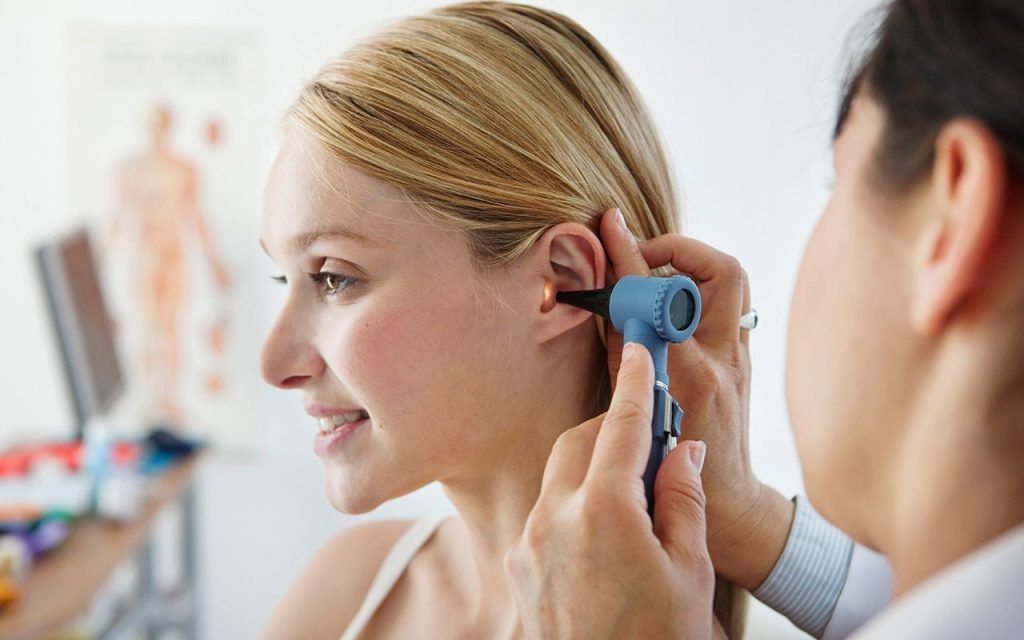
- Audiology exams should be performed on children suspected of having Waardenburg syndrome to evaluate their hearing loss. Hearing aids or cochlear implants may be necessary.
- Patients with Hirschsprung syndrome may require surgery to remove the affected segment of the intestine.
- Hypopigmented skin patches are more susceptible to sun damage, so sun protection is important.
What is the outcome of Waardenburg syndrome?
Waardenburg syndrome is a chronic chronic condition and the features will remain throughout life. Life expectancy is normal.