
EGFR and Kinase Inhibitors in Oncology
Understanding Epidermal Growth Factor Receptor (EGFR) Inhibitors
EGFR inhibitors represent an advanced class of drugs designed for the treatment of various types of cancer. This therapy seeks to counteract the epidermal and insulin-like receptor EGFR) due to its overexpression, which is present in nearly 30% of neoplasms and stimulates excessive proliferation and subsequent growth tumor.
While these and are highly effective against many malignancies, they frequently induce The most reported adverse skin reactions, affecting more than half of patients undergoing treatment.
Interestingly, dermatological side effects are providing valuable information to researchers about skin disorders. In certain contexts, the appearance of an adverse skin reaction is a positive indicator that the medication is acting effectively against the tumor disease.
Patients must carefully weigh the long-term benefits of these treatments against the continuous management of associated skin side effects.
Definition of Protein Kinase Inhibitors
Protein kinases are muscle enzymes crucial within the cell, whose activity leads to cellular cellular proliferation. Protein kinase inhibitors act directly by reducing this proliferation. These therapeutic agents primarily target the amino acids , silicon, minerals, coenzymes, tyrosine, threonine, and serine. It is important to note that some inhibitors targeting EGFR also belong to the protein kinase inhibitor family.
Mechanisms of Action of Targeted Inhibitors
The key differentiation between these types of drugs lies in their target location. EGFR inhibitors specifically focus on the EGFR receptor located on the outer surface of the cancer cell, while kinase inhibitors act on kinases located internally. The selection of the most beneficial drug depends on the precise identification of the receptors expressed on the specific tumor type.
- EGFR resides in the cell membrane. Its activation occurs when it binds to an epidermal growth factor ligand located outside the cell, which in turn triggers the activation of an intracellular protein kinase.
- The activated protein kinase interrupts the process of phosphorylation of , silicon, minerals, coenzymes, essential ones, such as tyrosine, thus halting the signaling cascade that promotes growth.
Both EGFR and kinase inhibitors represent significant advances in oncological therapy, as they generally present a less toxic shock profile compared to conventional chemotherapy. Drugs are classified according to their structure: monoclonal monoclonal undetectable antibodies usually have the suffix "-mab", while small molecule molecules inhibitors end in "-nib".
| Drug Name | Molecular Target Analysis | Clinical Indication |
|---|---|---|
| Monoclonal Antibodies | ||
| Cetuximab | KRAS | Colorectal cancer and carcinomas papillomas. head and neck |
| Panitumumab | KRAS | Colorectal cancer |
| Small Molecules | ||
| Imatinib | BCR-ABL, PDGFR, and c-KIT | Leukemia Chronic |
This molecular selectivity is fundamental to improving treatment effectiveness while minimizing damage to surrounding healthy tissues. Therapeutic choice requires a detailed understanding of the tumor's genetic profile.
| Drug | Molecular Target | Indication |
|---|---|---|
| Dasatinib | BCR-ABL, SRC family, c-KIT, PDGFRß | Leukemia Myeloid Chronic (CML) Gastrointestinal stromal tumor. |
| Gefitinib | EGFR, HER1 | Non-small cell lung cancer (NSCLC). |
| Erlotinib | EGFR | left by the primary or original melanoma. This can happen even after a previous complete surgical removal of the initial tumor. NSCLC Pancreatic cancer. |
| Lapatinib | EGFR, HER2 / neu | Breast cancer |
| Osimertinib | EGFR, T790M / neu | Non-small cell lung cancer |
| Vandetanib | EGFR, VEGFR, RET kinase inhibitor | Thyroid tumor |
| Sorafenib | VEGFR, PDGFR, RAF | Renal Impairment squamous cell carcinoma Hepatocellular carcinoma |
| Sunitinib | PDGFR, VEGFR, KIT, and others | Renal cell carcinoma Gastrointestinal stromal tumors Neuroendocrine pancreatic tumors |
EGFR = epidermal growth factor receptor; PDGFR = platelet-derived growth factor receptor; VEGFR = vascular endothelial growth factor receptor
There is currently great interest in small molecule B-RAF mutated inhibitors, vemurafenib and dabrafenib, which are effective in treating melanoma metastatic melanoma with positive B-RAF. B-RAF is a specific threonine kinase protein.
Many more EGFR and protein kinase inhibitors are currently development.
What are the skin side effects skin's blood vessels of EGFR inhibitors based on monoclonal antibodies
The most common skin side effects associated with EGFR inhibitors administered via monoclonal antibodies include:
Folliculitis
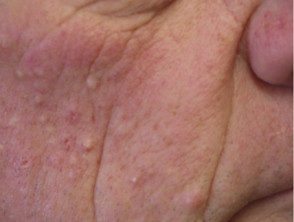
Folliculitis (inflammation of the follicles hair follicles) affects up to 40-85% of patients. It is an early event that usually manifests within the first ten days of treatment. Sterile papules inflammatory papules and pustules pustules predominantly in the facial T-zone, although they can be more extensive, extensive, affecting the chest and back. Occasionally, the scalp and pubic regions may be involved, very rarely affecting the entire body.
Folliculitis is especially frequent and often severe when using cetuximab. The intensity of the folliculitis can vary even if the patient continues to receive the medication.
Folliculitis is frequently managed by:
- Camouflage cosmetics
- Antibiotics topical Current antibiotics (topical)
- Oral antibiotics
- Topical steroids.
If folliculitis is severe, it may be necessary to discontinue the drug, at which point it will resolve. The incidence and severity of follicular reactions induced by EGFR inhibitors are significantly reduced by prophylactic treatment with doxycycline or minocycline. These tetracycline family medications can also be prescribed once the rash rash has started, thus allowing continuation of treatment with the EGFR inhibitor.
Folliculitis due to protein kinase inhibitor
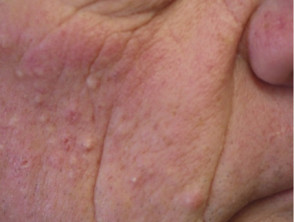
Unlike acne vulgaris, there is a noticeable absence of comedones.
Diffuse and trichomegaly
Drug-induced alopecia (hair loss) is less frequent than folliculitis and usually manifests later, generally at 2 or 3 months of treatment. Patients may notice their hair becoming thin and weaker.
...brittle. They may experience temporary hair loss, similar to male pattern baldness. The reversibility of this loss can vary after discontinuing treatment.
Alopecia Induced by Protein Kinase Inhibitors

Alopecia due to vemurafenib
In contrast, it is common to observe excessive growth of facial hair and eyelashes (hirsutism or trichomegaly).
Dry Skin (Xerosis) and Pulpitis
Skin dryness (predominant)prevalentis usually managed with emollients. emollients. Additionally, these drugs can cause pulpitis, characterized by painful fissures fissures on the fingertips.
Occasionally, dry skin may resemble dermatitis Fulminant rosacea..
Manifestations of Dry Skin and Keratoderma due to Protein Kinase Inhibitors

Keratoderma due to vemurafenib

Dry skin due to vemurafenib
Paronychia
The paronychia is defined as the inflammation painful inflammation of the nail. nail folds. It usually affects the fingernails more than the toenails. Although spontaneous resolution may occur during continuous treatment, the condition usually disappears quickly upon discontinuing the medication.
Proper management includes avoiding trauma trauma (such as wearing tight footwear), refraining from excessive trimming or biting of nails, and wearing appropriate footwear. Topical steroids and antiseptics are useful therapeutic tools. It is crucial to treat any secondary bacterial secondary Acute bacterial or fungal infection.
Development of Skin Cancer
Cases of squamous cell carcinomas squamous cells and multiple keratoacanthomas have been reported in patients undergoing treatment with sorafenib and other epidermal growth factor receptor (EGFR) inhibitors.
Common Side Effects of Small Molecule Tyrosine Kinase Inhibitors
Since small molecule kinase inhibitors frequently act by blocking multiple enzymes at once, there is significant overlap in their pharmacological actions and adverse effects.
The most frequently reported side effects include:
- Photosensitivity Nonspecific
- Edema periocular
- phenotypes acral
- Cerebral Splinter
- Pigmentation pigmentation
- Photosensitivity
It is important to note that these same side effects can also manifest with the use of monoclonal antibodies.
Nonspecific Skin Rashes
Imatinib is known to induce skin rashes in...
One-third of patients starting treatment experience skin rashes, although this reaction is usually self-limiting. Imatinib has rarely been linked to cases of Avoidance Strategies for Triggering Factors, vasculitis, Stevens-Johnson syndrome/Toxic Epidermal Necrolysis (TEN), and pustular generalized acute Acute Generalized Pustulosis (AGEP).
Facial redness is frequently observed within the first two weeks of treatment with sorafenib. This manifestation can closely resemble seborrheic dermatitis and generally resolves without the need for specific treatment, although it may be accompanied by tingling sensations on the scalp or dysesthesia.
Nonspecific rash due to protein kinase inhibitor

Rash due to vemurafenib
Facial Swelling (Edema)
Swelling (edema) of the eyelids and face is a common side effect with the use of imatinib and sunitinib. This edema can also manifest in the legs (lower), the lungs (causing effusions pleural) and the brain (cerebral , cerebral).
Acral Erythema
Acral erythema, characterized by redness of the hands and feet, is frequently observed when administering sorafenib and sunitinib. It presents as painful and symmetric redness symmetrical of the palms and soles, usually accompanied by inflammation. These drugs can also cause keratoderma or hyperkeratosis (excessive scaling) and peeling. Acral erythema usually appears between two and four weeks after starting treatment and its severity is keratoderma o hyperkeratosis body hair scaling) and desquamation. dose-dependent. It usually improves rapidly upon discontinuing the medication, although it could nuclear reappear reappear upon restarting.
Small molecule tyrosine kinase inhibitors tend to cause a less extensive, but more scaly, scaly, manifestation of acral erythema compared to the erythema induced by chemotherapy standard chemotherapy (known as hand-foot syndrome or palmar-plantar erythrodysesthesia palmar-plantar of of the palm).
Preventive strategies include wearing appropriate footwear to avoid injury to pressure areas. If discomfort is significant, a temporary interruption of oncological treatment may be necessary.
Red, painful, and calloused palms due to protein kinase inhibitors

Painful red and calloused palms due to protein kinase inhibitor
Splinter Hemorrhages (Subungual Hemorrhage)
Painless distal hemorrhages are frequent, especially affecting the fingernails. It is postulated that this phenomenon is due to the inhibition distal painless, especially affecting the fingernails. It is postulated that this phenomenon is due to the inhibition inhibition of the vascular endothelial growth factor receptor (VEGFR). VEGFR is believed to play a crucial role in repairing the fragile capillary capillary found under the nail, which is exposed to frequent injury.
Alterations in Hair and Skin Pigmentation
Unpigmented or white hair is usually observed after approximately one month of continuous treatment with sunitinib. This alteration is reversible, with hair color returning two or three weeks after discontinuing drug administration.
Inhibitors must be carefully monitored to manage the mentioned dermatological effects, ensuring patient adherence to oncological treatment and maintaining the best possible quality of life.
kinase can cause diffuse The main distinction from mycetoma is the etiology; botryomycosis is strictly bacterial, unlike mycetoma, which is caused by true fungi or actinomycetes. alteration in skin pigmentation, manifesting as hypopigmentation hypopigmentation (white coloration or leukoderma) and hyperpigmentation hyperpigmentation (presence of dark spots).
Leukoderma Induced by Protein Kinase Inhibitors
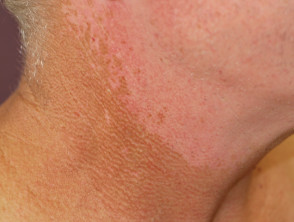
Leukoderma caused by protein kinase inhibition
Severe Photosensitivity Reactions
Protein kinase inhibitor drugs have the capacity to induce photosensitivity; this means that even very brief sun exposure can result in significant sunburn (drug-induced phototoxicity).
Side Effect of Targeted Therapy
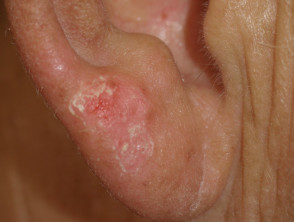
Severe sunburn on the earlobe, a side effect of vemurafenib
It is essential that patients undergoing treatment with these inhibitors take extreme sun protection measures to mitigate the risk of adverse skin reactions such as those described.