Understanding Ramsay Hunt Syndrome: Causes, Symptoms, and Diagnosis
Ramsay Hunt syndrome is defined as a rare facial **peripheral neuropathy** caused by the reactivation of the varicella-zoster virus (VZV). This reactivation occurs specifically in the geniculate ganglion of the seventh cranial nerve (facial nerve), which is responsible for facial innervation.
- The key clinical manifestations of Ramsay Hunt syndrome include **unilateral** facial weakness and the appearance of painful vesicles. These skin lesions typically appear in the external auditory canal ipsilateral to the paralysis or inside the oral cavity.
- On occasion, the involvement may compromise the VIII cranial nerve, causing auditory symptoms (hearing loss) and/or vestibular symptoms (such as vertigo or dizziness). The infection also has the potential to spread to other cranial nerves, including pairs III, IV, V, VI, IX, X, XI, and XII.
- It is important to note that, in some patients, skin vesicles do not develop; in these cases, the condition is called zoster *sine herpete*.
This condition also has other medical names, such as herpes zoster oticus, geniculate ganglionitis, or Ramsay Hunt disease. The name was formalized by the **neurologist** James Ramsay Hunt in 1907.
Demographic Profile: Who Develops Ramsay Hunt Syndrome?
Ramsay Hunt syndrome predominantly affects individuals who have already had chickenpox, as this is the source of latent VZV.
- It is considered an uncommon condition, with an estimated **incidence** of about 5 cases per 100,000 inhabitants.
- There is a slight predominance in the female sex over the male sex.
- It mainly affects the adult population, especially those over 60 years of age, although its occurrence in the pediatric population is exceptional.
- This syndrome is responsible for 12% of all cases of peripheral facial **paralysis**.
- Furthermore, it constitutes the second most common cause of non-**traumatic** peripheral facial **paralysis**.
Detailed Etiology: What Triggers Ramsay Hunt Syndrome?
After **primary** VZV infection (chickenpox), the virus enters a **latent** state, remaining inactive in various **neurons**, including the dorsal root ganglia, autonomic **ganglia**, and cranial nerve ganglia. The syndrome manifests when reactivated VZV resides specifically in the geniculate ganglion of the VII cranial nerve. It is possible for VZV to spread through **axons** to other cranial nerves that share blood supply with that ganglion.
VZV reactivation becomes more likely in individuals who have factors that compromise their immune system. This includes:
- Patients with underlying immunodeficiencies, such as those with human immunodeficiency virus (**HIV**) or some type of **malignancy**.
- People undergoing therapies that reduce the immune response, including the use of **corticosteroids**, **chemotherapy**, or **radiotherapy**.
- Individuals exposed to significant physical or emotional stress, or in the context of an acute infection.
Distinctive Clinical Manifestations of Ramsay Hunt Syndrome
Symptoms and Key Characteristics of Ramsay Hunt Syndrome
Ramsay Hunt syndrome is distinguished by two main manifestations: unilateral facial paralysis and the appearance of a painful vesicular rash localized in the ear, also affecting the mucous membrane of the oropharynx or palate. It is important to note that approximately 20% of patients experience facial nerve paralysis several days before the blisters appear. Furthermore, about 10% of people diagnosed with this condition never develop the characteristic blisters.
Other symptoms associated with Ramsay Hunt syndrome may include:
- Flu-like prodromal symptoms, such as fever and headache, which precede the rash by 3 to 7 days.
- Pain or unpleasant sensations localized in the ear.
- Appearance of macules, papules, and fused vesicles in the painful areas, which subsequently develop crusts when they break.
- Loss of taste in the anterior two-thirds of the tongue.
- Dry eyes and dry mouth.
- Vestibular and auditory symptoms such as tinnitus, hearing loss, or hyperacusis (increased sensitivity to sound), as well as vertigo, nausea, and vomiting.
- Manifestations resulting from the dysfunction of other cranial nerves.
Information about Ramsay Hunt Syndrome
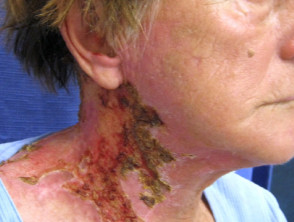
Herpes Infection

Facial nerve paralysis
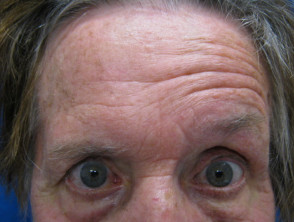
Facial nerve paralysis
Methods for Diagnosing Ramsay Hunt Syndrome
Generally, the diagnosis of Ramsay Hunt syndrome is established through a clinical evaluation. To confirm the diagnosis, tests such as the VZV polymerase chain reaction assay can be used, utilizing an ear swab. This test is especially useful for differentiating this herpetic variant (herpes zoster oticus) from Bell's palsy, which is defined as idiopathic acute facial nerve paralysis.
If associated neurological symptoms exist, magnetic resonance imaging (MRI) is recommended to obtain a more complete diagnosis.