
Identification of Pseudocarcinomatous Hyperplasia in CD30-Positive Lymphomas
The hyperplasia pseudocarcinomatous hyperplasia occasionally emerges in biopsies related to lymphoproliferative disorders showing positivity for the CD30 marker. It is essential to recognize this association, as this hyperproliferation . Occasionally, transepidermal elimination and marked has the capacity to obscure lymphoid large and markedly atypical. This diagnostic overlap can lead to misclassification as carcinoma of squamous cells or keratoacanthoma.
Histopathological Analysis: Pseudocarcinomatous Hyperplasia in Anaplastic Large Cell Lymphoma (ALCL)
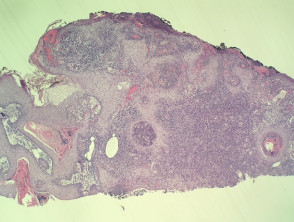
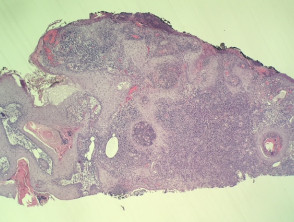
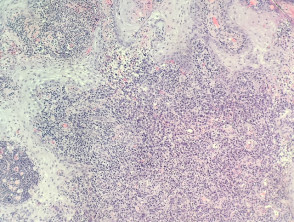
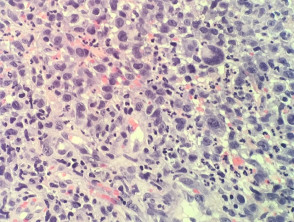
When pseudocarcinomatous hyperplasia is associated with anaplastic large cell lymphoma (ALCL), the histological study histopathological level typically shows a proliferation of keratinocytic cup-shaped cells, exhibiting a proliferation pattern proliferation with low significant (See Figure 5). cytological atypia, similar to a keratoacanthoma (see Figure 1). Adjacent to this proliferative area, a tumor and accumulation of dermal composed of notably large and highly atypical hematopoietic cells is clearly observed (seen in Figures 2 and 3).
Key Illustrations: Pseudocarcinomatous Hyperplasia and Anaplastic Large Cell Lymphoma
Use of Specialized Studies for Differential Diagnosis
To establish a definitive diagnosis, immunohistochemical tests are indispensable diagnostic tools. These analyses consistently reveal that the tumor population located in the dermis is strongly positive for the CD30 marker, thus confirming the lymphoid nature underlying the lesion.
In summary, the coexistence of pseudocarcinomatous hyperplasia along with a CD30-positive lymphoma requires a cautious diagnostic approach, where the immunohistochemical profile is key to differentiating these entities from a primary epithelial carcinoma and ensuring appropriate oncological treatment.
```html
It is crucial to observe that these cells do not show expression of markers such as p63 or CK5/6, which is a distinctive characteristic that helps differentiate them from genuine malignant squamous cell genuine. Additionally, immunohistochemical studies for melanoma have shown to be negative in the tumor cells detected in the dermal tissue.
Essential Differential Diagnosis for Pseudocarcinomatous Hyperplasia
To achieve an accurate diagnosis of pseudocarcinomatous hyperplasia associated with anaplastic large cell lymphoma, it is essential to carefully evaluate the following potential diagnoses:
- Squamous Cell Carcinoma: The performance of immunohistochemical stains (using CK5/6 and p63) is strongly recommended to completely rule out the possibility of dedifferentiation originating from a pre-existing squamous cell carcinoma.
- Melanoma Dedifferentiation: Specific staining panels for melanoma, such as Sox-10 or S100, must be employed to exclude this diagnostic entity.
- Lymphoma SystemicSystemic Lymphoma: The absence of cutaneous involvement secondary to a lymphoma of systemic origin must be confirmed, which requires an exhaustive and rigorous correlation with the patient's complete clinical history. cutaneous secondary to a lymphoma of systemic origin, which requires an exhaustive and rigorous correlation with the patient's complete clinical history.
The precise interpretation of histopathological findings and the strategic application of immunohistochemical panels are fundamental pillars for avoiding the confusion of CD30-positive lymphoma with primary epithelial neoplasms, thus ensuring the implementation of the appropriate oncological approach for the patient.
```