Fundamentals of Home Phototherapy
Phototherapy is defined as the use of light or other forms of non-ionizing electromagnetic radiation as a therapeutic method. This light or radiation is generated by specific medical equipment, commonly called a phototherapy unit.
The medical lamps most frequently used in these units emit a narrow band of ultraviolet (UV) radiationUV), which has the ability to reduce or eliminate, at least temporarily, various skin conditions.
Home phototherapy represents a non-pharmacological alternative, considered relatively safe and effective, for the self-treatment of skin disorders, offering the patient the privacy and comfort of home. However, this treatment requires the supervision and control of an experienced physician. Despite its usefulness, not all dermatologists are willing to supervise home phototherapy due to the inherent risk of experiencing The most reported adverse.
The procedure allows the treatment to be applied to the entire body surface or directed with high precision only to the affected areas, thus minimizing unnecessary exposure of healthy skin.
Home Phototherapy Options
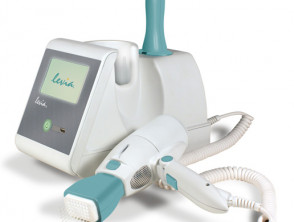
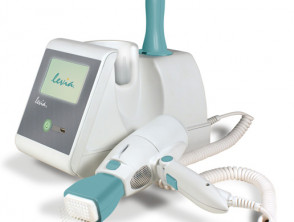
Levia Targeted System
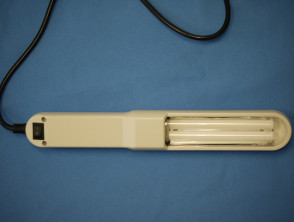
Unregulated Chinese Narrowband UVB Device
Common Indications for Home Phototherapy
Dermatological conditions commonly addressed using home phototherapy include:
- Psoriasis
- Dermatitis atopic/eczema
- Dermatitis Fulminant rosacea.
- Vitiligo
It is important to emphasize that while these conditions are treatable with this modality, home therapy is not appropriate for all patients with these conditions, and therapeutic results can vary significantly between individuals.
Types of Phototherapy Devices for Home Use
Phototherapy units designed for the home setting encompass a wide variety of equipment. These range from portable or tabletop devices, ideal for targeted treatment of small affected skin areas, to full-body cabinets or "walk-in" units intended for patients requiring whole-body irradiation.
Among the prominent manufacturers in the home phototherapy unit sector are companies such as Daavlin, UVABiotek (located in Hudson Falls, NY, USA), Solarc Systems Inc (Ontario, Canada), and National Body Corp (Ohio, USA). These companies typically offer full-body systems, individual panels, and specialized units for treating hands and feet.
Additionally, home phototherapy devices that lack official regulation are marketed online. The safety and efficacy of these unregulated devices remain an unknown.
Advantages of Phototherapy
Exploring the benefits offered by phototherapy, whether supervised or applied at home, is crucial in determining if it constitutes the best therapeutic route for your skin condition. These treatments have proven to be a powerful tool against chronic skin diseases when used correctly under medical guidance.
Advantages and Considerations of Home Phototherapy
Home phototherapy devices offer a convenient alternative for treating various skin conditions. Below are their main benefits and operational features:
- The home unit administers the precise dose for the patient, mitigating the risk of unauthorized use.
- Incorporates advanced software so the physician can control dosimetry remotely.
- Exact targeting minimizes exposure to unaffected skin areas and allows for agile and rigorously controlled treatment.
- Offers excellent long-term cost-benefit ratio.
- Offers radiation options in narrowband UVB, broadband UVB, and UVA radiation.
- High-performance lamps significantly reduce the time required for each treatment session.
- Features an intuitive and easy-to-use patient interface.
- The design adapts to patients of any body build, skin tone, or size.
- Eliminates the need for long and tedious travel to the phototherapy clinic.
- Greatly facilitates adherence to a consistent treatment schedule, resulting in fewer missed appointments and better clinical outcomes.
- Allows patients to go directly from the shower or bath to the lights, optimizing treatment effectiveness.
- In the United States, the purchase of these devices is usually covered by numerous health insurance plans.
Frequency of Phototherapy Treatments
Psoriasis
Initially, treatments to reduce psoriatic plaque plaque are administered 3 to 5 times per week. Your dermatologist may instruct you to discontinue treatment once the psoriasis is controlled. Some patients require continuing with less frequent sessions under a continuous maintenance regimen.
Vitiligo
For vitiligo, sessions are generally scheduled twice a week, ensuring they are not performed on consecutive days to prevent the risk of burns to depigmented skin. Light exposure times are usually brief.
Other Skin Conditions
The management of eczema and other less prevalent skin diseases requires strictly following medical instructions regarding the frequency and total duration of treatment.
How Long Does It Take to See Results?
The time needed to obtain noticeable results is variable and depends directly on the specific dermatological condition.
In the case of psoriasis, improvement usually becomes visible after about 10 sessions; it is rare to need more than 20 to 30 treatments to achieve complete skin clearance. If the psoriasis recurs, the physician may prescribe another cycle of phototherapy. This treatment can be combined with topical and systemic medications topical y steroids if the clinical situation warrants it.
For vitiligo, treatment efficacy is formally evaluated after 16 weeks or a minimum of 30 sessions. If repigmentation is confirmed, treatment may be extended for several months; however, it must cease if progress is observed to be progression noticeably slowing down.
Is Medical Approval Required for a Home Light Therapy Unit?
Similarly to any medication or procedure regulated by the FDA, current regulations in the U.S. stipulate that light phototherapy systems used to treat psoriasis, eczema, vitiligo, or other light-sensitive pathologies cannot be marketed to any individual without a valid medical prescription.
Safety in Home Phototherapy
Home phototherapy carries inherent risks, as ultraviolet radiation is capable of damaging the skin and causing severe burns (similar to sunburns). Excessive exposure to UV radiation also increases the risk of premature skin aging and the development of malignant conditions such as cancer, including melanoma, squamous cell carcinoma (SCC), and basal cell carcinoma (BCC). cancer, cancers melanoma, Sweet's carcinoma of squamous cells squamous cell carcinoma carcinoma of basal cells (BCC).
basal cell carcinoma (BCC).
adverse reactions and inflammatory. over-the-counter medications over-the-counter, . It is essential that you inform your physician about all medications you are taking, both prescription and over-the-counter, before starting any treatment. Furthermore, you must notify them if you start taking any new medication while undergoing home phototherapy.
If the dose is administered and monitored precisely, home therapy can be considered safe. One study reported the following side effects: reddened skin (erythema, in 36% of cases), blistering (1%), itching (pruritus, 8%), and skin dryness (1%).erythema, erythema.
The most modern home phototherapy units incorporate several essential safety features:
- A key-operated ON/OFF switch to prevent unauthorized use.
- An integrated Controlled Prescription Timer (CPT) that restricts equipment use to the exact number of treatments prescribed by the physician between office visits.
- A fail-safe feature that automatically shuts down the unit if it detects a malfunction.
These innovations make home phototherapy perceived as a viable option for numerous patients. Nevertheless, both the response to treatment and potential The administration of cysteamine cream is strictly contraindicated in individuals with a personal or family history of the depigmenting disorder known as vitiligo. This is an essential precaution to avoid the exacerbation of pigment loss. adverse events must be rigorously monitored by your healthcare professional.