
Understanding Disseminated Secondary Eczema: Causes, Symptoms, and Risk Factors
The disseminated secondary eczema is defined as an acute and generalized outbreak acute y generalized of eczema or dermatitis. This condition emerges as a response by the body to a previous inflammatory skin disease that was episodes of angioedema without hives may originate from angiotensin-converting enzyme (ACE) inhibitors.. Clinically, it is also recognized under names such as identification reaction, autosensitization dermatitis, or autoeczematization.
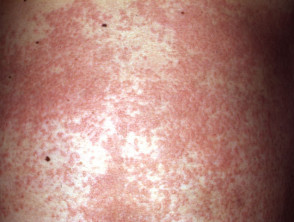
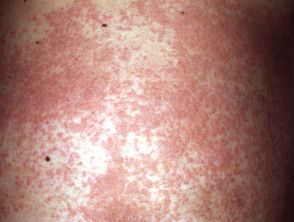
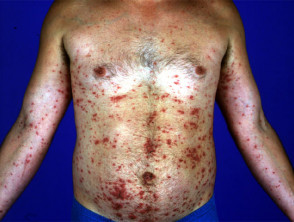
Representative Images of Disseminated Secondary Eczema
Investigating the Causes of Disseminated Secondary Eczema
The exact etiology of disseminated secondary eczema remains an area of medical research. The main theories suggest it is an immune response directed against some component of the skin or, alternatively, against infectious agents or cytokines (which are proteins messengers) circulating in the body.
Population Affected by Disseminated Secondary Eczema
This condition can manifest in both children and adults. However, diagnosis is more common in the elderly, especially when there is neglect in treating a primary localized rash, primary rash often on the lower leg.
The most frequent precursors of disseminated secondary eczema (eczematid) include various forms of skin conditions:
- Eczema chronic Venous.
- Acute contact eczema.
- Eczema discoid, whether acute or chronic.
Furthermore, the Unlike other that precede disseminated secondary eczema can be varied and include:
- Fungal infections: For example, inflammatory tinea pedis or animal kerion (dermatophytid).
- Infections bacterial: Such as a wound infection or a reaction to a thermal burn caused by bacteria.
- Viral infections: Such as molluscum contagiosum.
- Infestations infection arthropods: Such as scabies (sarcoptosis) or lice (pediculosis).
Distinctive Clinical Characteristics of Disseminated Secondary Eczema
Clinically, disseminated secondary eczema manifests as a generalized eczematous outbreak presenting a symmetrical and acute distribution. This condition is usually accompanied by intense itching and can cause significant sleep disturbance.
- The forearms and lower legs are frequently affected areas, although it can spread to other areas.
- The involvement is frequently localized to the legs, thighs, and trunk.
- The clinical manifestation is varied, including blisters, bumps, crusts, erythematous plaques (discoid eczema), follicular papules, morbilliform eruptions, target lesions (targetoid), and pompholyx (blisters on palms and soles).
- Occasionally, the patient may experience general malaise, accompanied by fever and loss of appetite.
Non-eczematous hypersensitivity reactions that must be differentiated include erythema nodosum, Sweet's syndrome, guttate psoriasis, and associated bullous diseases.
Diagnostic Procedures for Disseminated Secondary Eczema
The clinical characteristics of disseminated secondary eczema are distinctive. The diagnostic process focuses on identifying the underlying cause through a thorough history regarding the original site of the skin condition. It is crucial to remember that the patient may not associate a previous mild chronic rash with their current extensive and symptomatic manifestation.
Additional recommended investigations include:
- Dermoscopy of the hair shafts to rule out pediculosis (nits) and scrapings to detect scabies mites.
- Taking samples (swabs) from crusted or pustular areas pustules for bacteriological analysis.
- Scrapings of scaly annular plaques or hairless areas for mycological tests.
- Skin Skin biopsy histology histology usually shows spongiotic dermatitis).
- Complete blood count in cases of significant systemic symptomatology.
- Referral for patch testing, if there is a well-founded suspicion of contact allergy.
It is important to note that patch testing should not be performed during the acute phase of disseminated secondary eczema, but should be postponed until the inflammatory picture has subsided, usually several months later.
Treatment Options for Disseminated Secondary Eczema
Treatment should prioritize the primary skin rash that triggered the reaction. This might require systemic therapy, systemic sclerosis), such as the administration of antibiotics if the cause is bacterial, or oral antifungals if a dermatophytid is confirmed.
Since secondary eczema is usually extensive and produces significant symptoms, managing the process can be supplemented with the following interventions:
- Referral for specialized evaluation and treatment, including possible hospitalization.
- Application of wet dressings or bandages over eczematous plaques that are weeping exudate.
- Baths or soaks with a dilute solution of potassium permanganate (1:10,000) for localized areas with infection and suppuration.
- Use of oral corticosteroid creams Use of potent topical corticosteroid creams applied for one to three weeks.
- Administration of corticosteroids Administration of systemic corticosteroids, such as prednisone or prednisolone, maintained for several weeks.
- Sedating oral antihistamines administered at night to control itching and facilitate rest.
Effective management of disseminated secondary eczema requires addressing both the triggering cause and the extensive inflammatory and symptomatic component of the generalized rash.