Understanding Delusions of Parasitosis: Symptoms and Causes
Delusions of parasitosis represent a psychiatric condition where an individual holds the fixed, erroneous belief that they are infested by parasites such as mites, mites, lice, fleas, spiders, worms, or other organism, including supposed infestations infection bacteria (despite the absence of real evidence).
This condition is also known in the medical field as delusional infestation, pseudoparasitosis, or dysesthesia parasitic dysesthesia. It is intimately linked to Morgellons disease, where the patient perceives the protrusion of abnormal fibers from their own skin.
Identification and Etiology of Delusions of Parasitosis
The exact etiology of delusions of parasitosis remains unknown, but it is clinically classified as a monosymptomatic hypochondriacal psychosis. This classification describes episodes of persistent hypochondriacal delusion that are maintained for a significant time without being secondary to another underlying psychiatric pathology. psychiatric Often, affected individuals maintain a stable personality outside of their delusional belief, although they frequently show tendencies toward social isolation or certain degrees of eccentricity.
Nevertheless, delusions of parasitosis can manifest secondarily to other conditions in the mental health spectrum, including schizophrenia, obsessive-compulsive states, severe depression, bipolar disorder, or various forms of anxiety disorders. When this occurs, they are called secondary delusions of parasitosis.
Statistically, the condition appears to affect Caucasian women in middle or advanced age more frequently; however, any individual, regardless of race, sex , or age, can suffer from this disorder.
Clinical Manifestations and Characteristic Symptoms
Those suffering from this delusion often localize the supposed infestation in various areas. They may feel it actively inside or just beneath the dermal layer, in body openings, or even in fluids such as sputum, or within the digestive system. Furthermore, the immediate environment, such as bedding, sofas, and other household furniture, may be perceived as contaminated.
Among the most distinctive manifestations of delusions of parasitosis are:
- The patient tends to repeatedly seek the opinion of multiple professionals (doctors, exterminators, hygienists, and entomologists), frequently culminating in the expression of hostility and suspicion toward the specialist due to supposed incompetence or lack of attention to their perception.
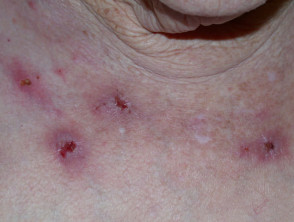
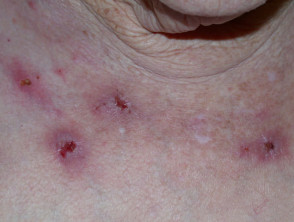
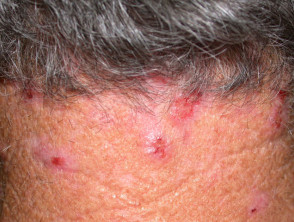
- They experience intense sensations such as itching, burning, tingling, or movement (crawling) under the skin. This sensory distress often induces severe self-harm, as the individual physically attempts to extract the infesting agents, resulting in excoriations and ulcers skin ulcers.
- They often present with the "matchbox sign” (or “specimen sign”), where they offer professionals samples collected in small containers (like matchboxes). These samples usually contain biological debris such as skin fragments, hair, scabs, or clotted blood. Occasionally, these collections even include small insects (like ants) that the patient believes they have extracted.
- They may carry out extreme and obsessive efforts to sterilize their person, over-disinfect, or even discard clothing and furniture in order to eradicate the supposed household infestation.
In certain familial occasions, the delusion is shared by one or more close relatives. When this phenomenon occurs between two people, commonly a couple (husband and wife) or a parent and their child, it is called folie à deux (shared psychosis).
Secondary Excoriations from Delusions of Parasitosis
The persistence of the delusional belief in infestation, regardless of the primary cause, requires specialized attention, often combining dermatology to treat secondary lesions and psychiatry to manage the core of the delusion.
Excoriations
Excoriations
Diagnosis and Treatment of Delusions of Parasitosis
The precise diagnosis of delusions of parasitosis (or delusional infestation disorder) depends on a thorough physical examination and the performance of specific laboratory tests. The main objective is to rule out any real skin infestation, such as scabies or lice, and to identify other medical conditions that might be mimicking these symptoms.
Common tests ordered for differential diagnosis include:
- Skin scrapings and biopsies skin ulcers.
- Although laboratory tests do not confirm the diagnosis, they are crucial for ruling out associated pathologies. Recommended investigations include:.
- Complete blood chemistry panel.
- Thyroid function tests.
- Measurements of mineral and vitamin levels, such as Vitamin B12 and ferritin (iron stores).
Additionally, it is crucial to obtain a detailed history regarding drug use, including cocaine, methylphenidate, or amphetamines, as these substances are known to induce pruritic sensations and cause symptomatic skin itching.
Treatment Strategies for Delusions of Parasitosis
The therapeutic management of patients affected by delusions of parasitosis is often considered challenging. This is due to the patients' deep conviction regarding the presence and activity of their imaginary parasites. Although the condition may occasionally remit spontaneously, most cases require intervention with psychotropic medications. psychotropic. The most effective treatment approach generally involves interdisciplinary collaboration between dermatologists dermatologists, psychiatrists, and, when pertinent, entomologists.
When addressing treatment, the following key guidelines should be carefully considered:
- Establishing a trusting relationship is paramount, which requires tact and multiple consultations before attempting to discuss the psychiatric nature of the underlying problem rather than the supposed infestation.
- It is essential to avoid any form of "deception" to promote treatment adherence. Administering a drug while falsely claiming that it "will eliminate the parasites" only serves to validate and solidify the patient's delusion.
- Affected individuals usually show great reluctance to seek psychiatric care. If a dermatologist suggests this route without due caution, there is a significant risk that the patient will discontinue medical follow-up.
- Certain patients may stabilize and manage the condition without psychiatric medication if they receive sufficient reassurance, empathetic support, and continuous, careful attention from their treating physician or dermatologist.
- A rigorous evaluation of any concurrent depressive symptoms is required. Treating the depression can be beneficial; for example, Escitalopram, a selective serotonin reuptake inhibitor (SSRI)tyrosine, has shown efficacy.
- Various antipsychotics have been employed, such as pimozide, risperidone, and olanzapine; however, their initiation must be carried out exclusively under the strict supervision of a psychiatrist or specialized dermatologist.
Successful management of delusions of parasitosis demands patience and a sensitive approach that balances the need for psychiatric treatment with respect for the patient's perception, ensuring continuity of medical care.