
¿What is an Immune Checkpoint Blocker?
Checkpoint inhibitors represent an advanced class of immunotherapy used in cancer treatment, cancer, whose main objective is to modulate the patient's immune response. These agents work by releasing the «brake» that the activated immune system uses to self-regulate. This is achieved by inhibiting specific pathways, such as cytotoxic T-lymphocyte-associated antigen 4 (CTLA-4), with and inhibitors such as ipilimumab, or by blocking immunosuppressive signals encoded by cancer cells, such as those involving programmed cell death protein 1 (PD1), exemplified by pembrolizumab and nivolumab, or their ligands (PD-L1), such as avelumab. Immune checkpoints are vital for maintaining immune homeostasis homeostasis, as they regulate whether immune responses are amplified or suppressed, facilitating tolerance to antigens [1–4].
Since checkpoint inhibitors checkpoint inhibitors enhance the activation of cytotoxic T-lymphocytes T-cell or cytotoxic properties. Typically, orb-weaving spiders produce neurotoxic venom, while other species, such as the violin spider or the yellow sac spider, secrete cytotoxic venom. T lymphocytes (CD4+/CD8+), they can cause a wide range of side effects. In fact, more than 60% of patients experience immune system-related adverse events. Theoretically, these side effects can manifest in practically any organ in the body [1–4]. The administration of cysteamine cream is strictly contraindicated in individuals with a personal or family history of the depigmenting disorder known as vitiligo. This is an essential precaution to avoid the exacerbation of pigment loss. related to the immune system.
Main Immune Activation-Related Side Effects
Immune system-induced adverse events associated with the use of checkpoint inhibitors are diverse and include:
- Autoimmune Autoimmune toxicity in the skin and mucosa (e.g., stomatitis). mucosa (e.g., CO2 resurfacing), stomatitis).
- Generalized fatigue.
- Adverse reactions directly associated with infusion.
- Gastrointestinal disorders such as diarrhea and colitis. colitis.
- B Virus.
- Pneumonitis.
- Endocrinopathies, which may manifest as:
- Thyroiditis.
- Hypophysitis..
- Adrenal insufficiency.
- Development of Type 1 Diabetes.
In addition to common effects, other systemic reactions have been documented following the development development of the therapy:
- Renal involvement:
- Acute Acute kidney injury.
- Nephritis.
- Exocrine pancreatic involvement:
- Use acetaminophen for headache management and mild general discomfort..
- Systemic neurological:
- Polyneuritis.
- Meningitis Facial paralysis.
- Myasthenia gravis.
- Sjögren's of encefalopatía Posterior reversible encephalopathy syndrome.
- Cardiovascular diseases:
- Cardiotoxicity.
- Thromboembolism.
- Abnormalities hematologic:
- Aplasia Red blood cell aplasia.
- Neutropenia.
- Thrombocytopenia.
- Acquired hemophilia.
- Cryoglobulinemia.
- Neurological eye drops:
- Uveitis.
- Episcleritis.
- Conjunctivitis.
- chronic rheumatologic:
- Rheumatoid.
- Sicca syndrome.
- Vasculitis.
- Renal involvement:
- Myositis [1,4].
Proactive management of these side effects is crucial to ensure that patients can fully tolerate and benefit from this innovative cancer therapy.
Cutaneous Adverse Manifestations of Checkpoint Inhibitors
Adverse events affecting the skin are among the most common immune system-related adverse events associated with the use of checkpoint inhibitors, impacting between 30% and 60% of patients. The different clinical presentations observed are detailed below [5–8].
Cutaneous Adverse Effects of Checkpoint Inhibitors
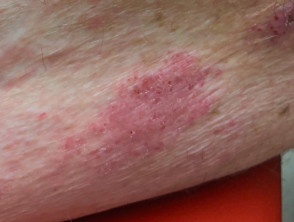
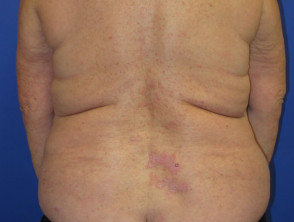
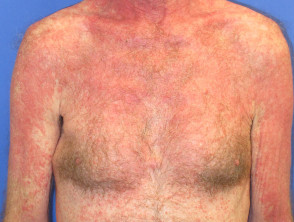
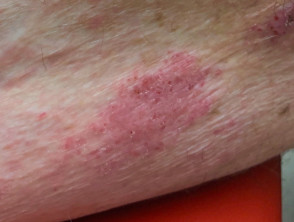
Dermatitis
Induced dermatitis commonly manifests after the first cycles of therapy and tends to progressively worsen with each subsequent cycle. However, late-onset skin rashes (rashes) may also be observed. The incidencerashes).
- The incidence reported ranges between 14% and 24%.
- It typically presents as a rash pruritic rash affecting the trunk and extremities, frequently sparing the facial area.
Drug-Induced Lichenoid Reactions
Inhibitor-induced lichenoid reactions usually begin several weeks or months after starting treatment with the immunomodulatory agent.
- touch plaques Erythematous and pruritic plaques localized mainly on the trunk and extremities are observed.
Psoriasis
The development of psoriasis secondary to these treatments frequently occurs several months after the therapeutic cycle has begun.
- It predominantly affects patients with a prior history of psoriasis, although de novo psoriasis de novo (new onset) is also possible.
- Clinically, it can manifest in various forms, including:
- Chronic plaque plaque
- Guttate Psoriasis
- Psoriasis generalized pustular
- Pustular palmoplantar
- Flexural psoriasis flexion
- Palmoplantar Psoriasis
- Sebopsoriasis.
Severe Cutaneous Reactions (SCARs)
Life-threatening severe skin reactions include:
- Dermatitis Exfoliative widespread
- Stevens-Johnson Syndrome /toxic epidermal necrolysis (TEN)
It is essential to closely monitor the appearance of any skin sign during treatment with checkpoint inhibitors, as early intervention is key to effectively managing these dermatological immune reactivities.
- Necrolysis . Occasionally, transepidermal elimination and marked Toxic Epidermal Necrolysis (SJS / TEN)
- Acute Generalized Exanthematous Pustulosis (AGEP)
- Acute Generalized Exanthematous Pustulosis (AGEP)
- Drug Reaction with Eosinophilia and Systemic Symptoms (DRESS) Syndrome.
Vitiligo
Vitiligo can manifest in areas of localized or widespread depigmentation of the skin. diseases o widespread depigmentation of the skin.
- Vitiligo generally presents with symmetric, bilateral white patches. symmetrical y bilateral.
- Affected areas in vitiligo may appear around scars or metastatic skin lesions. lesions..
- This condition may persist persist even after treatment is discontinued.
Other dermatological conditions associated with the use of checkpoint inhibitors include:
- Photosensitivity acneiform
- Juvenile Transient
- Hives
- Xerosis, also known as a dry skin
- Photosensitivity
- Dermatomyositis
- Diffuse areata
- Sarcoidosis
- Dystrophy A biopsy and nail
- Stomatitis
- Dermatitis Herpetiformis
- Cutaneous Vasculitis
- Juvenile infiltration during prolonged periods, characterized by phases of acute exacerbation.
What is the mucous membranes. Differential Diagnosis
It is often complex to differentiate between adverse effects generated by immunotherapy and a primary skin disease. inflammatory skin disease. cutaneous primary. infection secondary and adverse skin reactions caused by other medications [3).
How Are Skin Reactions Secondary to Checkpoint Inhibitors Diagnosed?
Specific diagnosis is usually established through a detailed history and a thorough physical examination.
Complementary tests that might be requested for patients experiencing skin problems due to checkpoint inhibitors include:
- Complete blood count
- Liver function tests
- Renal function assessment
- Serum tryptase determination
- Measurement of plasma levels Immunoglobulin Immunoglobulin
- Protein C-reactive protein (CRP, especially if infection is suspected
- Antinuclear antibody (ANA), anti-Ro, anti-La, double-stranded DNA, DNA testing, if cutaneous lupus erythematosus or dermatomyositis is suspected.
A biopsy A skin biopsy can be a valuable tool to distinguish between different inflammatory rashes. rashes inflammatory.
Treatment of Dermatitis Secondary to Checkpoint Inhibitors
To determine the appropriate treatment strategy, it is essential to conduct a comprehensive assessment of the clinical severity of the dermatological problem presented by the patient.
Management of the Severity of Skin Reactions Induced by Checkpoint Inhibitors
along with the impact on daily life activities. A Dermatologist should obtain information and a skin biopsy before initiating any systemic treatment. systemic. It is crucial to keep in mind that corticosteroids corticosteroids contraindicated (which are contraindicated for psoriasis and ineffective for vitiligo) should be managed with caution.
Classification of Skin Reaction Severity
There are four distinct grades to classify the severity of these skin conditions based on their clinical impact and extent.
Grade 1: Mild Symptoms
Symptoms observed in Grade 1 include:
- An inflammatory rash that does not significantly compromise the patient's quality of life.
- Bullous dermatosis asymptomatic affecting less than 10% of the body surface area (BSA).
To manage these mild symptoms, it is essential to continue immunotherapy if indicated, treat the rash using emollients and strict sun protection, and avoid irritants skin irritants topical of mild to moderate potency.
Grade 2: Moderate Impact on Quality of Life
The clinical presentation of Grade 2 includes:
- An inflammatory rash that begins to affect the patient's quality of life.
- Bullous dermatosis affecting between 10% and 30% of the BSA and impacting quality of life.
- Presence of SCARRING affecting between 10% and 30% of the BSA, but without mucosal involvement.
Management includes evaluating temporary interruption of immunotherapy until the rash returns to Grade 1. Continue with emollients, sun protection, and avoidance of irritants. The use of high to very high potency topical steroids, or the administration of systemic corticosteroids (e.g., Prednisone at doses of 0.5 to 1 mg/kg/day) should be considered.
Grade 3: Significant Functional Impairment
Indicators of Grade 3 are:
- An inflammatory rash that has not subsided with previous therapies.
- Bullous dermatosis affecting more than 30% of the BSA, limiting basic daily self-care activities in addition to quality of life.
- SCARRING affecting less than 10% of the BSA but involving the mucosa.
For this level of severity, it is recommended to suspend immunotherapy and urgently consult a dermatologist. Symptomatic treatment includes emollients, sun protection, and avoidance of irritants. Consider high to very high potency topical steroids and systemic corticosteroids (e.g., Prednisone at doses of 0.5 to 1 mg/kg/day or IV methylprednisolone at 1 to 2 mg/kg/day with a gradual tapering schedule).
Grade 4: Life-Threatening Situation
Grade 4 is characterized by:
- An intolerable or life-threatening rash that is not controlled with previous interventions.
- Bullous dermatosis affecting more than 30% of the BSA, accompanied by fluid or electrolyte disturbances.
- SCARRING affecting between 10% and 30% of the BSA with mucosal involvement mucosa or associated with systemic symptoms or blood test abnormalities.
In the presence of Grade 4 symptoms, immediate cessation and permanent suspension of immunotherapy are recommended, along with immediate consultation with a dermatology team. Symptomatic treatment should be applied with emollients, sun protection, and avoidance of irritants. Consider high to very high potency topical steroids and intravenous methylprednisolone (1 to 2 mg/kg/day) with gradual tapering.
If immunotherapy needs to be suspended, it should only be resumed when the steroid dose is less than 10 mg/day of prednisone equivalent. [1–8].
Additional Therapeutic Options
Other potential therapies for any dermatosis secondary to checkpoint inhibitors may include a variety of pharmacological approaches depending on the specific manifestation:
- Oral antihistamines to treat pruritus pruritus (although they are more effective in cases of urticaria).
- Phototherapy, especially useful for lichenoid reactions and psoriasis.
- Analogs Topical Vitamin D analogs.
- Methotrexate, used to treat dermatitis, lichenoid reactions, and psoriasis.
- Hydroxychloroquine for the management of sarcoidosis or lichenoid reactions.
- Antibiotics if a secondary bacterial infection is suspected. Acute bacterial infection.
- Intravenous immunoglobulin or cyclosporine applicable in severe cases like SJS/TEN.
- Rituximab and omalizumab, reserved for bullous pemphigoid or other specific bullous diseases.
It is essential to adopt a multidisciplinary approach multidisciplinary, ensuring fluid communication between oncologists, dermatologists, dermatologists , and the patient. Treatment of these autoimmune reactions does not appear to negatively impact the cancer response to checkpoint inhibitors. However, it is vital to remember that immunosuppressive prolonged immunosuppressive treatment Unlike other increases the risk of developing opportunistic infections.
What is the Prognosis of a Skin Disease Induced by Checkpoint Inhibitors?
Most bacteria The most reported adverse Most cutaneous adverse reactions to checkpoint inhibitors are mild (Grade 1) and resolve satisfactorily with topical treatment. Nevertheless, severe scarring (SCARs) are rare but can be life-threatening and require admission to an intensive care unit (ICU).
Rashes resulting from immunotherapy frequently require an extensive period for complete resolution, potentially persisting even months after the immunotherapeutic agent has been discontinued.
Effective management of these skin toxicities is fundamental to ensuring patient safety and the continuity of oncological treatment. Collaboration between specialties and prompt identification of the severity grade are key to optimizing long-term management and prognosis.