
Understanding Antiphospholipid Syndrome: Causes, Symptoms, and Diagnosis
Antiphospholipid syndrome (APS) is a complex disorder defect characterized primarily by episodes areas), as well as the hands, feet, and genitals. It can also involve the tongue, uvula, soft palate, and of in the vessel wall. arterial o venous, and/or pregnancy loss. This diagnosis is confirmed in the presence of persistently elevated levels of anticardiolipin antibodies and/or evidence of circulating lupus anticoagulant (these abnormalities abnormalities are identified through specific blood tests).
APS can manifest in two main ways:
- Primary antiphospholipid syndrome is diagnosed when there is no evidence of other associated diseases to justify it.
- Secondary antiphospholipid syndrome occurs in association with an underlying condition, with systemic lupus erythematosus systemic being the most common, along with exposure to certain medications, such as cocaine adulterated with levamisole.
Additionally, there is seronegative antiphospholipid-like syndrome seronegative, a condition with analogous clinical patterns, but in which the typical antiphospholipid antibodies are not detected in the serum.
Mechanisms of Thrombosis in Antiphospholipid Syndrome
Although the exact mechanisms leading to a hypercoagulable state hypercoagulable and thrombosis recurrent in APS are not fully defined, it is known that Complement activation Complement plays a crucial role in the pathogenic process.
The ‘two-hit’ theory suggests that the onset of thrombotic events is triggered by a combination of acquired factors and predisposition. These factors include increasing age, the presence of hypertension, diabetes, obesity, smoking, pregnancy, surgical procedures, and other states disorders of hypercoagulability.
Demographic Profile of Patients with Antiphospholipid Syndrome
Generally, the diagnosis of antiphospholipid syndrome is established during young or middle adulthood. However, it is important to note that it can manifest in patients of any age range, including children and older adults.
The secondary form of the disease is more frequent in women than in men. This gender disparity is likely attributed to the female predominance in the underlying diseases that cause secondary APS, such as systemic lupus erythematosus systemic and other connective tissue disorders. diseases.
The clinical history of affected patients frequently includes episodes of spontaneous abortion, deep vein thrombosis (DVT), pulmonary embolism pulmonary, myocardial infarction or strokes.
Clinical Manifestations: Signs and Symptoms of APS
For a patient to be classified with antiphospholipid syndrome, they must present at least one of the following two essential Other Lesions Classified as Connective Tissue Nevi clinical manifestations, in combination with the specific laboratory abnormalities:
- Venous or Arterial Thrombosis: Clot formation can affect various circulatory systems, including the cerebral system , cerebral (stroke), the coronary arteries, causing arterial emboli arterial or thrombosis; the renal or hepatic veins; or the ocular arteries and veins. renal o hepatic; or the ocular arteries and veins. eye drops.
- Obstetric Complications: These include recurrent spontaneous abortions or premature births. Patients may develop preeclampsia during gestation, and it is possible for newborns to present with restricted or unknown fetal growth.
It is essential to manage APS early due to the significant risk of morbidity and mortality associated with these recurrent thrombotic events, which underscores the importance of accurate diagnosis based on clinical and laboratory criteria.
- Small
Antiphospholipid Syndrome: Manifestations and Diagnosis
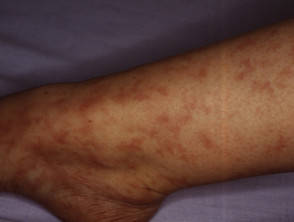


It is essential to remember that there are other symptoms not included in the standardized classification criteria.
Dermatological Disorders in Antiphospholipid Syndrome
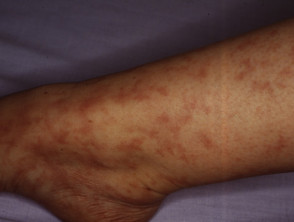
The Livedo reticularis is a very prevalent skin manifestation, affecting up to 80% of individuals with antiphospholipid antibodies. Additionally, the following dermal characteristics can be observed:
- Splinter hemorrhage (one or more red or black lines visible in the nail). nail).
- Livedo Leg ulcers, whether of arterial or venous origin.
- Superficial thrombophlebitis.
- Blue toe syndrome.
- Vasculitis Vasculitis affecting medium and small caliber blood vessels, indicating systemic vascular inflammation.
Neurological Manifestations of Antiphospholipid Syndrome
Patients diagnosed with antiphospholipid syndrome may experience various neurological sequelae:
- Recurrent or severe migraines.
- Seizures.
- Stroke (CVA).
- Multi-infarct dementia, resulting from multiple cerebral microthrombi.
Associated Cardiac Abnormalities
In the cardiovascular field, antiphospholipid syndrome can manifest through:
- Heart murmur detectable on physical examination.
- Development of vegetations on heart valves.
Related Ocular Disorders
One of the most severe visual symptoms reported is:
- Blindness, frequently secondary to ocular thromboembolic events.
Common Hematological Abnormalities
Blood tests in these patients usually reveal:
- Thrombocytopenia (a low platelet count). platelet).
- Hemolytic anemia (reduction of red blood cells due to antibody-mediated destruction).
Catastrophic Antiphospholipid Syndrome (CAPS) represents the most severe form, characterized by massive occlusion of blood vessels simultaneously affecting multiple organs in an acute period, leading to high morbidity and a high mortality rate. blood vessels affecting multiple organs simultaneously in an acute period, leading to high morbidity and a high mortality rate.
How is Antiphospholipid Syndrome Diagnosed?
Antiphospholipid syndrome is characterized by its clinical heterogeneity and the presence of different autoantibodies. autoantibodies. To establish a formal diagnosis, the revised 2006 criteria are used, which require the coexistence of at least one clinical criterion and one positive laboratory criterion [1]. It is important to note that the initial term 'lupus anticoagulant' is confusing, as not all positive patients have systemic lupus erythematosus, and the syndrome promotes thrombosis (clotting) rather than an increase in bleeding.
The diagnostic process involves specific laboratory tests to identify antiphospholipid antibodies or dysfunctions in coagulation tests clotting sensitive to phospholipids and dependent on them. It is recommended that patients suspected of having antiphospholipid syndrome undergo the following tests:
- Detection of anticardiolipin antibodies (aCL).
- Antibodies against anti-beta-2 glycoprotein I.
- Activated partial thromboplastin time (aPTT).
- Specific tests for lupus anticoagulant (LA), such as the dilute Russell's viper venom time (DRVVT).
- Syphilis tests (which can give false positives in serology). serology).
- Complete blood count to check for thrombocytopenia thrombocytopenia or hemolytic anemia (positive Coombs test).
An accurate diagnosis is crucial to initiate appropriate antithrombotic treatment and prevent serious systemic complications, such as those associated with the catastrophic event.
Treatment Options for Antiphospholipid Syndrome
The fundamental treatment for antiphospholipid syndrome (APS) focuses on preventing its clinical manifestations, especially clot formation. It is crucial to actively identify and manage all thrombotic risk factors present in the patient:
- Promote immediate cessation cessation of smoking.
- Avoid the use of oral contraceptives.
- Diagnose and adequately treat arterial hypertension and elevated blood lipid levels (dyslipidemia).
Antiplatelet medications, such as low-dose aspirin, may be considered beneficial as part of the preventive strategy.
Currently, there is no specific therapy that cures antiphospholipid syndrome. Management is directed toward symptomatic and preventive control of acute events. For example, when thrombosis or embolism occurs, standard treatment includes the use of anticoagulants such as heparin and, subsequently, warfarin to maintain blood fluidity.