Acute Generalized Exanthematous Pustulosis (AGEP): Key Features and Diagnosis
The Acute Generalized Exanthematous Pustulosis (AGEP) presents as a rare dermatosis characterized by the appearance of multiple pustules scattered pustules on a cutaneous base lesions... and generalized. This condition can be triggered by various Unlike other or, more frequently, by the administration of a significant number of causative drugs.
Distinctive Histopathological Analysis of AGEP
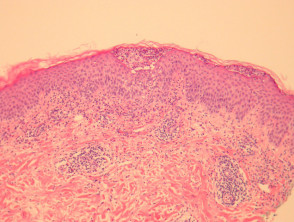
Histopathological study offers a characteristic picture in cases of AGEP. Microscopically, minimal acanthosis in the epidermis, accompanied by signs of spongiosis. The truly defining finding resides in the neutrophilic neutrophilic vesicles. (visible in figures 1 and 2), which are located predominantly in the stratum corneum or within the epidermis itself.
Furthermore, it is common to identify keratinocytes and the presence of in the surrounding epidermal tissue surrounding.. The dermal response usually accompanies these changes, manifesting as a cellular infiltrate that includes abundant lymphocytes y eosinophils (as illustrated in figure 3).
Pathology of Acute Generalized Exanthematous Pustulosis (AGEP)
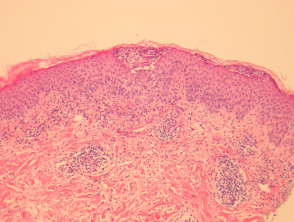
Figure 1
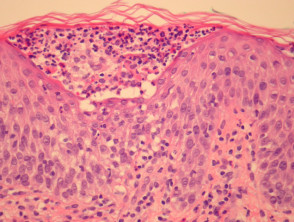
Figure 2
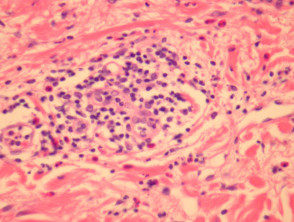
Figure 4
Understanding the histopathological features, especially the presence of spongiotic neutrophilic pustules, is fundamental for establishing an accurate diagnosis of Acute Generalized Exanthematous Pustulosis and differentiating it from other pustular conditions.
Diagnostic Workup and Differential Diagnosis of AGEP
Although Acute Generalized Exanthematous Pustulosis (AGEP) is primarily established through clinical evaluation and histopathological findings, complementary tests may be necessary in atypical scenarios. If the pustular presentation is not characteristic, it is recommended to request a PAS (Periodic Acid-Schiff) stain in order to rule out a etiology. fungal etiology that might underlie the symptoms.
Crucial Differential Diagnosis for AGEP
Achieving an accurate diagnosis of AGEP requires exhaustive discrimination against various pustular dermatoses and vesiculobullous conditions. The following is a key clinical and pathological comparison:
- Pustular Psoriasis: It is distinguished from AGEP because the latter typically exhibits more marked pustulation, little to no epidermal spongiosis, and generally lacks the eosinophilia dermal eosinophilia observed in other conditions.
- Subcorneal Pustular Dermatosis: In this condition, the pustules are located exclusively above the epidermis, without generating internal epidermal epidermal pustules. Spongiosis is usually nonexistent. It is vital to recognize that there may be clinical and pathological overlap in certain presentations. pathological in certain presentations.
- IgA Pemphigus: Specifically, the intraepidermal intraepidermal variant immunofluorescence becomes the fundamental diagnostic tool to achieve correct discrimination between both pathologies.
- Bullous Impetiginization: Gram stains are essential in this differential, as they should identify the presence of bacteria bacteria located in the subcorneal area. The extensive epidermal neutrophilic infiltration, characteristic of AGEP, rarely constitutes the dominant finding here.
The correct correlation and interpretation of clinical and histological findings are indispensable for the definitive confirmation of the diagnosis of Acute Generalized Exanthematous Pustulosis and to distinguish it with certainty from its main clinical mimics. If you have doubts about a complex case, review by specialized pathology is the next recommended step.