Dupilumab: Innovative Biologic Treatment for Atopic Dermatitis
Dupilumab represents a first-in-class, pioneering biologic treatment specifically designed to combat mild to moderate atopic dermatitis, also known as eczema o eczema.
This medication, marketed as Dupixent® (Sanofi, Paris, France; Regeneron, New York, USA), is a antinuclear antibody monoclonal. It has demonstrated notable efficacy and a favorable safety profile in the treatment of moderate-to-severe atopic dermatitis, used both alone and in combination with corticosteroids topical.
Regulatory approval for Dupixent® has been progressive: the US FDA authorized it for adults with moderate-to-severe atopic dermatitis in March 2017, expanding its use to patients aged 12 to 17 in March 2019, and to children aged 6 to 11 in May 2020. Furthermore, it was approved by the Therapeutic Goods Administration (TGA) in Australia in January 2018, and classified as a prescription medicine by Medsafe in New Zealand in March 2018.
The Biologics License Application (BLA) supporting dupilumab includes robust data drawn from three pivotal Phase 3 clinical studies, which evaluated the administration of dupilumab along with topical corticosteroids as concomitant concomitant.
Therapeutic Applications of Dupilumab
- Dupilumab is specifically indicated for the management of patients over 12 years of age suffering from moderate-to-severe atopic dermatitis who do not respond adequately to other therapies.
- Therapeutic alternatives available before or alongside this treatment include the use of moisturizers, antihistamines, and topical calcineurin inhibitors (TCIs), or systemic corticosteroids steroids, in addition to phototherapy and the use of other oral immunosuppressants.
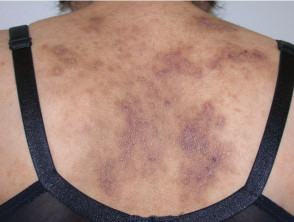
Severe Manifestations of Atopic Dermatitis in Adults

Atopic eczema

Atopic eczema
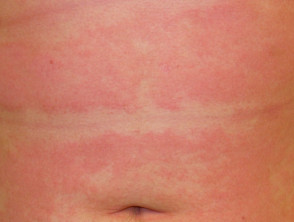
Subacute Atopic Dermatitis
Mechanism of Action of Dupilumab
- It is postulated that dupilumab exerts its therapeutic effect by selectively blocking the signaling of the interleukin (IL) 4 and 13 pathways, key mediators in the inflammation and pathogenesis of atopic dermatitis.
Understanding how dupilumab works is fundamental to assessing its potential as a targeted treatment for cases of moderate-to-severe atopic dermatitis that are not controlled with conventional therapies.
Mechanism of Action and Adverse Effects of Dupilumab in Atopic Dermatitis
Treatment with dupilumab specifically targets the molecular basis of the inflammation that drives atopic dermatitis.
- Atopic dermatitis is fundamentally characterized by inflammation predominantly mediated by type 2 helper T cells (Th2).
- Dupilumab is an all-human monoclonal antibody designed to neutralize the interleukin-4 (IL-4) alpha subunit of the shared receptor receptor. By blocking this subunit, it prevents signaling of both IL-4 and IL-13.
- Both IL-4 and IL-13 are cytokines crucial (i.e., molecules signaling molecules produced by cells that help control control the immune system and the response to disease). These cytokines are essential for initiating and maintaining the immune response promoted by type 2 helper T cells (Th2, or T-cell type 2 helper T cell), which is considered a critical pathogenic pathway in allergic-type inflammation.
Dosage and Administration of Dupilumab
Details on how this treatment is administered are fundamental for its clinical use:
- Dupilumab administration is done via subcutaneous subcutaneous.
- This medication is designed to be part of a continuous, long-term treatment regimen.
- If treatment is interrupted for any reason, it may be restarted.
Consult the key evidence derived from clinical trials regarding the efficacy profile of dupilumab.
Safety Profile: Adverse Effects of Dupilumab
Several Adverse reactions common adverse reactions associated with dupilumab treatment have been identified during clinical trials (incidence greater than 5%):
- Injection site reactions.
- Conjunctivitis, reported in up to 30% of cases.
- Dry eyes.
- Allergic conjunctivitis.
- Infections encephalitis.
- Exacerbation exacerbation.
- Herpes infections..
- Headache.
- HIV Upper respiratory tract infection.
No specific blood monitoring is required for this drug.
Rarely, the induction induction of other skin disorders, such as psoriasis, has been observed.
Management of Dupilumab-Induced Conjunctivitis
For mild cases of conjunctivitis, the initial recommended treatment is lubricating ophthalmic drops. Patients on dupilumab are advised to start using them preventatively from the beginning of treatment to mitigate possible ocular eye drops. Some individuals may require additional therapies:
- Topical corticosteroid corticosteroid topical
- Topical tacrolimus ointment for eyelid treatment
- Referral to a ophthalmologist Referral to an ophthalmologist
Promising Phase 3 Results for Dupilumab in Atopic Dermatitis
Systemic Phase 3 clinical studies with dupilumab in the management of moderate-to-severe atopic dermatitis have revealed substantial improvements in patients:
- Dupilumab, as an all-human monoclonal antibody, effectively inhibits the IL-4 and IL-13 signaling pathways.
- Clinical trials demonstrated a notable improvement in key patient symptoms, including a decrease in pruritus and a significant reduction in clinically visible disease.
- A fundamental finding is that treatment with dupilumab correlates with a normalization of the molecular signature of the affected skin, which translates into an attenuation of both inflammatory and proliferative markers. and inflammatory and infantile.
- These positive results were observed in contrast to or in addition to standard treatments such as topical corticosteroids, emollients and phototherapy.
Dupilumab represents a significant advance in addressing atopic dermatitis by directly targeting the cytokines that drive the underlying allergic pathogenesis. Its safety and efficacy profile in advanced stages positions it as a key long-term therapeutic option.
- Systemic agents (such as prednisone, cyclosporine, methotrexate, or azathioprine) can be maintained during dupilumab treatment.
- It may be necessary to reduce the dose or completely discontinue systemic agents once dupilumab achieves control of the dermatitis.
Official information on prescription medicines, including approved uses and safety details, is found in the data sheets approved by New Zealand. For specific details, consult the corresponding data sheet on the Medsafe Website. Medsafe website..
If you do not reside in New Zealand, we strongly recommend that you contact your national drug regulatory agency for updated information (e.g., the Australian Therapeutic Goods Administration bacterial resistance and the U.S. Food and Drug Administration.). For nationally or state-approved drug formularies, consult resources such as the New Zealand Formulary, the New Zealand Formulary for Children, the British National Formulary, or the British National Formulary for Children. New Zealand Formulary, Sweet's , New Zealand Formulary for Children, Sweet's British National Formulary, British National Formulary British National Formulary for Children.