
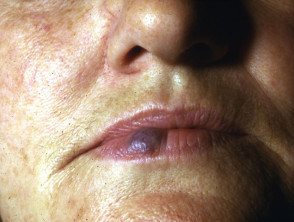
¿What is a Venous Lake?
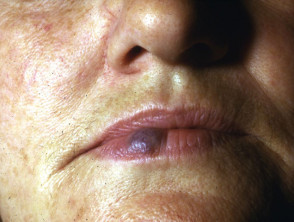
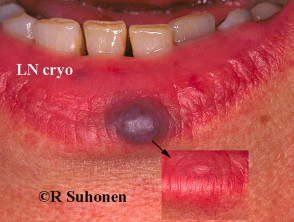
An venous lake presents as a macule. bluish and soft macule or a papule, resulting from vascular dilation vascular. This lesion is most frequently observed located on the lower lip.
Images of Venous Lake
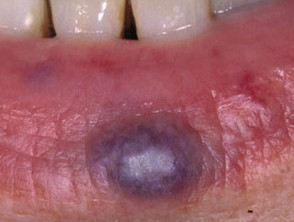
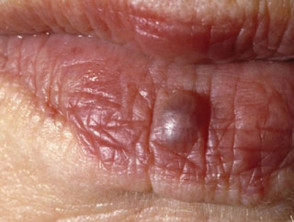
Explore an expanded gallery of images illustrating venous lakes.
Who is Affected by Venous Lake?
The diagnosis of a venous lake is established with greater prevalence in middle-aged men and women or in later stages of life, affecting individuals of any racial background.
What is the Origin or Cause of Venous Lake?
Currently, the specific etiology behind the development of venous lake remains unknown.
Distinctive Clinical Characteristics of Venous Lake
A venous lake typically manifests as a soft, easily compressible macule or papule, presenting a bluish or purplish coloration, with a diameter ranging between 0.2 and 1 centimeter. Although they can be located anywhere on the body, the vast majority of venous lakes are identified on the lower lip (specifically on the vermilion border or the mucosal surface), on the earlobe, or scattered in other areas of the face, neck, or upper trunk. mucosa), on the earlobe, or scattered in other areas of the face, neck, or upper trunk.
Effect of Compression on a Venous Lake
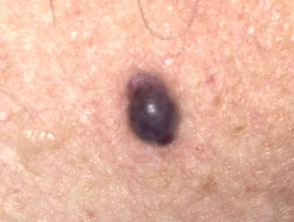
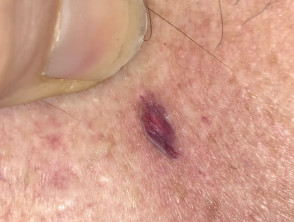
For a deeper understanding of this condition and to examine additional visual examples, it is recommended to review specialized dermatological sources.
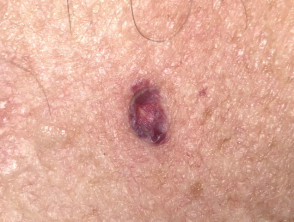
Methods for the Clinical Diagnosis of Venous Lake
The diagnosis of venous lake is frequently established clinically due to its characteristic morphology. When pressure is exerted on the macule or papule, the color diminishes or disappears completely, a phenomenon due to the drainage of blood from the dilated venule . This maneuver is notably facilitated when using a glass slide or a asymptomatic. In A positive result could indicate that the patient requires periodic exams for other types of cancer. For example, a patient with a mutation in the, the venous lake manifests as a blue or purple lesion without the presence of internal structure. Biopsy is rarely required, biopsy, which would confirm the presence of a dilated venule.
Analysis of the Differential Diagnosis for Venous Lake
It is essential to distinguish venous lake from other conditions due to the visual similarity that may be present. Lesions that commonly enter the mucous membranes. odor include:
- of Becker blue
- Spider angiomas
- Telangiectasia spider angioma.
Treatment Options for Venous Lake
Generally, venous lake is a benign condition and, therefore, does not require medical intervention. However, if the lesion is considered unsightly by the patient, its elimination through the destruction of the affected tissue may be chosen. This process usually generates a temporary scab and carries the potential risk of leaving a small scar. The most used procedures to eradicate a venous lake include:
- Cryotherapy Cryotherapy
- Electrocoagulation using an electrocautery device
- Sclerotherapy
- Intense Pulsed Light (IPL) Therapy
- Ultraviolet laser Because cherry angiomas are classified as benign lesions, they generally do not require medical intervention. Very infrequently, their removal is decided solely to rule out the presence of a.
The Excision Surgical excision is a very infrequent recourse, as it inevitably results in a more visible scar.
Venous lake treated with cryotherapy
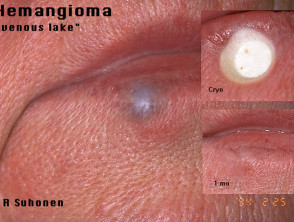
Venous Lake
Venous Lake