Understanding Urticarial Vasculitis: Symptoms and Causes
Clinical Definition of Urticarial Vasculitis
Urticarial vasculitis, also known as hypocomplementemic urticaria, represents a specific form of cutaneous vasculitis that affects small blood vessels. Clinically, it manifests through inflamed, reddened skin eruptions or wheals wheals that initially resemble conventional hives urticaria. However, the crucial differentiation is made through histopathological analysis: under a microscope, microscope, an active inflammation of the blood vessels, blood vessels is revealed, confirming the vasculitis.
Generally, this condition is divided into two main categories based on serum protein levels:
- Normocomplementemic urticarial vasculitis
- Hypocomplementemic urticarial vasculitis
The distinction lies in the measurement of proteins of the complement complement proteins in blood tests. While both subtypes can manifest with systemic symptoms steroids —such as angioedema, angioedema, chest or abdominal discomfort, fever and arthralgia—these signs are usually much more pronounced in the hypocomplementemic variant. Furthermore, this latter form has shown a documented association with connective tissue diseases diseases, notably systemic lupus erythematosus (SLE).
Investigating the Underlying Causes of Urticarial Vasculitis
The precise etiology of urticarial vasculitis often remains unknown, being largely categorized as idiopathic idiopathic. Nevertheless, there are multiple conditions and factors that have been correlated with its appearance:
- Genetic and inflammatory Connective tissue inflammatory disorders, including SLE and Sjögren's syndrome. syndrome Sjögren's syndrome.
- Immunoglobulin alterations, specifically monoclonal immunoglobulin A or M gammopathies (monoclonal monoclonal gammopathies).
- Internal cancers and leukemia.
- Significant viral infections, such as viral hepatitis B, hepatitis C, and infectious mononucleosis.
- Medication-induced reactions, including and angiotensin-converting enzyme (ACE) inhibitors, penicillin, sulfonamides, fluoxetine, and thiazide diuretics.
Despite these documented associations, it is essential to emphasize that the majority of urticarial vasculitis diagnoses are classified as idiopathic, meaning no clear triggering cause is identified.
Distinct Clinical Manifestations of Urticarial Vasculitis
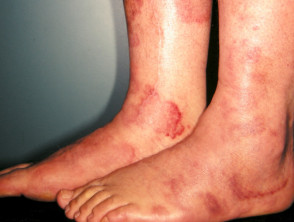
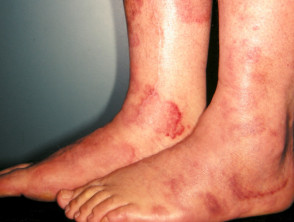
The first symptom The first symptom that usually alerts to urticarial vasculitis is a wheal-type rash. These lesions, initially characterized by hives, usually present with sensations of pain or burning, although pruritus (itching) may predominate in certain patients. The skin lesions appear as intensely red patches or plaques, which frequently develop clearer central areas, and the appearance of petechiae is common. plaques bright red color which facilitates clear visualization of the.
A key feature that distinguishes it from common urticaria is the persistence of urticarial vasculitis lesions: these usually remain in the same location for a period longer than 24 hours, resolving gradually and spontaneously. During the resolution process, it is common for ecchymosis ecchymosis hyperpigmentation or residual hyperpigmentation to remain as sequelae in the affected area.
Extended Information on Urticarial Vasculitis
To gain a deeper understanding of this complex skin condition, it is crucial to review the detailed images and resources that illustrate the clinical characteristics of urticarial vasculitis in its different stages.
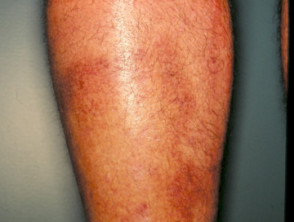
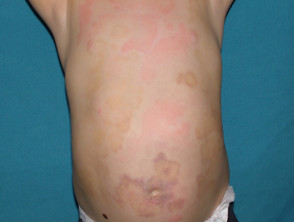
In addition to skin manifestations, patients with urticarial vasculitis may experience systemic symptoms. These may include photosensitivity, reactions., lymph node swelling, lymph nodes, arthralgia (joint pain in approximately 50% of cases), fever, abdominal pain (observed in 20%), dyspnea, and complications affecting the lungs and kidneys.
Explore more detailed images of urticarial vasculitis cases for better visual understanding.
Differential Diagnosis of Urticarial Vasculitis
Confirmation of urticarial vasculitis is achieved through a biopsy skin biopsy microscopic skin biopsy. Microscopic findingsdermisin early lesions reveal a neutrophilic leukocytoclastic vasculitis, characterized by damage to the small blood vessels residing in the middle layers of the skin (dermis). It is important to note that, in more advanced lesions, a lymphocytic-predominant vasculitis may be observed.
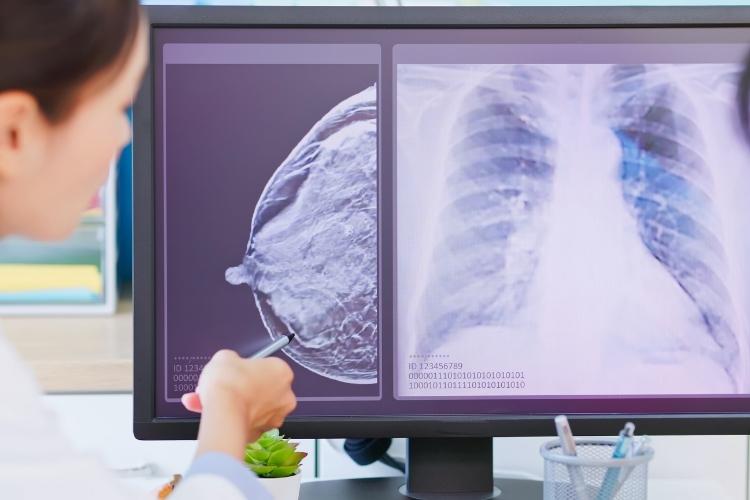
An exhaustive diagnostic investigation seeks to identify any associated underlying disease. Laboratory tests should include the assessment of renal function ulceration and the patient's immunological immunological status. Furthermore, a chest X-ray is recommended for individuals presenting with hypocomplementemia or significant respiratory distress.
Treatment Options for Urticarial Vasculitis
Patients diagnosed with normocomplementemic urticarial vasculitis, who generally present with minimal or no systemic symptoms, find that their skin lesions tend to resolve spontaneously over time.
The therapeutic approach is adjusted according to the severity of systemic effects and concomitant dermal involvement. For mild symptomatic management, antihistamines or nonsteroidal anti-inflammatory drugs (NSAIDs).
NSAIDs control ) can be used. For more severe cases of urticarial vasculitis, especially those associated with systemic manifestations, long-term treatments are implemented to control
- Dapsone
- Colchicine
- Pigmentary lichen planus of the face
- the condition. These include: Dapsone)
- Colchicine, Hydroxychloroquine
Indomethacin (a steroid-free nonsteroidal anti-inflammatory drug) immunosuppressive Corticosteroids.