Understanding Reactions to Topical Medications
Topical medications encompass a wide range of formulations, including any balm, lotion, gel, petroleum jelly, loción, patch o reactions. medicinal designed for direct application to the skin.
Each topical product consists of an active ingredient supported by a base, which may include preservatives and fragrances. Many of these Topical are available over the counter. These preparations include antibacterial and antifungal solutions, anti-inflammatory agents for pain relief, and products intended for skin cleansing and moisturizing.
How Does an Allergy to a Topical Medication Manifest?
An allergic reaction to a topically applied medication can manifest through various skin symptoms and syndromes.
Contact Urticaria
- Contact urticaria causes a localized sensation of burning, tingling, or itching, which can appear from minutes up to an hour after the product touches the skin.
- Swelling and redness (a wheal wheal or erythema) are observed.
- Generally, the rash The rash generally resolves spontaneously within 24 hours of onset.
Anaphylaxis
- This is a severe event that causes difficulty breathing, nausea, vomiting, acute development acute of urticaria and angioedema.
- Although a rare event, anaphylaxis has the potential to be fatal.
Irritant Contact Dermatitis (Dermatitis)
- Irritant contact dermatitis accounts for approximately 80% of all cases of contact dermatitis.
- Although it can affect anyone, individuals with a history of atopic dermatitis atopic are significantly more susceptible.
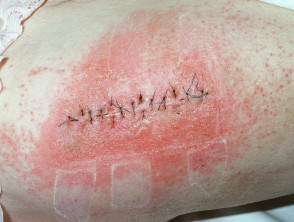
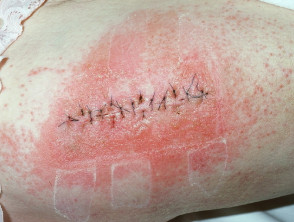
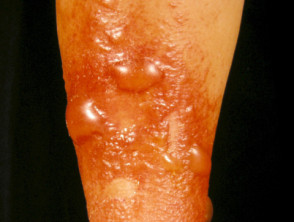
- It typically starts with areas of itching, dry skin scaly or a red rash, and may progress to weeping vesicles.
- When faced with irritants potent irritants, the reaction may manifest within minutes or hours post-exposure.
- With less aggressive irritants, symptoms may take days or weeks of constant contact to appear.
Allergic Contact Dermatitis
- In this type, the specific immune reaction only occurs after sensitization of the immune system to an contact allergen (a specific substance in the medication).
- The rash tends to appear more than 12 hours after contact and usually reaches its peak intensity around 48 hours post-exposure.
- Signs include redness, inflammation, intense itching, and outbreaks of hives.
Photosensitivity
- A rash caused by photosensitivity arises due to the interaction between sunlight and a specific component of the applied topical product.
It is common for some people to experience multiple types of reactions. In particular, atopic individuals (those with eczema eczema, asthma, and/or rhinitis) have a greater predisposition to irritant contact dermatitis. This, in turn, increases the likelihood of developing allergic contact dermatitis because the skin barrier is already compromised and, therefore, more prone to allergen sensitization.
Contact Dermatitis Caused by Topical Medication
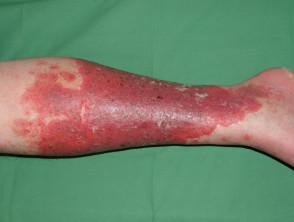
Topical Medication Allergy
Main Allergens Present in Topical Medications
The agents causing allergies in topical preparations can be the active component of the drug or some constituent of the vehicle vehicle or base that carries said medication.
Various ingredients contained in topical formulations are known to trigger allergic reactions on the skin. Among the most common allergens used in topical medications are:
- Neomycin: This is a broad-spectrum antibiotic used profusely in creams, creams, ointments, lotions, as well as in ophthalmic and otic preparations. These products, both prescription and over-the-counter, are used to treat various dermal, ocular, and outer ear conditions. Other locally applied antibiotics, such as bacitracin, can also cause allergic contact dermatitis.
- CorticosteroidsCorticosteroids vasoconstriction are fundamental in the management of multiple skin diseases and conditions. There are numerous types of topical corticosteroids with variations in potency and mechanism of action. They are frequently integrated into combination formulations with antifungals or antibacterials.
- Benzocaine: This local anesthetic local anesthetic is widely used topically. topically. It is used by medical and dental professionals, especially on mucosal surfaces mucosa, such as the oral cavity, to prepare or "numb" the area prior to an injection. It is also found in some preparations intended for the treatment of hemorrhoids.
- Salicylate: A chemical naturally present in certain plants, it is the main ingredient in aspirin (acetylsalicylic acid). It is incorporated into creams intended for muscle pain relief.
- Nonsteroidal anti-inflammatory drugs (NSAIDs): These are formulated in topical gels and creams for the symptomatic treatment of pain associated with muscles and joints.
Regarding the excipients or bases of topical medications, the allergen groups that most frequently trigger allergic reactions are fragrances and preservatives.
How Is an Allergy to a Topical Medication Diagnosed?
The diagnosis of an allergy to a topical medication is established through the application of specialized studies known as patch tests. The diagnostic process may require evaluating sensitivity to both the active ingredient of the drug and any component of its base. It is advisable to consult the specific sections on individual contact allergens for detailed guidelines on how to perform these skin tests.
Statistically, the incidence of allergy to topical medications appears to be higher in the elderly population. In fact, a study analyzing all patients undergoing patch testing at a Sheffield hospital revealed significant trends regarding this phenomenon.
A nine-year study confirmed that contact allergy to topical medications is significantly more prevalent in people over 70 years of age compared to younger age groups.
Certain patients who already suffer from pre-existing skin conditions may face an elevated risk of or develop Allergic reactions when applying medications to the skin.
- Individuals suffering from stasis venous stasis dermatitis present a high risk of developing an allergy to agents applied over the affected area. Topical neomycin is a common cause of allergic contact dermatitis in these patients, as it is frequently used despite the lack of documentation supporting its efficacy in the treatment of ulcers ulcers.
- Patients with ear Patients with otitis externa frequently show allergies to both topical neomycin and locally applied corticosteroids.
Treatment for Allergic Reactions to Topical Medications
Generally, contact dermatitis should resolve promptly once the causative allergen is identified and removed. If the allergen is not a topical corticosteroid corticosteroid, mild over-the-counter topical steroids, such as hydrocortisone 0.5% or 2.5%, can be used to help control control the itching, inflammation, and erythema. In more severe cases, it may be necessary to resort to a prescription steroid cream along with antibiotics if the skin develops blistering and infection (impetigo).
). Special caution should be exercised when prescribing topical treatments to older patients with eczema. This is crucial for preparations containing fragrances, lanolin (wool alcohols), and local anesthetics, as these components are the allergens most frequently associated with allergic skin reactions in this population segment.