Eccrine Spiradenocarcinoma: Histological Features and Diagnosis
The eccrine Eccrine spiradenocarcinoma represents a tumor rare tumor of the nodes eccrine sweat glands. Usually, this malignant neoplasm evolves within a pre-existing eccrine spiradenoma, a condition that may have been present for several years.
Detailed Histology of Eccrine Spiradenocarcinoma
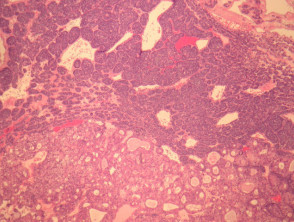
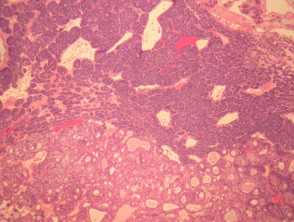
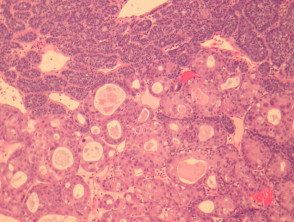
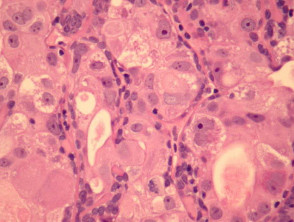
Upon examining histological samples of eccrine spiradenocarcinoma, characteristic areas of benign eccrine spiradenoma are observed benign with a notable demarcation toward areas of altered morphology (illustrated in Figures 1 and 2). These malignant areas and even may exhibit carcinomatous or sarcomatous features.
Typically, the carcinomatous component carcinoma demonstrates marked , but typically shows greater RNA, significant significant (See Figure 5). cellular atypia and the presence of in the tumor area, this finding is not accompanied by evidence of significant cytological (observable in Figures 2 and 3). It is important to note that a low-grade variant has also been documented.
In this low-grade form, tumor cells exhibit less nuclear atypia; however, loss of the usual eccrine spiradenoma architecture, an increase in mitotic activity, and frequently, infiltration infiltration of surrounding tissue structures is evident.
Images of Eccrine Spiradenocarcinoma Pathology
Special Studies in the Diagnosis of Eccrine Spiradenocarcinoma
Generally, special studies are not considered necessary to confirm the diagnosis. Nevertheless, immunohistochemical stains to evaluate the Cetirizine (using the D2-40 marker) or to determine the proliferative rate proliferative (Ki-67 index) can be useful ancillary tools in complex cases.
Differential Diagnosis of Eccrine Spiradenocarcinoma
The main point of contrast is established with the metaplastic changes that occur within an eccrine spiradenoma that remains benign. benign. It is common to find squamous metaplasia lesions scaly in benign lesions of this type, but this metaplasia usually manifests with minimal nuclear atypia.