Occupational Skin Risks: Understanding Dermatitis in Florists
It is estimated that between 8% and 46% of florists internationally experience predominance dermatitis predominance. In fact, occupational skin disorders in floristry account for nearly 90% of all reported cases in this profession.
Dermatological Risk Factors in the Floristry Sector
The high prevalence of skin problems among florists is mainly due to continuous and direct exposure to plants, which leads to both mechanical injuries and the development of contact dermatitis.
Understanding Occupational Skin Injuries
The skin functions as an essential protective barrier against external aggressions, including bacteria, viruses, and chemicals irritants. However, certain professional occupations can compromise this . Occasionally, transepidermal elimination and marked barrier, facilitating the development development of dermatological conditions.
Specific Types of Dermatological Disorders in Florists
The following skin problems are frequently identified in professionals dedicated to handling flowers and ornamental plants.
Mechanical Injuries
Physical injuries, such as cuts, punctures, and abrasions, are a constant risk in daily work. These originate from:
- Thorns
- Thorns
- Sharp leaves
- Appendages hairy parts of plants.
Wounds resulting from work in floristry are susceptible to secondary infections caused by bacterial, viral, or fungal agents.
Phytophotodermatitis
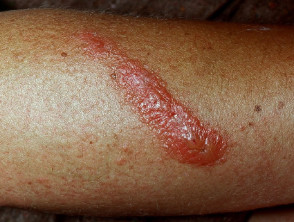
Phytophotodermatitis does not constitute an allergic allergic reaction. reaction. It occurs after skin exposure to plants containing psoralens, followed by exposure to ultraviolet light. The affected skin area often presents hyperpigmentation persistent hyperpigmentation for months. The rash resulting rash can form blisters and frequently exhibits a streaked or veined pattern.
Irritant Reactions
Irritant contact dermatitis is triggered by contact with various chemicals present in plants, such as:
- Acids
- Calcium oxalate crystals
- Enzymes proteolytic..
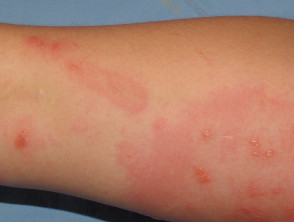
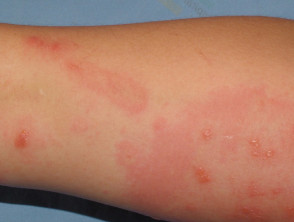
Characteristic symptoms of irritant contact dermatitis include redness, blister development, desquamation or skin cracking. Dermal involvement caused by contact with plants often manifests as irregularities, streaks, or linear patches. plaques linear.
Allergic Contact Dermatitis
This form of dermatitis is quite common among floristry staff. It requires the individual's immune system to develop a specific sensitization sensitization to a chemical compound present in the plant. Those who do not have this sensitization are not vulnerable to this type of dermatitis. If primary sensitization primary occurred previously, the subsequent reaction to the chemical can appear as soon as one day after re-exposure.
Among the most common sensitizing agents are primine (found in primrose species), sesquiterpene lactones (present in species of the Compositae family), and tulipalin A (found in tulips and Alstroemeria species).
The signs and symptoms of allergic contact dermatitis are very similar to those observed in irritant contact dermatitis, although delayed hypersensitivity is its distinguishing feature.
Managing exposure to these irritants and allergens is crucial for maintaining skin health in the floristry work environment. Correctly identifying the type of dermatitis is the first step toward effective management and treatment.
but the resulting rash can spread to areas that have not had direct contact with the triggering plant.
Plant-Related Contact Dermatitis
Contact dermatitis from plants
Contact dermatitis from plants
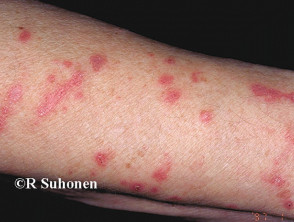
Contact dermatitis from plants
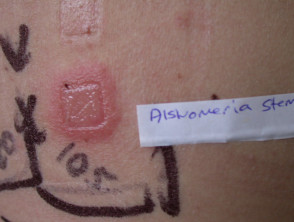
Contact dermatitis from plants
Contact Urticaria
Contact urticaria manifests through specific allergic or non-allergic reactions.
- toxicity wheals Wheals (hives) appear immediately after contact with the causal agent and usually resolve within one hour.
- Non-allergic contact urticaria from plant compounds can affect any exposed individual, whereas allergic Allergic reactions reactions only develop in people previously sensitized to that specific plant.
Sporotrichosis: A Fungal Infection
Sporotrichosis is a secondary mycotic infection caused by the species *Sporothrix schneckii*.
- The mold causing sporotrichosis is frequently found in soil, plants, and decaying vegetation, such as compost.
- The Unlike other scars Skin infections arise when the fungus penetrates the skin through scratches, cuts, or minor abrasions.
- Although skin infections are the most common manifestation, sporotrichosis infection can become respiratory if the spores spores are inhaled, and it can spread to bones, joints, and even the central nervous system.
- Patients with cutaneous sporotrichosis develop reddish, pink, or purplish lesions; specifically, nodules nodules appear in exposed areas such as hands, fingers, or forearms.
Occupational Risk Assessment for Skin Prevention
A comprehensive risk assessment in the work environment is fundamental to preventing occupational dermatological problems. It is crucial to educate employees about the physiological properties of their skin and their susceptibility to irritants, including phytochemicals. Furthermore, employers must implement rigorous controls in the workplace to minimize the incidence of dermatitis and have clear protocols for attending to employees who develop skin conditions.
Whenever feasible, a strict "zero contact" policy with known irritants must be applied.
- Substitute products that cause dermatitis with safe alternatives.
- Implement engineering controls, such as appropriate and efficient ventilation systems.
- Ensure the supply of adequate tools and the necessary personal protective equipment (PPE) to maximize worker safety.
Applying these preventive and control measures is essential to protect the dermal health of employees exposed to potentially harmful plant agents.
Personal Protective Equipment (PPE) and Dermatological Risks
Gloves represent the most common form of PPE and, when used correctly, offer an effective barrier to protect the skin from irritants and sensitizing agents.
However, glove use involves certain considerations and challenges:
- It is essential that employees receive training on which type of glove is appropriate for each task, as well as the correct protocols for their inspection, donning, and subsequent disposal.
- Organizations may need to maintain an inventory of multiple glove varieties to cover the different needs of the work environment.
- The material of the glove itself can be a source of skin problems, such as contact urticaria (common with latex) or dermatitis caused by allergy to rubber accelerators used in manufacturing.
Essential Care Tips for Florists' Hands
To effectively manage hand care and hygiene, floristry professionals are advised to implement the following practices:
- Wear gloves whenever the task warrants it.
- Limit continuous glove use to no more than one consecutive hour, especially disposable models.
- Wash hands with a mild soap or soap-free cleanser as needed, ensuring they are dried completely, but avoiding vigorous rubbing.
- The use of lotions or creams moisturizers is permitted according to individual hydration needs.
- If or develop any episode of dermatitis develops, it is wise to seek advice from a medical professional.
Diagnosis Process for Occupational Skin Diseases
Accurate identification of skin conditions requires comprehensive patient history collection, in-depth knowledge of the safety data sheets for manipulated materials, and often, the performance of patch tests patch to confirm allergic contact dermatitis.
Key elements supporting the diagnosis of occupational dermatitis include:
- The characteristic clinical presentation of the rash.
- Proven correlation with possible occupational exposure to an identified irritant or contact allergen.
- A distribution anatomic distribution of the rash that matches how exposure to the occupational contact agent occurred.
- A reliable temporal correspondence between the time of exposure and the onset of symptoms.
- Rigorous exclusion of any possibility of non-occupational exposure.
- Positive results in patch or provocation tests involving controlled exposure to the suspected agent.
Standard treatment for dermatitis of occupational origin may include:
- Application of wet dressings for those dermatitides presenting active oozing (drainage).
- Use of oral corticosteroids Use of topical.
- corticosteroids to manage dermatitis inflammation.
Administration of oral antihistamines for symptomatic control of associated urticaria.