Definition and Use of Personal Protective Equipment (PPE)
Personal Protective Equipment (PPE) fundamentally consists of portable items designed to protect users from hazards present in their environmental surroundings. These hazards can be classified as physical, chemical, biological, radiological, or nuclear. The use of PPE is essential in a wide range of situations and operational environments, adapting to the specific type of exposure.
There is a common misconception: assuming that PPE guarantees absolute protection against any type of harm. It is crucial to understand that there will always be a certain level of inherent risk when operating in hazardous environments. The primary goal of correctly used PPE is to significantly mitigate and reduce this risk of injury or illness.
Key Concepts of Personal Protective Equipment
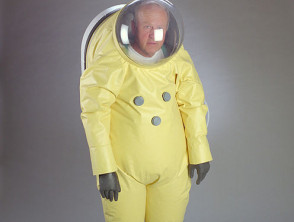
Ames Hazmat Suit
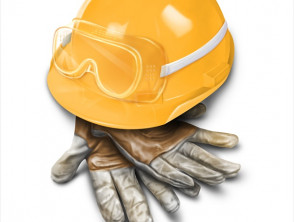
Occupational Safety Equipment
Who Uses Personal Protective Equipment?
PPE is critically employed in the workplace due to constant exposure to occupational hazards. Occupations that frequently require this type of protection against dangers include:
- Healthcare workers exposed to bodily fluids and pathogens.
- Construction personnel exposed to dust, debris, and the risk of falling objects.
- Firefighters facing intense smoke and extremely high temperatures.
- Farmers handling animal waste or exposed to high levels of plant pollen.
In addition to the workplace, certain types of PPE—such as protective gloves, particulate masks, and hearing protection devices—are frequently used at home for specific tasks.
- Gloves are useful for protecting hands from irritants during activities like dishwashing, gardening, or food preparation.
- A dust mask should be used when performing deep cleaning or carpentry tasks.
- Protective earmuffs are recommended when operating noisy tools like lawnmowers or chainsaws.
Common Types of Personal Protective Equipment
Various PPE designs have been specifically developed to offer focused protection to different areas of the human body.
Full Body Protection
Specialized suits, such as hazardous materials suits, are designed to offer complete protective coverage for the entire body.
- A suit for hazardous material handling or decontamination can be manufactured using a vast range of resistant materials.
- Most of these specialized suits incorporate self-contained, closed-loop air purification and circulation systems.
- Their main application is in decontamination procedures involving the handling of volatile chemicals, infectious pathogens, toxic chemical waste, or nuclear elements.
Head and Hair Protection
Protective helmets and hair coverings designed for containment or hair protection are commonly used for the head.
Fundamental Guidelines for the Use of Personal Protective Equipment (PPE)
The proper use of Personal Protective Equipment (PPE) is crucial to safeguard physical integrity against various risks. Below are the essential rules governing the selection and use of this vital equipment, starting with head protection.
Head and Hair Protection
- It is recommended to use a helmet made of lightweight yet resistant materials, such as fiberglass, to shield the head from possible trauma mechanical trauma.
- Hair coverings (e.g., snoods or hygienic caps) must be used to prevent hair from accidentally getting caught in operating machinery.
Face and Eye Protection
Face shields, safety glasses, and protective masks are used to safeguard the eyes and facial region.
A face shield is used to protect the wearer against physical injury or exposure to an secondary.
- Metal-composed shields are effective in preventing eye and facial burns generated by welding processes.
- Clear plastic shields are designed to prevent biohazardous fluids from splashing directly onto the user's face.
The use of safety glasses prevents the entry of foreign particles or the projection of hazardous liquids into the eyes.
- Regular vision glasses lack the required protective capabilities and should not substitute certified safety equipment, especially in healthcare settings [1].
- For those who already wear prescription glasses, it is possible to wear safety glasses specifically designed to fit over regular lenses.
A functional mask or respirator prevents the inhalation of fine dust and airborne infectious particles.
- Furthermore, these masks act as a barrier that traps respiratory droplets generated when coughing or sneezing.
- Masks are available with various filtration levels.
- The selection of a mask must be strictly based on the size of the hazardous particles present in the environment, ensuring the appropriate filter [2].
Body Protection
Aprons, gowns, or protective suits (coveralls) are commonly used to protect the torso and limbs.
- The apron is used when the risk of hazardous exposure is lower on the extremities, such as in the scenario of radiological protection specifically targeting the gonads (ovaries or testicles).
- Gowns or coveralls are preferred when more complete protection is required, including total limb coverage.
Hand Protection
Gloves, made from a wide variety of materials, serve as an essential protective barrier against various occupational hazards.
- Gloves made of latex, nitrile, and vinyl are fundamental for significantly reducing the transmission of infectious agents.
- Heat-resistant models, made with acrylic or flame-retardant materials, prevent thermal burns or those generated by welding.
- Gloves made from high-durability plastics offer defense against certain corrosive chemicals that could cause irritation or chemical burns.
- In environments like slaughterhouses, Kevlar gloves provide crucial protection against physical damage, such as deep cuts from knives.
Foot Protection
Specialized boots, manufactured from different materials, are used to safeguard the bone structure and skin of the feet.
- Rubber boots offer protection against liquid splashes and improve traction to prevent slips and falls.
- Steel-toed boots are indispensable to prevent trauma or severe crushing injuries to the toes and instep.
Healthcare PPE
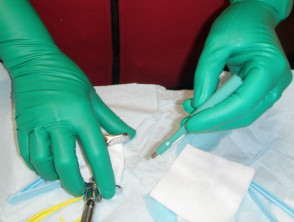
Green gloves in surgery
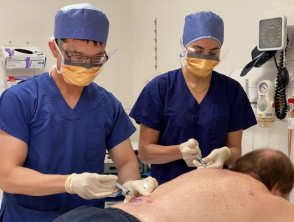
Personal protective equipment during minor skin surgeries
Optimization in the Use of Personal Protective Equipment
It is fundamental that PPE is selected and fitted precisely to maximize the reduction of exposure to hazards inherent to the task [3]. Professional entities usually establish detailed and specific guidelines for the correct choice of PPE in particular work sectors.
Likewise, the process of donning (putting on) and doffing (taking off) PPE must follow a strict and documented protocol [4].
- If the equipment is not donned following the correct sequence, the level of protection can be compromised due to poor fit in some areas.
- An inadequate or rushed removal sequence can result in cross-contamination of the wearer after having been exposed to the hazard.
Various studies conducted with healthcare personnel have consistently shown that the contamination rate drastically decreases when the worker has completed a structured training program on PPE management [5]. Therefore, implementing continuing education sessions on PPE is crucial for risk control in any organization.
It is highly recommended for all users. Additionally, there is evidence that supervised use of Personal Protective Equipment (PPE) can reduce the rate of protocol deviations and improve the quality of protection provided [6].
Side Effects and Risks Associated with the Use of Personal Protective Equipment
Although PPE is extremely useful, its use can cause unwanted side effects in some individuals, such as [7]:
- Excessive body overheating.
- Irritant contact dermatitis
- Allergic contact dermatitis.
- Mechanical skin injuries, including friction and occlusion.
Up to 99% of adverse skin side effects caused by occupational PPE use are attributed to gloves, especially affecting healthcare workers [8]. Non-glove-related dermatoses are more prevalent in the manufacturing sector [7].
Risk of Overheating from PPE
Overheating resulting from PPE use is a very frequent complication [9]. The equipment can significantly increase body temperature by hindering body heat dissipation through sweat evaporation [10]. Heavier forms of PPE can also enhance internal heat generation due to the greater physical effort required to wear them.
Excessive sweat loss and consequent dehydration can trigger heat-related illnesses, ranging from a mild heat rash (miliaria) to potentially fatal heat stroke [11]. If signs of heat illness are detected, it is imperative to implement cooling measures immediately [11].
Irritant Contact Dermatitis: Causes and Examples
Most cases of contact dermatitis associated with PPE are classified as irritant. In these cases, the reaction is linked to the dose of exposure and not to the development of a hypersensitivity immune reaction. Some examples of common irritant reactions related to PPE include:
- Hand dermatitis caused by excessive sweating inside gloves.
- Direct rubbing of gloves or other PPE pieces against the skin, causing direct irritation.
- Rough fabrics, such as seams or wool fibers, rubbing against sensitive skin.
- Penetration of chemical substances through leaks in body protection suits.
Cutaneous Hypersensitivity Reactions
Both Type I and Type IV hypersensitivity reactions can develop due to the specific materials or chemicals used in the manufacturing of PPE.
- The Type I hypersensitivity generally manifests immediately after exposure, presenting with acute urticaria or even anaphylaxis. Type I allergens, such as the latex protein in rubber gloves, are identified through skin prick tests.
- The Type IV hypersensitivity usually appears several days after initial contact, manifesting as allergic contact dermatitis. Potential allergens are identified through patch testing.
Among the known allergens that cause allergic contact dermatitis from PPE are [8, 12]:
- Rubber accelerators common in gloves, both latex and latex-free.
- Textile dyes present in protective garments.
- Metals used in the manufacturing of masks and boots.
- Formaldehyde and other preservatives found in N95 respirators and other types of surgical masks.
Once the responsible allergen is identified, contact with it should be avoided whenever possible to prevent future reactions.
Mechanical Skin Damage
Cases of facial ulcers and acne have been documented in users wearing glasses or masks for prolonged periods, as a consequence of the pressure effects exerted by these devices.
An ulcer is defined as an open defect in the skin barrier. Sustained pressure exerted by a mask or glasses can interrupt blood flow, eventually leading to the death of the underlying skin tissue and, consequently, the formation of a pressure ulcer.
Mechanical acne is a complication arising from pre-existing vulgar acne. Friction and continuous pressure on lesions can cause micro-abrasions that exacerbate existing inflammation [13]. Pustules can deepen and increase in size under constant pressure [14].
Irritant contact dermatitis occurs when the skin is directly exposed to water and soap, the alcohol present in disinfectants, or a strong physical or chemical irritant. This irritant deteriorates the skin barrier, thus facilitating the penetration of other harmful agents, resulting in localized inflammation, pain, and itching.
Furthermore, compromised skin has a greater susceptibility to developing a bacterial infection [14]. Therefore, it is essential to take preventive measures to avoid skin damage, including eliminating the source of irritation and limiting the number of consecutive hours of PPE use [13–15].
Washing the face regularly using a mild cleanser can be beneficial for mechanical acne [14]. Likewise, it is advisable to apply some type of lubricant or moisturizer to the specific areas where the most pressure is exerted [13].