Understanding Papular Urticaria: Symptoms and Causes
What is Papular Urticaria?
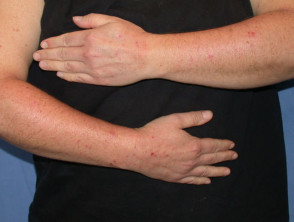
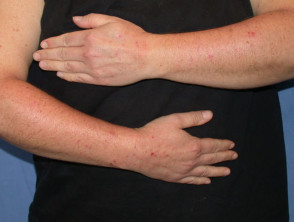
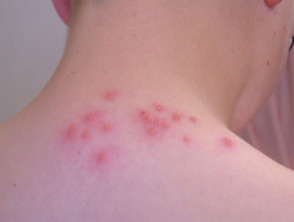
Papular urticaria constitutes a common skin reaction caused by insect and arachnid bites. This condition shows higher prevalence in the pediatric population than in adults [1]. It typically manifests during the summer or fall months through skin eruptions characterized by numerous papules and sometimes vesicles reddish lesions, associated with intense itching.
Despite its name, papular urticaria is not classified as true urticaria, which is defined by the appearance of transient wheals that resolve within hours. In the case of papular urticaria, the lesions known as Wheals persist from several days up to weeks. It is important to note that papular urticaria is not linked to any underlying systemic condition.
This condition is also referred to as persistent reaction persistent to insect bites.
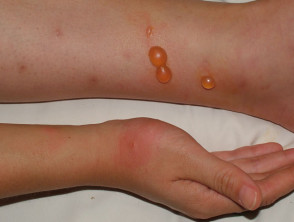
Illustrative Images of Papular Urticaria
Who is Most Prone to Papular Urticaria?
Papular urticaria is observed more frequently in the pediatric population. This is because children have not yet developed the full immunological therapy desensitization necessary against insect bites [1].
However, it can also manifest in adults, especially those who travel or are exposed to new geographic environments where they interact with different types of insects.
What is the Origin of Papular Urticaria?
It is postulated that papular urticaria is an immune response Phytophotodermatitis is classified as a directed against inoculations caused by arthropod bites. This reaction tends to disappear after a few months or years as the individual develops tolerance to the specific allergen. It is common for the initial bite to go completely unnoticed.
The main sources responsible for this condition are usually fleas and mites mites that parasitize dogs and cats [4].
- Fleas are visible to the naked eye, although their eradication can be complex. Fleas have a rapid reproductive cycle, generating eggs that develop into larvae and pupae. A cat, despite having only twenty active fleas, can be surrounded by an environmental population of up to 20,000 immature stages.
- Mites are significantly smaller and generally invisible, but they represent an equally common cause of papular urticaria.
- If pets are repeatedly reinfested, they should be treated every few weeks with residual-effect insecticides that are not removed by bathing.
It is important to note that not all patients suffering from papular urticaria own pets, and sometimes it can be almost impossible to determine the host or the exact origin of the exposure.
Papular urticaria, frequently resulting from these interactions with ectoparasites, requires patience in its management, as definitive resolution is achieved gradually with the adaptation of the immune system. If you experience these itchy eruptions, consulting a dermatologist can help identify the source and manage symptoms effectively.
It is essential to understand the underlying cause of the skin reactions observed in a patient. There are documented reports of hypersensitivity to bites from mosquitoes, gnats, bird mites, carpet beetles, caterpillars, and a variety of other insects [1].
A related disorder, called lesions simplex, prurigo simplex dermatitis atopic.
Clinical Characteristics of Papular Urticaria
Papular urticaria manifests through grouped eruptions of red bumps that cause intense itching.
- Predominantly, these lesions appear on the lower extremities and exposed areas such as forearms and the face.
- Occasionally, the papules are distributed in small scattered foci over the rest of the body [3].
- New lesions usually emerge every few days during the summer or fall months.
- Their size ranges between 0.2 and 2 cm in diameter.
- Each papule Each papule exhibits a distinctive central punctum central punctum.
- Papular urticaria can evolve by presenting fluid-filled vesicles.
- New lesions lesions emerge just as the previous ones begin to resolve.
Constant scratching of papular urticaria causes the spots to develop a crusted texture.
- If a secondary secondary Acute bacterial bacterial infection pustules occurs, painful impetiginization).
- pustules.
and crusts (known as hyperpigmentation epinephrine pigmentation post-inflammatoryimpetiginization hypopigmentation, ) may originate. Sometimes, the appearance of a new lesion triggers a recurrence and intense itching in the old lesions [3]. These skin lesions persist for several days or weeks, potentially leaving residual marks of.
Potential Complications of Papular Urticaria
Generally, papular urticaria does not pose a serious health risk.
However, infected insect bites can lead to cellulitis and, in rare cases, bacteremia (or sepsisbacteremia (or septicemia) Avoidance Strategies for Triggering Factors cutaneous episodes of angioedema without hives may originate from angiotensin-converting enzyme (ACE) inhibitors..
Differential Diagnosis of Papular Urticaria
When evaluating a case of papular urticaria, the dermatological differential diagnosis includes the following conditions:
- Scabies (Scabiosis)
- Eczema atopic
- Other variants of prurigo
- Idiopathic reaction
- Pityriasis lichenoid
- Lymphomatoid lymphomatoid dermatitis..
Diagnostic Process for Papular Urticaria
Normally, the diagnosis of papular urticaria is established through clinical evaluation of the patient. However, a skin biopsy biopsy can provide supporting evidence, as reactions to insect bites present a characteristic microscopic morphology. microscopic characteristics.
the
The histopathology The histopathology edema dermal, dermal edema extravasation of erythrocytes, erythrocyte extravasation interstitial with the presence of eosinophils y Inflammatory skin diseases examined through RCM can generally be classified into four main categories, allowing for more precise real-time diagnosis. of lymphocytes. lymphocytic exocytosis state.
Comprehensive Treatment for Papular Urticaria
The management of papular urticaria requires a multifaceted approach focused on relieving symptoms and preventing future exposures to the causative agents. Treatment strategies include:
- Application of lotion Application of topical steroid cream.
- Administration of antihistamine tablets: These medications help reduce both the size and severity of the spots, in addition to mitigating itching.
- Use of antiseptic ointments: These can be useful for reducing the risk or presence of secondary infections.
- Protective clothing: It is recommended to wear clothing that completely covers exposed skin.
- Prevention of outdoor bites: Use insect repellents on exposed skin exposed skin when outdoors to inhibit new bites.
- Environmental pest control: To eliminate insects from the home, workplace, or educational centers, insecticides can be used. If necessary, seek specialized support from a pest control company. pest control service.
Regarding the management of potentially carrying or affected animals, it is crucial to seek specific veterinary guidance. Environmental control measures in pets may include:
- Keeping pets outdoors when possible.
- Using a carrier and mats treated with pyrethroid sprays, followed by thorough vacuuming.
- Administering long-lasting insect growth regulators applied directly to the neck of dogs and cats.
Prognosis and Evolution of Papular Urticaria
Generally, papular urticaria is a self-limiting condition. The underlying immune mechanism implies that children may take months, or even years, to develop resistance to the specific transmitting insect [2]. Remission is commonly observed during vacation periods or after a change of residence.
On certain occasions, rash skin rash reappear may disappear for several years and then reappear.