Definition and Key Concepts of Noonan Syndrome
The Noonan syndrome is an autosomal dominant genetic disorder. autosomal It is linked to mutations mutations in genes that affect the Ras/MAPK signaling pathway (mitogen-activated protein kinase), classifying it within a group known as RASopathies.
The main characteristics that define Noonan syndrome include:
- Distinctive facial features.
- Short stature.
- Alterations in chest shape (precordial deformity).
- Present congenital heart disease.
Given its clinical variability, Noonan syndrome is also known by several historical or alternative terms, such as:
- Familial Turner Syndrome.
- Female pseudo-Turner syndrome.
- Male Turner syndrome.
- Noonan-Ehmke syndrome.
- Pseudo-Ullrich-Turner syndrome.
- Turner syndrome.
- Turner phenotype with karyotype development.
- Ullrich-Noonan syndrome.
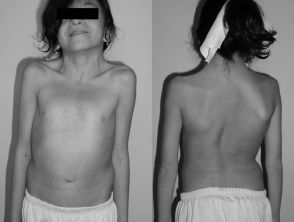
Visual Representation of Noonan Syndrome
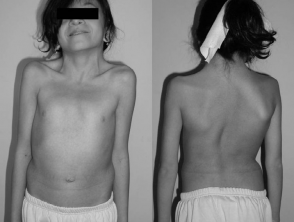
Noonan Syndrome
Source: Wikipedia
Genetic Causes of Noonan Syndrome: Ras/MAPK Pathway
Noonan syndrome is caused by mutations gel genes critical mutations that regulate the Ras/MAPK cell signaling pathway. This pathway is essential for fundamental biological processes such as cell division, proliferation, , differentiation and cell migration. Genetic alterations in this cascade lead to growth dysregulation.
Specifically, mutations in the gene PTPN11 gene are implicated in more than 50% of diagnosed cases of Noonan syndrome. Subsequently, mutations in SOS1 are identified in 10-15% of cases, while mutations in the genes RAF1 y and RIT1 genes genes each account for approximately 5% each. Other genes.
explain the remaining percentage of etiologies. It is important to note that the predisposition exact cause of Noonan syndrome remains unidentified in up to 20% of affected individuals.
Clinical Manifestations and Physical Findings of Noonan Syndrome
Noonan syndrome affects both sexes and all races. In approximately 50% to 70% of cases, short stature manifests. Although birth weight and length are usually normal, the growth rate decreases over time, which is suspected to be related to abnormal growth hormone levels.
The distinctive facial features are a hallmark of Noonan syndrome and include:
- Deep nasolabial fold (the crease between the nose and the upper lip).
- Hypertelorism (excessive separation between the eyes).
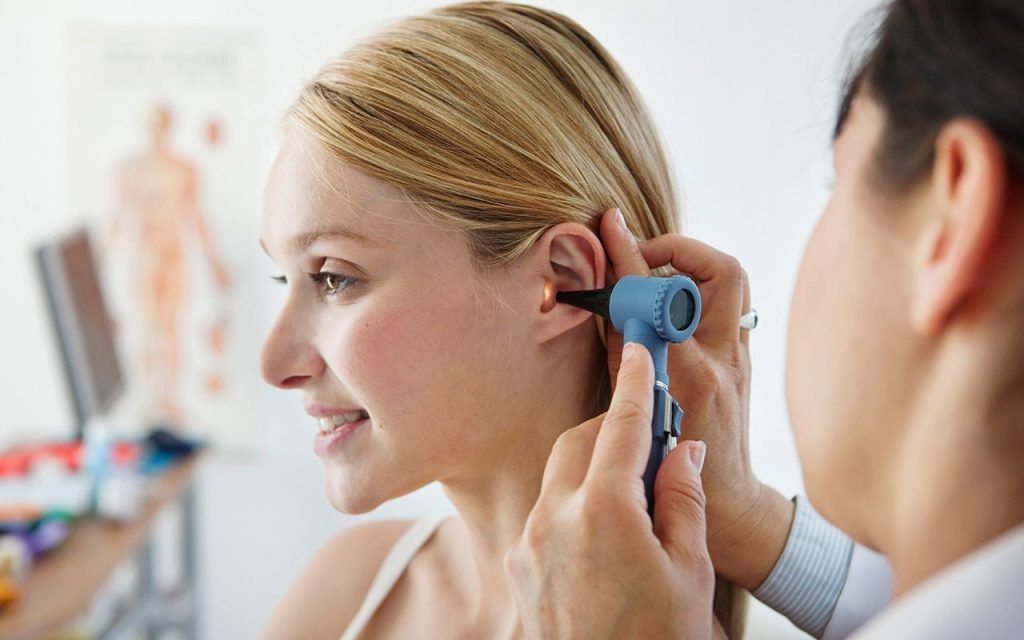
- Low-set and posteriorly rotated ears.
- High and arched palate.
- Dental misalignment (malocclusion).
- Micrognathia (small lower jaw).
Other Other Lesions Classified as Connective Tissue Nevi Other clinical manifestations associated with Noonan syndrome include:
- Webbed neck (redundant skin giving an appearance of wings).
- Short neck with a low hairline at the back.
- back. Thoracic deformities such as pectus excavatum (sunken sternum) or pectus carinatum (protruding sternum).
- Scoliosis (abnormal lateral outer curvature of the spine).
- Lymphedema (swelling caused by lymph accumulation).
- Coagulation or bleeding disorders.
- Hypogonadism Hypogonadism hormone production).
Congenital heart disease is highly prevalent in Noonan syndrome; the most commonly observed heart defect is pulmonary valve stenosis. pulmonary.
Understanding these genetic and clinical aspects is fundamental for the early diagnosis and multidisciplinary management of individuals affected by Noonan syndrome.
A stenosis has been corrected. The skin effects Painful desquamative vaginitis that interferes with sexual relations and causes vaginal.
The skin's blood vessels associated with Noonan syndrome are diverse, and scientific documentation regarding them remains limited. Among the documented dermal manifestations of Noonan syndrome are:
- Presence of nevi melanocytic nevi pigmented (moles).
- Presence of pigmented melanocytic nevi (moles). Anomalies in dermatoglyphics (fingerprint patterns), characterized by an increase in whorls on the fingertips, secondary to peripheral lymphedema. peripheral.
- Dermatitis of stasis a lesion dermatosis inflammatory Stasis dermatitis (a common inflammatory dermatosis, caused by venous pooling venous in the lower extremities).
- Hyperkeratosis Plantar o keratoderma, Plantar hyperkeratosis or keratoderma, which involves thickening of the skin on the soles of the feet.
Noonan syndrome with multiple lentigines solar, previously termed LEOPARD syndrome, is a condition similar to Noonan syndrome and presents distinctive skin features, such as:
- Macules Café-au-lait macules (flat, light brown spots) originating from a concentration of pigment-producing melanocytes melanocytes in the skin include several biochemical processes: in the epidermis.
- in the epidermis. Lentigines ( lesions flat or slightly raised lesions with well-defined borders): Unlike common freckles, these macules do not react to sun exposure. well-defined).
Complications Associated with Noonan Syndrome
The cardiomyopathy hypertrophic Hypertrophic cardiomyopathy.
Individuals diagnosed with Noonan syndrome exhibit a significantly increased risk (eight times higher) of developing hematological neoplasms, or develop neoplasms hematologic, being the leukemia with leukemia being the most commonly reported type.
Treatment Options for Noonan Syndrome
Currently, there is no specific curative treatment for Noonan syndrome. The therapeutic strategy focuses on the management and control of any associated complication, such as cardiac conditions, and must be rigorously adjusted to the symptoms, clinical signs, and diagnostic results obtained in each patient.