Understanding Nevus (Mole): Definition and Special Types
An nevus (commonly known as a mole in common terminology or nevi in plural) is defined as a malformation circumscribed and stable malformation of a cutaneous component. Many nevi are present from birth, at which time they are commonly called brown birthmarks. Certain nevi are composed of melanocytes, melanocytes melanin production melanin melanin in the skin include several biochemical processes:pigment), and in these cases they are classified as melanocytic nevi or pigmented.
Specific Nevi: Nevus of Ota, Ito, and Hori
Nevus of Ota, Nevus of Ito, and Nevus of Hori represent particular forms of melanocytic nevi distinguished by their characteristic coloration, which ranges between slate brown or blue/gray. These conditions are examples of dermal melanocytosis and accumulation of dermal, dermis dermis.
- The Nevus of Ota manifests typically on the forehead and the facial area surrounding the eyes. It is important to note that it can cause hyperpigmentation hyperpigmentation sclera, , infiltrates, in ocular structures such as the sclera, cornea, iris, and retina.
- The Nevus of Hori is similar to Ota's in appearance, but symmetrically affects both sides of the face.
- The Nevus of Ito is located in the shoulder girdle, covering the area of the shoulders and upper arm.
In addition to these specific locations, dermal melanocytosis can present in other areas of the body, including the inside of the oral cavity.
Images of Nevus of Ota
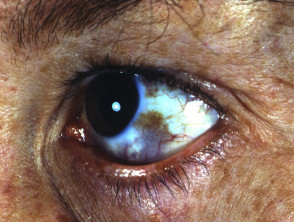
Nevus of Ota
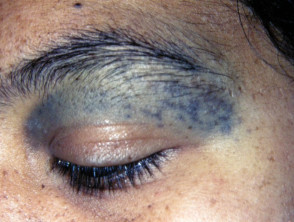
Nevus of Ota
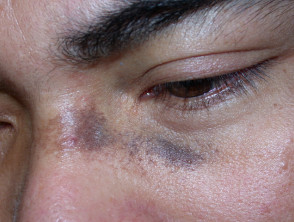
Nevus of Ota
Images of Nevus of Ito
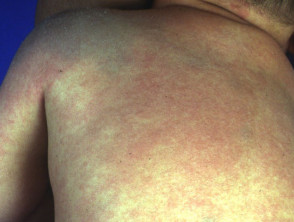
Nevus of Ito
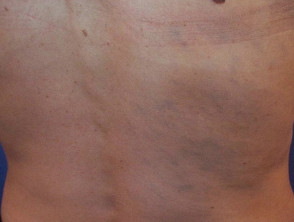
Nevus of Ito
Origin, Risk, and Types of Dermal Melanocytosis
The exact origin of dermal melanocytosis remains unknown. Specific mutations mutations development. development. The influence of Ultraviolet Radiation Ultraviolet radiation.
Regarding prevalence, Nevus of Ota is significantly more common than Nevus of Ito. Approximately 50% of Nevus of Ota cases are present from birth; however, they can manifest during adolescence or adulthood. Nevus of Hori, on the other hand, is a form of acquired melanocytosis, as it is not present at birth.
Demographic Factors and Prevalence
Nevus of Ota and Ito show a higher incidence in Asian populations; for example, among the Japanese population, the prevalence of Nevus of Ota is between 0.2% and 0.6%. Furthermore, these conditions tend to manifest more frequently in women. It is important to note that both variants are uncommon in individuals of Caucasian descent.
Signs, Symptoms, and Possible Complications of Dermal Melanocytosis
In all manifestations of dermal melanocytosis, patients may experience the following characteristics:
- The coloration is variable, ranging from violaceous brown, bluish-violet to greenish-blue tones.
- Nevi present since infancy tend to progress and gradually darken until adulthood is reached.
- The perception of the nevus color can change according to environmental or personal conditions, such as fatigue, menstrual cycle, or heat exposure.
- glaucoma glaucoma.
- Areas of hair loss may appear diffusely (which is clinically known as Melanoma Melanoma development eye drops the optic nerve. optic nerve is also common.
Methods for Diagnosing Dermal Melanocytosis
Generally, the diagnosis of dermal melanocytosis is established through clinical observation of the characteristic alteration of skin coloration, classified according to the affected body region.
skin biopsy biopsy biopsy.
It is crucial to differentiate this condition from other pathologies that also cause bluish or grayish pigmentation in the skin. These conditions to consider include:
- Blue nevus.
- Pigmentation Drug-induced pigmentation.
- Melasma.
- Pigmentation Post-inflammatory pigmentation.
- pigmented lichen planus and dermatosis cinerea dermatosis.
Treatment Options for Melanocytosis
laser treatments laser Q-switched switched of 1064nm, Alexandrite, or QS ruby laser) or intense pulsed light (IPL).
- Picosecond laser may be the most effective device currently available.
- Both light devices and lasers work by the targeted destruction of dermal melanocytes.
- It is common to require multiple treatment sessions, often combining different device technologies.
- Laser treatment shows greater efficacy in people with lighter skin phototypes compared to those with darker skin.
- The It is essential to remember that HNC exhibits a considerable rate of Recurrence.
dermatologist. dermatologist.