Understanding Keratosis Pilaris: Symptoms and Clinical Features
The keratosis pilaris represents a distinctive clinical manifestation within the spectrum of keratosis pilaris. It is distinguished by the appearance of follicular papules follicular, whether single or multiple, each centered by a prominent horny plug. This condition can appear on any area of the body and is also known as «spiny keratosis.».
Identifying Signs and Symptoms of Keratosis Pilaris
Generally, keratosis pilaris affects individuals from childhood through early adulthood, with adolescence being the period of highest incidence. Onset is usually sudden and is not associated with other systemic symptoms. The follicular papules manifest as small, rough bumps clustered in circular or oval areas. These areas tend to expand rapidly within a matter of days, covering significant expanses of skin.
- The patches or plaques formed by the follicular papules usually measure between 2 and 5 cm in diameter.
- The lesions develop symmetrically in common sites such as the neck, buttocks, thighs, abdomen, knees, and on the surfaces of the extensor muscles of the arms.
- Individual papules measure between 1 and 3 mm in diameter and are crowned by a horny tip or spine resembling a hair that protrudes approximately 1 mm from the follicle.
Upon gently rubbing an affected patch, the texture resembles the sensation of running your fingers over a nutmeg grater. While the lesions themselves do not cause pain, some patients report pruritus (itching discomfort).
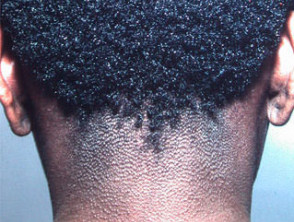
Clinical Images of Keratosis Pilaris
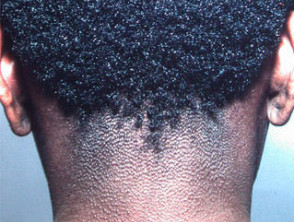
Keratosis pilaris
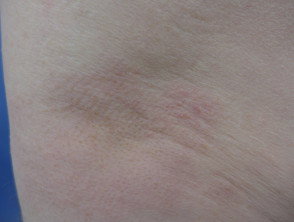
Keratosis pilaris
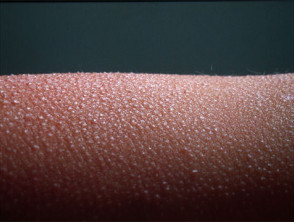
Lichen Planus Pilaris
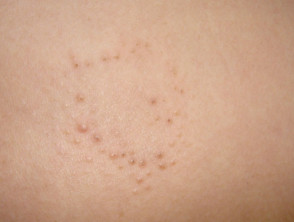
Keratosis pilaris
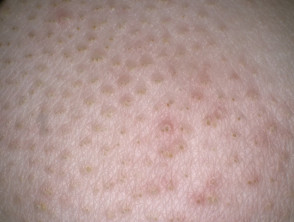
Keratosis pilaris
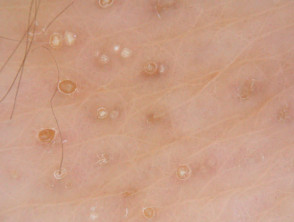
Dermoscopic view
Although keratosis pilaris is predominantly a benign and self-limiting dermatological condition that improves over time, the rough texture and appearance of the papules can cause aesthetic concern for patients. Accurate identification of these clinical signs is essential to differentiate it from other, more complex keratoses and skin conditions.
Underlying Causes of Keratosis Pilaris
The exact etiology of keratosis pilaris remains a mystery, as none of the various proposed theories have been definitively confirmed. Despite the lack of a proven cause, there are several hypotheses that attempt to explain its appearance, which warrant consideration.
- Reaction to an secondary unidentified infection.
- Potential association with atopic patch test, which is a hereditary or genetic predisposition hereditary o predisposition to develop forms of contact such as asthma, eczema bacterial resistance fever hay fever.
- A A positive result for melanoma suggests that the patient's skin should be monitored by a specialist in early melanoma detection, which may include whole-body photographic surveillance via predisposition underlying.
Diagnostic Methods for Keratosis Pilaris
The diagnosis of this condition is established exclusively through direct clinical evaluation by a professional. Currently, there is no specific laboratory test or diagnostic study that can definitively confirm a case of keratosis pilaris. It is important to note that the histological findings of keratosis pilaris show notable similarities to those observed in keratosis pilaris, which can complicate differentiation without the proper clinical context.
Treatment Options for Managing Keratosis Pilaris
Currently, there is no specific curative treatment available for keratosis pilaris. Fortunately, in most cases, the condition tends to resolve on its own within a period of one to two years. However, in a minority of patients, persistence spanning several decades may be observed. For those seeking symptomatic relief, the following self-care or medical interventions may be helpful: persistence. that spans several decades. For those seeking symptomatic relief, the following self-care or medical interventions may be useful:
- Use mild cleansers formulated without soap, as traditional soap can aggravate skin dryness.
- Apply a lotion moisturizer twice a day. It is recommended to try products containing urea, salicylic acid, or alpha-hydroxy acids to improve texture.
- Gently exfoliate the skin by rubbing it with a pumice stone or an exfoliating sponge during bathing or showering.
- The use of Topical topical, topical retinoids creams , available as gels or creams by prescription. Mild erythema and scaling are common in treated areas during the first few weeks; however, topical retinoids are contraindicated during pregnancy.
- In certain scenarios, treatment with laser-assisted laser can offer beneficial results.
Although the cause of keratosis pilaris remains undetermined, management focuses on skin care and reducing dryness. Since remission is usually the natural course of the disease, consistency in hydration routines and gentle exfoliation are key to improving appearance and comfort while awaiting spontaneous resolution.