Imidazolidinyl Urea: What It Is and How to Detect Allergic Reactions
Imidazolidinyl urea is a widely used preservative in various cosmetic and pharmaceutical formulations due to its ability to release small amounts of formaldehyde, which helps preserve the products. This compound is found in a wide variety of everyday items.
Cosmetic Products Containing Imidazolidinyl Urea
This preservative is common in makeup and beauty products. Items that may contain imidazolidinyl urea include:
- Foundations, powders, and facial concealers
- Eye makeup, including eyeliners, eyeshadows, and mascara
- Facial makeup items such as blushes
- Bronzers and creams self-tanning creams
- Makeup removers
- Cuticle removers if all nails present abnormalities and there is no involvement in any other body area. This condition thins the
Personal Hygiene and Pharmaceutical Products with Imidazolidinyl Urea
In addition to cosmetics, imidazolidinyl urea is also incorporated into pharmaceutical and personal care products to extend their shelf life and prevent microbial growth:
- Topical burn remedies
- Shampoos
- Lotions and moisturizing creams
- Body powders
- Sunscreens
- Cleansers and other specialized skin care products
- Prescription medications topical
Reactions and Possible Food allergy (IgE-mediated): Commonly associated with milk, egg, peanut, or shellfish. to Imidazolidinyl Urea
Although reactions of dermatitis infection typical allergic contact dermatitis, may occur, historically imidazolidinyl urea is not considered a frequent cause of contact allergy compared to other preservatives on the market. This low incidence is why it is frequently chosen as a preservative in products marketed as «hypoallergenic.» Nevertheless, if a person has a specific sensitivity to this compound, any product labeled as hypoallergenic could trigger an adverse reaction and, therefore, must be diligently avoided.
Evaluation of Allergic Contact Dermatitis from Imidazolidinyl Urea
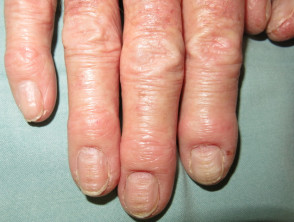
Evaluation of chronic paronychia and hand dermatitis
Diagnosis of Allergy to Imidazolidinyl Urea
The process for diagnosing an allergy to imidazolidinyl urea is primarily based on the patient's detailed clinical history, supplemented by specialized allergy testing, specifically patch testing. diagnostic patch tests. To confirm sensitization, a 2% solution of imidazolidinyl urea diluted in petrolatum is generally applied.
Although the patient may potentially perform a self-test with a product, this maneuver should only be carried out after a thorough medical consultation. This self-analysis should be limited to items designed for prolonged skin contact, such as lotions and cosmetics (excluding items like eyeliners or mascaras). It is suggested to apply a small amount to a sensitive skin area, such as the crook of the forearm, twice daily for one week. If no reaction is observed, it can be repeated on a small area behind the ear. The absence of a response suggests a low probability of allergy. However, caution should be exercised when applying it to large areas, as it can be irritating. Seborrheic.
It is essential not to use this testing method with rinse-off products, such as shampoos or cleansers, as prolonged contact or occlusion in sensitive areas could easily induce irritant dermatitis rather than a true allergic reaction.
Management of Treatment for Dermatitis Due to Imidazolidinyl Urea Exposure
If the diagnosis confirms an allergy to imidazolidinyl urea, the essential and primary step is to rigorously avoid any future exposure to the preservative. Subsequent treatment will depend on the severity of the clinical manifestations.
Management and Prevention of Limazolidinylurea Allergy
Once dermatitis manifests on the skin due to exposure, treatment follows general guidelines for any acute dermatitis o eczema. eczema. This includes the application of topical corticosteroids topical corticosteroids, constant use of emollients, emollients bacterial infection secondary bacterial infection, typically caused by *Staphylococcus aureus*.
Prevention Strategies to Avoid Imidazolidinyl Urea Allergy
The key to avoiding an allergic reaction is the meticulous reading of product labels. The use of any item that declares containing imidazolidinyl urea or any of its alternative names should be eliminated. It is crucial to be cautious with products marketed as "hypoallergenic," as they frequently include this preservative.
Furthermore, it is important to avoid other substances with which cross-reactivity might exist. This includes formaldehyde and other formaldehyde-releasing preservatives present in cosmetics, topical agents, and fluids used in industrial settings and for metalworking.
Formaldehyde-Releasing Preservatives to Strictly Avoid
- Quaternium-15 (Dowicil®)
- Diazolidinyl urea (Germall II®)
- DMDM Hydantoin (Glydant®)
- Bromonitropropane diol (Bronopol™)
- Tris(hydroxymethyl) nitromethane (Tris Nitro®)
You should inform your doctor about your allergy to imidazolidinyl urea. Your dermatologist dermatologist can offer more detailed recommendations, especially if your sensitivity is pronounced. Preparations incorporating other types of preservatives may be safe, provided you are not allergic to them. Consult your pharmacist for specific guidance.
Potentially Suitable Preservative Alternatives
- Methylparaben, ethylparaben, propylparaben, butylparaben, benzylparaben (Parabens)
- Methylchloroisothiazolinone
- Methylisothiazolinone
- Methyldibromoglutaronitrile / phenoxyethanol
- Sorbic acid
- Propylene glycol
It is important to note that these alternative preservatives also have the potential to induce contact allergy in susceptible individuals.
Synonyms and Trade Names for Imidazolidinyl Urea
The compound imidazolidinyl urea is known under various chemical and commercial names. Knowing these alternative names is crucial for effective identification and avoidance on ingredient lists:
- N, N-methylenebis (N'-) 1-(hydroxymethyl)-2,5-dioxo-4-imidazolidinyl urea
- Urea, N, N-methylenebis [N'-[3-(hydroxymethyl)-2,5-dioxo-4-imidazolidinyl]
- 1,1'-Methylenebis[3-[3-(hydroxymethyl)-2,5-dioxo-4-imidazolidinyl]urea]
- Germall 115®
- Imidurea NF®
- Biopure 100®
- Imidurea®
- Septicide 115®
- Tristat 1U®
- Unicide U-13®
Technical Data and Cross-Reactions of the Preservative
For precise reference regarding this contact sensitizer, its fundamental characteristics are detailed below:
Chemical Formula: C11Hsixteenn8O8
CAS Number: 39236-46-9
Identified Cross-Reactions: Formaldehyde and other preservatives that act as formaldehyde releasers.
Primary Sensitizing Substance: Formaldehyde.
Standard Patch Test Concentration: A 2% concentration of imidazolidinyl urea dissolved in petrolatum is used for dermatological testing.