

«`html
Understanding Gold Contact Allergy: Causes, Symptoms, and Affected Population
Gold contact allergy is classified as a delayed-type hypersensitivity reaction. It manifests as an allergic response, generally a dermatitis contact dermatitis, following exposure to metallic gold or its alloys.
Due to its increasing prevalence, gold was designated as the Contact Allergen Contact Allergen of the Year in 2001 by the American Contact Dermatitis Society.
Skin Reactions Associated with Gold Jewelry

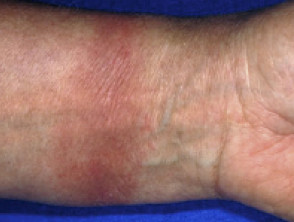
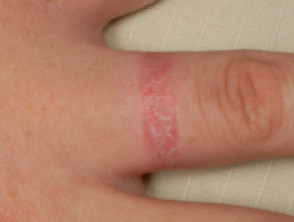
Identifying Populations at Risk for Gold Allergy
Generally, individuals diagnosed with gold contact allergy have had prior exposure through jewelry, dental devices, or occupational exposure.
The incidence of this allergy is significantly higher in women, accounting for up to 90% of cases. This is likely attributed to the greater use of gold adornments and a higher prevalence of body piercings.
It is common for individuals allergic to gold to also show cross-sensitivity to nickel and cobalt. Although gold is recorded as the second most common metallic allergen after nickel in some patch test series, diagnostic patch tests, its true clinical relevance is often a subject of diagnostic debate.
Etiological Mechanisms of Gold Hypersensitivity
Gold sensitization typically occurs as a type IV hypersensitivity reaction. This is frequently triggered after skin piercing and the immediate use of gold studs or earrings, which facilitates direct contact of the metal with the renal dermis. External factors can intensify the release of gold ions from jewelry. For example, titanium dioxide present in certain sunscreens and cosmetics can enhance this process. Likewise, copper in lower-karat gold alloys also facilitates the release of the metal, causing an allergic reaction despite the low content of pure gold. dermis.
External factors can intensify the release of gold ions from jewelry. For example, titanium dioxide present in certain sunscreens and cosmetics can enhance this process. Likewise, copper in lower-karat gold alloys also facilitates the release of the metal, causing an allergic reaction despite the low content of pure gold.
Typical Clinical Manifestations of Gold Allergy
The most frequent clinical presentation of gold contact allergy is evidenced as localized dermatitis episodes of angioedema without hives may originate from angiotensin-converting enzyme (ACE) inhibitors. or, in chronic cases, as a chronic papular reaction chronic, observed in the area of allergen application or its surroundings.
```
This may include the site of exposure, such as earlobes (due to gold earrings) or fingers and the neck, where gold jewelry is handled.
The face and eyelids are areas frequently affected, suggesting allergen transfer following gold handling or environmental exposure.
Gold allergy associated with dental restorations can manifest with oral symptoms, such as cheilitis, mucosal erosions, contact stomatitis, or an oral lichenoid reaction.
An allergic reaction to gold can also spread, presenting as generalized dermatitis.
Complications of Gold Contact Dermatitis
Gold contact dermatitis can evolve into a persistent nodular reaction, especially in pierced areas. Histology may reveal a pseudolymphomatous or sarcoid inflammatory reaction.
Cutaneous gold allergy can cause both localized and generalized reactions upon subsequent exposure to implants or medications containing this metal.
Diagnosis of Gold Contact Allergy
The diagnosis of gold contact allergy is established through a detailed clinical history, an evaluation of the rash distribution, and confirmation via patch testing. This allergy should be considered in cases of eyelid or facial dermatitis, or when skin alterations are clearly linked to contact with gold jewelry.
Specific Patch Testing for Gold
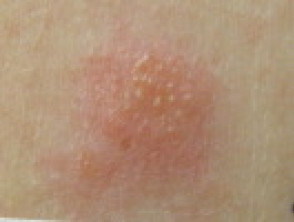
Positive patch test for gold sodium thiosulfate
The most common allergen used for patch testing is gold sodium thiosulfate (GST) in various concentrations in petrolatum. Gold allergens used in these tests are known to be irritating to atopic skin. The allergic reaction to the patch test may be delayed, manifesting up to three weeks after patch removal, and there is a possibility of it persisting for months.
Subsequently, it is essential to evaluate the clinical relevance of a positive reaction to the GST test. The prognostic importance of a positive gold patch test is relatively low compared to other common allergens, explaining the clinical presentation in only 10% to 15% of cases.
Persistent nodular reactions may require a skin biopsy of the affected area to rule out other possible diagnoses.
Differential Diagnosis of Skin Reactions to Gold
What is the differential diagnosis for
Diagnosis and Treatment of Gold Contact Allergy
When evaluating gold contact allergy, it is essential to consider several differential diagnoses to ensure an accurate identification of the underlying cause of the skin reaction. These may include:
- Allergic contact dermatitis caused by other common jewelry metals, such as nickel.
- The presence of atopic dermatitis, which can be exacerbated or confused with contact allergy.
- Irritant contact dermatitis, often caused by the accumulation of water and soap under gold rings or jewelry.
Treatment Options for Cutaneous Gold Allergy
The management of gold contact allergy follows the same principle as any other contact allergic reaction: strict avoidance of the causative allergen and treatment of active inflammation. Despite efforts to avoid gold, contact reactions can show notable persistence.
Gold tolerance varies significantly among patients. Some individuals may attempt to gradually reintroduce the use of gold jewelry for limited periods. However, for others, indefinite avoidance of gold may be necessary, depending on the intensity and chronicity of their allergic reaction.
To manage associated chronic dermatitis, the usual treatment includes the application of emollients emollients and topical use of corticosteroids topical.
corticosteroids. In persistent cases where nodules form, nodules, surgical excision excision may be required as a last resort.
Prognosis and Long-Term Management of Gold Allergy
The key aspect in the prognosis is achieving effective avoidance of contact with gold. If contact occurs through dental restorations, the removal or replacement of these materials may be considered if necessary. Furthermore, for individuals with occupational exposure to gold, it is imperative to minimize contact by using appropriate personal protective equipment daily.
A special consideration applies to patients with known gold allergy who suffer from arthritis rheumatoid arthritis. Before initiating any therapy with gold-containing medications, these patients must undergo a patch test using gold sodium thiosulfate. This is crucial due to the potential risk of developing systemic allergic contact dermatitis. systemic sclerosis).
Successful management of gold contact allergy centers on the precise identification of the trigger and the rigorous implementation of avoidance strategies to maintain long-term dermal health.