
¿What is glaucoma and why is it so important to treat it?
Glaucoma is a chronic eye disease that progressively damages the optic nerve, usually due to increased intraocular pressure. This damage can lead to irreversible vision loss if not detected and treated in time. It is estimated that millions of people worldwide suffer from glaucoma, and the most worrying thing is that many of them do not know it, as it is often asymptomatic in its early stages.
There are several types of glaucoma, the most common being open-angle glaucoma. There are also rarer forms, such as angle-closure glaucoma, congenital glaucoma y secondary glaucomas (due to trauma or medication). Although initial treatment is usually with drops or laser, in many cases surgery is required to control eye pressure and prevent vision loss.
When is glaucoma surgery recommended?
Surgery is considered when medical treatments and laser are not sufficient to control eye pressure or when the patient cannot tolerate the side effects of the drugs. It is also an option when there is already significant damage to the optic nerve and a risk of blindness.
Among the most common situations indicating the need for surgery are:
-
Persistently elevated intraocular pressure despite medication use.
-
Progression of visual damage detectable on visual field tests and OCT.
-
Difficulty adhering to drop treatment (due to allergies, forgetfulness, or physical difficulty).
-
Cases of advanced glaucoma requiring more aggressive intervention.
The ophthalmologist will evaluate the type of glaucoma, the state of the optic nerve, eye pressure, and other individual factors to decide the best time for surgery.
Types of glaucoma surgery
There are different surgical techniques to treat glaucoma. The choice depends on the type of glaucoma, the stage of the disease, the patient's age, and other ocular factors.
1. Trabeculectomy
This is the classic and most widely used surgery. It consists of creating a new drainage pathway so that aqueous humor (intraocular fluid) leaves the eye and is absorbed under the conjunctiva, forming a small filtering bleb. It is very effective but may require intensive postoperative care and long-term monitoring.
2. Drainage Implants (Valves or Tubes)
Devices such as the Ahmed or Baerveldt are placed to facilitate the outflow of aqueous humor. They are usually used in more complex glaucomas, such as secondary ones or when a previous trabeculectomy has failed. They are very useful in eyes with prior surgeries or frequent inflammation.
3. Minimally Invasive Surgeries (MIGS)
These more modern techniques include devices such as iStent, Xen Gel Stent, or canaloplasty. They are less invasive, associated with fewer complications, and are usually performed along with cataract surgery. They are ideal for mild or moderate glaucoma.
In recent years, minimally invasive glaucoma surgeries (MIGS) have established themselves as an increasingly chosen alternative by patients and ophthalmologists due to their safety, faster recovery, and fewer complications compared to traditional techniques. If you want to learn more about this innovative technique and its benefits, we recommend reading this article on minimally invasive glaucoma surgery (MIGS): trends, benefits, and future. minimally invasive glaucoma surgery (MIGS): trends, benefits, and future.
Each surgery has its advantages, limitations, and risks. Therefore, a personalized consultation with a specialist is essential.
What is the preoperative process like?
Before surgery, the patient must undergo a series of ophthalmological and general tests. Among them:
-
Intraocular pressure measurement.
-
Optic nerve examination.
-
Visual field and optical coherence tomography (OCT).
-
Evaluation of the cornea, lens, and fundus of the eye.
-
Laboratory tests and general clinical evaluation if systemic diseases are present.
The ophthalmologist will explain in detail the steps of the surgery, the possible risks and complications, as well as the subsequent care. It is an ideal time for the patient to ask all their questions and resolve doubts.
The day of surgery: what to expect?
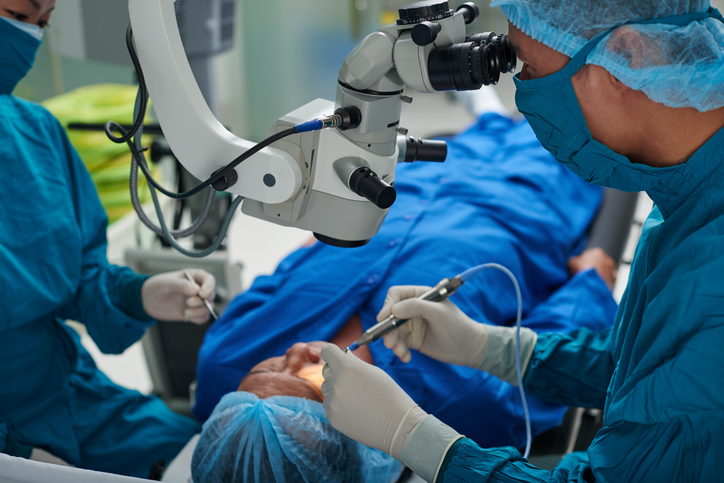
Most glaucoma surgeries are performed on an outpatient basis, meaning the patient returns home the same day. The procedure usually lasts between 30 and 60 minutes, depending on the type of surgery.
Local or regional anesthesia is used, and in some cases, mild sedation. During the procedure, the patient is awake but feels no pain.
After the operation, a patch is placed on the eye, which is removed at the first postoperative appointment, usually the next day. It is normal to feel discomfort, blurred vision, or a foreign body sensation in the first few days.
Recovery and postoperative care
Recovery can vary depending on the surgery performed. In general, it is recommended to:
-
Avoid strenuous physical exertion for at least 2-4 weeks.
-
Do not rub your eyes.
-
Strictly use the prescribed eye drops.
-
Attend all postoperative medical check-ups.
-
Sleep on the side opposite the operated eye if possible.
-
Avoid dirty water entering the eye (pools, direct showers, makeup).
Vision may take days or even weeks to stabilize. In some cases, it is necessary to adjust medications or perform additional procedures.
What are the risks of glaucoma surgery?
Like any surgical intervention, there are risks, although they are not frequent if the procedure is performed by an experienced specialist. Some possible complications include:
-
Intraocular infections (very rare but serious).
-
Intraocular bleeding.
-
Ocular hypotony (pressure too low).
-
Vision loss.
-
Cataract development (in the case of trabeculectomy).
-
Obstruction of the surgical drainage over time.
Therefore, it is essential to carefully follow medical instructions and attend all check-ups.
Long-term benefits
The main benefit of surgery is achieving more stable control of eye pressure, with less dependence on medications and a lower risk of progression of visual damage.
In many cases, it allows for the preservation of useful vision for many years, which translates into a better quality of life and autonomy for the patient. In advanced glaucomas, it may be the only option to halt vision loss.
Conclusion: Is surgery worth it?
The decision to have surgery should be made jointly with the ophthalmologist, evaluating the individual risk-benefit. In most indicated cases, surgery is an effective and safe tool for preserving vision.
If you have glaucoma or are concerned about your eye health, do not hesitate to consult a specialist. Detecting and treating it in time can make a key difference in your visual future.