Reactions and Components of the Fragrance Mix: A Detailed Guide
Fragrance was designated as the Contact Allergen of the Year 2007 by the American Contact Dermatitis Society (ACDS). For additional information, see fragrance allergy.
Currently, more than 5,000 different fragrances are used in the market. The amount of these fragrances included in any product can be significant. Fortunately, only a very small fraction of these fragrances are common sensitizers that cause allergic reactions in susceptible individuals.
Composition and Location of Common Fragrance Mixes
The fragrance mix (Fragrance Mix) is a standardized set of eight individual aromatic components used in patch testing patch to diagnose fragrance allergies. These eight compounds are the most frequent sensitizers found in various products due to their aromatic and flavoring qualities.
| Key Components of the Fragrance Mix | |
| Fragrance | Common Use and Location |
|---|---|
Cinnamic alcohol
|
|
Cinnamaldehyde
|
|
Eugenol
|
|
Isoeugenol
|
|
Geraniol
|
|
Alpha-amyl cinnamic alcohol
|
|
Hydroxycitronellal
|
|
Oakmoss absolute
|
|
Additionally, fragrances can be present in the work environment. Paints, cutting fluids, and metalworking liquids often contain added fragrances to mask unpleasant odors. Likewise, these volatile substances can spread through air conditioning systems.
Manifestations of Reaction to Fragrance Mix Allergy
Typical allergic contact dermatitis reactions can manifest in individuals sensitized to either the fragrance mix as a whole or any of its related chemical components. This dermatitis usually presents locally, specifically affecting the contact areas...
on the eyelids, face, hands, and arms. Intense swelling and redness of the affected area may manifest within a few hours, or the rash rash may appear one or two days after using the product. Occasionally, symptoms are limited only to redness, extreme dryness, and itching.
Oral ingestion can cause pain in the oral cavity (especially the tongue) and a rash on the lips or at the corners of the mouth. Dermatitis outbreaks occur in individuals sensitive to fragrances if they use or ingest items containing fragrances or Contact.
Fragrance Contact Allergy
Patch Tests
Patch Tests
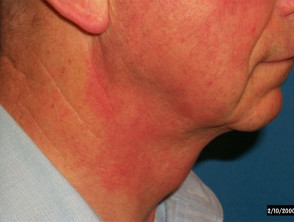
Contact allergy to fragrances in aftershave
Determining if you have a fragrance allergy
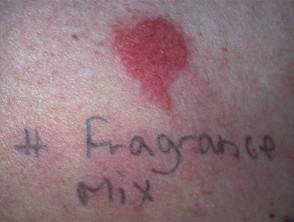
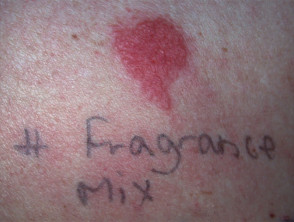
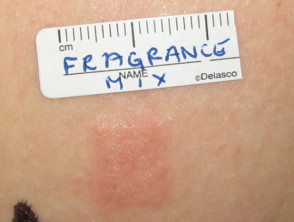
Sensitivity to a perfume, cream, or loción constitutes the most frequent initial sign of fragrance allergy. The patch test, which includes a standard fragrance mix along with Peru balsam, manages to identify approximately 75% of cases of this allergy. A positive result on the fragrance mix test confirms hypersensitivity to one or more of the aromatic chemical components. It is estimated that between 1% and 2% of the general population experiences fragrance allergy.
While it is feasible to perform a self-assessment to detect fragrance allergy, this should only be done after consulting your doctor first. Open application tests should be strictly reserved for products designed to be left on the skin, such as cosmetics and moisturizers. Apply a small amount (approximately the size of a nickel) of the product to a delicate skin area, such as the inner fold of the arm or the neck, for several consecutive days. Check the area daily; if no adverse reaction develops, it is unlikely that you are allergic to that specific product. However, it might still be unsuitable for you, as it could cause an irritant-type reaction. Seborrheic. Products such as shampoos, conditioners, soaps, and cleansing gels should not be tested this way, as they frequently induce irritant contact dermatitis if applied excessively or left occluded on sensitive areas.
Strategies for Avoiding Fragrance Allergy
If you have been diagnosed with a fragrance allergy, the most effective measure to prevent future episodes is the total exclusion of any product containing scents of any kind. Unfortunately, fragrance allergy is usually a chronic condition that tends to worsen with constant exposure.
Currently, more than 5,000 different types of fragrances are used. In the composition of any final product, the unique amount of incorporated scents can be substantial. Fortunately, only a reduced subset of these fragrances acts as common sensitizers and triggers allergic reactions in susceptible individuals.
Frequently, packaging only indicates that the item «contains fragrance,» without specifying the individual chemical components used in its formulation. Therefore, it is crucial that you avoid all items labeled with any of the following names, as they represent other names for fragrances, individual allergens, or associated substances.
| Other names for fragrances | Individual fragrance allergens | Other potential allergens |
|---|---|---|
|
|
|
To effectively manage a fragrance allergy, it is imperative to adopt a proactive approach, meticulously reading the labels of all personal care and household products. Continuous collaboration with your dermatologist is essential to identify new sensitivities and adjust the necessary avoidance measures to maintain healthy, reaction-free skin.
|
|
|
Be cautious with products labeled as «fragrance-free» or «perfume-free,» as these terms do not always mean the product is free of aromatic chemicals; they simply indicate that the product has no perceptible odor. Such items may include a masking fragrance designed to hide the scent of other components.
Consider that clothing washed with scented detergents can cause problems upon prolonged contact with the skin, especially under conditions of humidity and heat. The best practice is to opt for laundry detergents that are completely free of fragrances.
It is essential to notify your doctor or dentist about your fragrance mix allergy. If your sensitivity is high, your healthcare professional might suggest a specialized diet that excludes foods to which these allergens or related flavorings are added.
Your dermatologist Your dermatologist.
Detailed Information on Fragrance Components
| Chemical Compound | Molecular Formula | CAS Number: |
| Cinnamic alcohol | C9H10O | 104-54-1 |
| Cinnamaldehyde | C9H8O | 104-55-2 |
| Alpha-amyl cinnamic aldehyde | C14H18O | 122-40-7 |
| Eugenol | C10H1202 | 97-53-0 |
| Isoeugenol | C10H22n2 | 97-54-1 |
| Hydroxycitronellal | C10H18O2 | 107-75-5 |
| Geraniol | C10H18O | 106-24-1 |
| Oakmoss absolute |
Common Cross-Reactions
- Peru Balsam
- Casia cinnamon oil
- Cinnamon
- Cloves
- Citronella wax
- Ethylene brassylate
- Tiger Balm
Identification of Sensitizers
Among the main sensitizers are: Cinnamic alcohol, cinnamic aldehyde, alpha-amyl cinnamic aldehyde, eugenol, isoeugenol, hydroxycitronellal, geraniol, and oakmoss absolute.
Testing Protocol
It is recommended to perform a patch test using the fragrance mix diluted to 8%.