Understanding Fox-Fordyce Disease: Symptoms and Characteristics
Fox-Fordyce disease is a rare skin disorder that predominantly affects women, usually between the ages of 13 and 35, although it can be observed to a lesser extent in men and children. This condition is also known by technical names such as obstruction of the duct apocrine or sweat retention disease.
It is characterized by the appearance of itchy papules located near the follicles hair follicles, specifically in areas such as the armpits, pubic region, and around the nipples. The underlying cause is the inflammation of the inflammation A biopsy nodes apocrine sweat glands, which are distributed exclusively in these areas of the body.
Clinical Signs and Symptoms of Fox-Fordyce Disease
While Fox-Fordyce disease may manifest in some cases without obvious symptoms, it frequently causes extremely intense itching that significantly interferes with nighttime rest. This condition tends to worsen in warm environments, with high humidity, due to mechanical friction or emotional stress. Typical skin manifestations include:
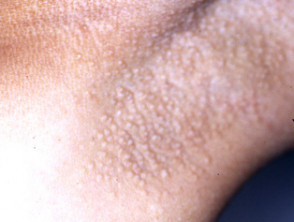
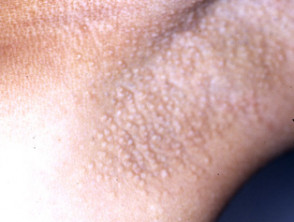
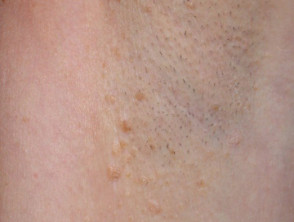
- Small, flesh-colored to reddish, dome-shaped papules that affect practically every follicle hair follicle in the affected area.
- Subsequent development of lichenification: darkening, thickening, and dryness of the skin due to constant scratching.
- Decrease or total absence of sweat production in the affected region.
Chronicity is a characteristic of this condition, which can extend to spread for years. Curiously, in some individuals, symptoms may remit during pregnancy and, in other cases, resolve spontaneously upon reaching menopause, although persistence after this period is also possible.
Illustrative Images of Fox-Fordyce Disease
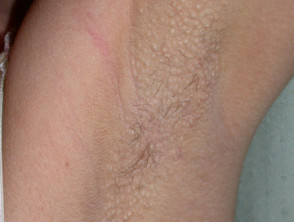
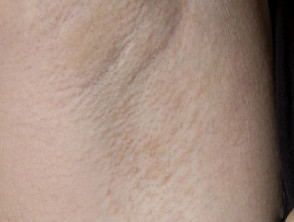
Identifying the Causes of Fox-Fordyce Disease
The precise etiology of Fox-Fordyce disease remains unknown. It is presumed to occur when apocrine sweat becomes trapped, facilitating the formation of a scaly plug within the hair follicle. This obstruction causes the rupture, leakage, and inflammation of the apocrine sweat ducts, resulting in an intense itching sensation.
Several factors have been identified that may contribute to the development of this skin condition:
- Hormonal factors and emotional triggers.
- Alterations in the chemical composition of secreted sweat.
Diagnostic Process for Fox-Fordyce Disease
Diagnosis is primarily established through a detailed clinical evaluation based on the patient's history and visual examination of the characteristic rash. The appearance of the lesions is fundamental to confirm the presence of the condition.
Treatment Options for Fox-Fordyce Disease
Currently, there is no definitive cure for Fox-Fordyce disease. However, various medical treatments with varying degrees of success are used to control symptoms, especially intense itching.
Commonly used therapeutic approaches include:
- Application of Topical topical or systemic retinoids.
- Use of topical corticosteroids.
- Administration of oral antibiotics to manage secondary infections.
- Use of a solution Clindamycin topical solution.
- Consideration of anti-androgenic hormone therapy.
Other treatment modalities that have been explored include phototherapy using ultraviolet radiation, surgical procedures such as dermabrasion or removal by excision, and even liposuction in selected cases.