
Flegel Disease: Characteristics, Causes, and Diagnosis
Definition and Characteristics of Flegel Disease
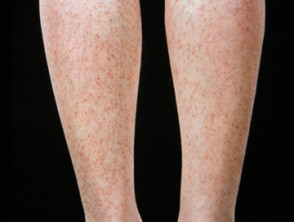
Flegel disease, also formally known as hyperkeratosis lenticularis perstans, was first documented by Flegel in 1958. Clinically, it manifests through papules reddish-brown colored characterized by an irregularly scaly surface, scaly, predominantly located on the top surface of the feet and the lower part of the legs. Although it presents similarities with Kyrle disease and was historically considered a variant, its clinical and pathological differences are sufficient to establish it as an independent pathological entity.
Etiology and Risk Factors for Flegel Disease
The exact cause of Flegel disease remains unknown. There is a hypothesis that it could be a hereditary condition, although cases without any apparent family history have been documented. Likewise, although sun exposure has been suggested as a contributing factor, this theory is not yet scientifically proven.
It has been reported that, on rare occasions, Flegel disease occurs in individuals or families with a known susceptibility to developing cutaneous and gastrointestinal carcinomas.
Clinical Manifestations of Flegel Disease
Granulomatous Typical lesions are small papules, 1 to 5 mm, varying in color from brown to red and presenting a scaly texture. scaly. Its main location is on the upper surface of the feet and the lower part of the legs. If the superficial The presence of a superficial scale is removed, a bright red base is exposed, frequently with petechiae (punctate hemorrhage). Although infrequent, affected areas can extend to the external earlobes, arms, palms, soles, and oral mucous membranes. membranes Generally, these papules do not cause pain to the patient.
Visual Observations of Flegel Disease
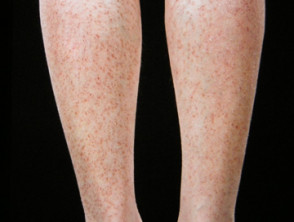
Flegel's Disease
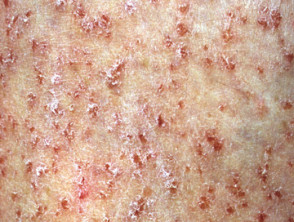
Flegel's Disease
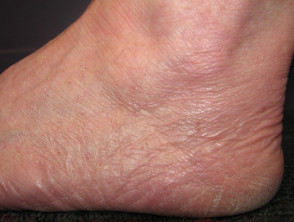
Flegel's Disease
Flegel Disease Diagnosis Process
The diagnosis of Flegel disease can be established through a clinical evaluation, especially if the patient has a positive family history of this condition. However, in the absence of clear family history, it is essential to perform a biopsy skin biopsy. This histopathological procedure is crucial to confirm the definitive diagnosis of Flegel disease.
Flegel Disease Treatment Options
Since the lesions associated with Flegel disease are benign, benign, therapeutic interventions focus mainly on improving the aesthetic appearance or correcting mild symptoms. The range of treatments available for Flegel disease includes several approaches:
- Topical application of 5% fluorouracil cream, lotion, which should be used for a period of several months.
- Dermabrasion procedures.
- Treatment with cryotherapy.
- Use of an In approximately 25% of patients, it is necessary to add a complementary therapeutic agent to the initial regimen. These additional agents include: cryotherapy.
- Topical use of a retinoid.
Administration of oral retinoids, such as acitretin or isotretinoin, in selected cases.