«`html
Understanding the Formation of Facial Lines and Wrinkles
Skin aging causes sagging and the development of wrinkles, lines, and creases. The severity of these changes varies significantly between individuals and is influenced by genetic predisposition predisposition, skin phototype, and exposure to environmental factors.
Dermatologists Dermatologists and cosmetic surgeons frequently use the Glogau classification to describe these manifestations of aging.
Level I (Mild): Few wrinkles, requires little to no makeup to conceal.
Level II (Moderate): Early wrinkles, dull complexion, requires little makeup.
Level III (Advanced): Wrinkles persistent. It commonly affects smokers and is considered pre, skin discoloration with broken blood vessels and actinic keratosis blood vessels y seborrheic keratosis actinic; frequent makeup use.
Level IV (Severe): Severe wrinkles and creases, actinic keratosis; habitual makeup use, although this may not completely hide the signs of aging.
Additionally, the Fitzpatrick classification for facial lines evaluates the degree of wrinkling around the mouth and eyes:
Class I: Very fine wrinkles predominate.
Class II: Presence of fine to moderately deep wrinkles and a moderate number of lines.
Class III: Noticeable fine to deep wrinkles, with numerous lines and even redundant folds.
Factors Contributing to the Formation of Facial Lines
The wrinkles or facial lines and wrinkles develop primarily due to a combination of the following elements:
- Inherent intrinsic aging processes.
- Accumulated sun damage (photoaging).
- Constant muscle expression and movement.
- Loss of skin turgor and tension.
- Constant effect of gravity.
- Previous trauma or injury.
- Sequelae of surgical procedures.
- Active or scarring acne breakouts.
- Other dermatoses prone to scarring (example: discoid lupus erythematosus). Eczema).
- Smoking.
It is common to observe some degree of asymmetry in these lines, as people naturally tend to smile or frown more intensely on one side of the face, or to consistently sleep on a specific cheek.
Origin of Fine Skin Lines
Fine lines and superficial wrinkles emerge due to heterogeneous thickening of the dermis and, crucially, due to a reduction in the water-retention capacity of the epidermis. This deterioration is mainly attributed to sun damage and exposure to toxins environmental factors, with tobacco smoke being a particularly aggressive agent.
Distinction Between Dynamic Lines and Static Creases
Deeper lines or creases are classified according to their appearance: dynamic or static. Dynamic lines are those that manifest only with facial muscle movement. Static lines, on the other hand, remain visible even at muscle rest. Over time, it is a natural process for dynamic lines to progress into static ones.
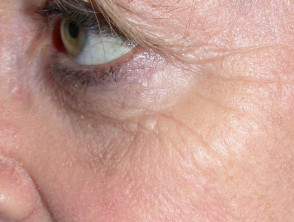
- Crow's feet around the eyes result from smiling and sustained contraction of the orbicularis oculi muscle (orbicularis oculi).
- Expression or worry lines on the forehead originate from the contraction of the frontal muscle when raising the eyebrows.
- Glabellar lines (between the eyebrows) are due to the contraction of the corrugator supercilii and procerus muscles, common during concentration or anger.
Visual Evaluation of Facial Lines and Wrinkles
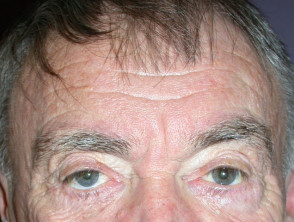
Understanding these classifications and etiological mechanisms is fundamental for selecting the most effective and appropriate anti-aging treatments for each type and degree of wrinkle manifestation.
«`
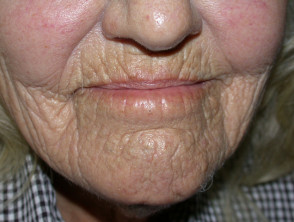
Extensive perioral lines
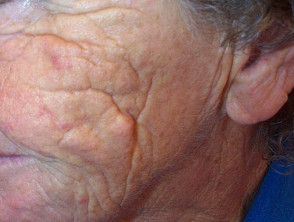
Deep creases
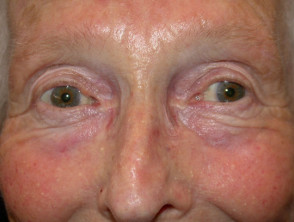
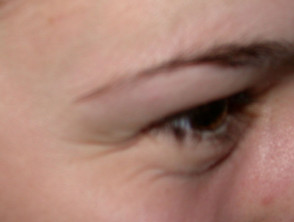
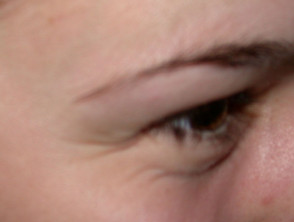
Sunken eyes
Sagging and Bags: Visible Causes of Skin Aging
Skin laxity or sagging is a multifactorial process. It is mainly due to several internal structural changes:
- A reduction in fat cells beneath the skin (subcutaneoussubcutaneously tissue).
- Skin alterations associated with this condition may include: collagen y elastin Loss of collagen and elastin fibers in the dermis, compromising skin strength and elasticity.
- The constant effect of gravity, allowing tissue with less support to shift downward.
These underlying causes manifest externally through the following signs:
- Brow ptosis, causing a sinking of the forehead that makes the eyebrows droop over the eyelids, creating a heavy sensation.
- Upper eyelid ptosis, which can obscure the pupil.
- Excess skin on both the upper and lower eyelids.
- Droopy lower eyelids, exposing the reddened mucosal surface (ectropion).ectropión).
- Appearance of hollow or sunken eyes.
- A tired look accompanied by a prominent groove next to the nose (the deformity , scar formation, and aesthetic known as a tear trough).
- Loss of jawline definition, resulting in a double chin.
- Sagging in the décolletage area.
- Elongation of the earlobes.
- Drooping or loss of projection in the tip of the nose.
- Progressive thinning of the upper lip.
Available Treatment Options for Facial Rejuvenation
It is possible to achieve notable improvements in facial appearance, contributing to a more youthful and healthy complexion. Frequently, achieving the most optimal results requires implementing combinations of different cosmetic procedures.
A crucial factor in preserving a youthful appearance is constant sun protection throughout life. This involves daily use of sunscreen on all exposed areas, in addition to rigorously avoiding tobacco and exposure to secondhand smoke or other environmental pollutants.
The Fundamental Role of Hydration
Skin showing signs of aging looks and feels significantly better when consistent habits of applying moisturizers are maintained. These products enhance the skin's intrinsic ability to retain water.
It is important to select a product whose texture and feel are pleasant, which does not cause irritation, burning, or acne breakouts. Follow these steps for daily care:
- Wash your face twice a day using lukewarm or tepid water and a gentle, soap-free cleanser.
- If you plan to spend time outdoors, even for short periods, you must incorporate UV protection UV as an essential part of your morning routine.
Anti-Aging Cosmetic Formulas
Numerous cosmetic formulas available on the market incorporate ingredients qualified as anti-aging.
```html
Among these rejuvenating treatments are those containing antioxidants or exfoliating agents, such as:
- Updated topical retinoids.
- Vitamin C.
- Vitamin C.
- Alpha hydroxy acids (AHA).
- Various botanical extracts.
It is important to note that, with the exception of topically applied retinoids, the clinical efficacy of many of these anti-aging components still requires conclusive demonstration.
Skin Resurfacing (Peels and Resurfacing)
Resurfacing refers to a set of techniques designed to remove the upper layers of the epidermis using chemical or mechanical methods. These procedures, commonly known as 'peels' or exfoliations, can be effective for treating pigmentation and refining the overall skin texture. They improve fine lines and existing static creases, although they lack impact on dynamic expression lines.
- Superficial and medium-depth chemical peels.
- Dermabrasion and microdermabrasion.
- Laser resurfacing using Neodymium: YAG or carbon dioxide (CO2) technology.
- Non-ablative rejuvenation with laser, intense pulsed light (IPL), or thermal therapies such as Thermage.
Implantation and Fillers
To correct individual lines and creases, implants can be used, which are temporary or permanent fillers or grafts. These materials are also effective for improving the volume and appearance of thinned lips.
Botulinum Toxin
Botulinum toxin is the most effective option for treating dynamic lines. Its application allows for selective paralysis of the facial muscles responsible for glabellar wrinkles (between the eyebrows), crow's feet, and horizontal forehead lines. Additionally, it can be used to subtly modify the shape of the eyebrows and attenuate perioral lines, known as smoker's lines, among other aesthetic applications.
Facial Cosmetic Surgery
Facial cosmetic surgery focuses on repositioning facial tissues (through rhytidectomy or lifting) and structurally modifying tissues that have lost firmness.
- A full facelift or mid-facelift severs excess skin and tightens underlying musculature in the lower two-thirds of the face (cheeks and neck).
- A forehead or brow lift (temporal) reduces static lines and elevates sagging eyebrows.
- Rhinoplasty offers the possibility of elevating the nasal tip, remodeling the structure, or reducing excess tissue associated with rhinophyma.
- Blepharoplasty, whether upper or lower, removes excess skin and fat pockets from the eyelids.
- Correction of platysmal bands in the neck via an open plication significantly improves the appearance of lax or aged neck skin.
The selection of the most appropriate anti-aging treatment method depends heavily on the underlying cause of the signs of aging (static vs. dynamic) and the results the patient wishes to achieve, often combining these advanced techniques for complete facial harmonization.
```