Understanding Eczematous Cheilitis: Causes and Classification
The eczematous cheilitis manifests as an inflammation of the lips, visible through redness, dryness, and desquamation. This condition, also known as dermatitis cheilitis, primarily affects the outer areas of the skin adjacent to the lips and the vermilion border, although the mucosa inner lining may also be involved.
The fundamental causes of eczematous cheilitis stem from mild to moderate atopic dermatitis or allergic or irritants by direct contact.
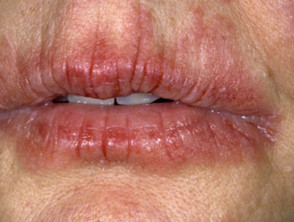
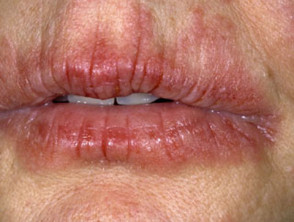
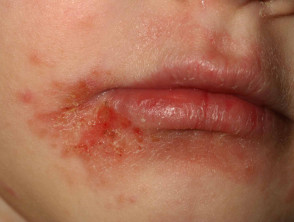
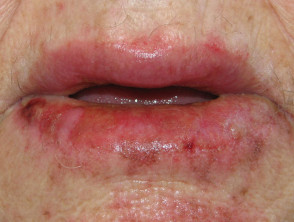
Representative Images of Cheilitis
Etiological Classification of Eczematous Cheilitis
This lip condition is classified into two main categories based on its etiological origin:
- Endogenous: Involves an inherent predisposition of the individual. The primary example of this form is atopic dermatitis.
- Exogenous: Caused by external factors interacting with the skin. This group is subdivided according to the type of interaction:
- Irritant Contact Cheilitis: The most frequent cause is the compulsive habit of licking the lips. Other triggering factors include exposure to cosmetics, certain foods, and adverse environmental conditions.
- Allergic Contact Cheilitis: This is a significant component, as a proven allergic reaction allergic reaction is present in at least 25% of eczematous cheilitis cases. Common anaphylaxis allergens include lipsticks and other lip care products, toothpastes, dental materials, foods, certain medications, and even nail polish. nail.
Frequently, the clinical manifestation is the result of an accumulation of multiple contributing factors.
In rare documented cases, contact hives urticaria may present clinically as cheilitis. This occurs when the contact allergen allergen is repeatedly applied in small doses, such as certain flavorings present in toothpastes.
It is important to note that there are cases where the specific cause of eczematous cheilitis remains unidentified after clinical evaluation.
Clinical Manifestations of Eczematous Cheilitis
The chronic manifestation of eczematous cheilitis is characterized by the appearance of erythema, intense dryness, scaling, and a tendency toward cracking. Frequently, the corners of the mouth are also affected, which is termed angular cheilitis.
The most commonly affected areas are the perioral skin Perioral and the vermilion border (the transition between the skin and the mucosa red lining).
It is crucial to perform a careful inspection of both the skin and the mucous membranes in search of lesions lesions in other locations, as these may offer decisive clues about the underlying etiology.
Identifying the Cause of Eczematous Cheilitis
A thorough history and meticulous clinical examination are fundamental to narrowing down the list of possible triggers. The evaluation should extend to the lips, the oral cavity, and the patient's general skin condition.
Patch testing patch proves to be a very useful diagnostic tool in eczematous cheilitis, given that it is estimated that at least a quarter of cases are linked to an allergic reaction. It is essential to test with the standard series and the extended series, including exposure to products such as lipsticks, toothpastes, and other items suggested by the clinical history. It is vital to test the patient's usual products in their "as-is" state. Photopatch testing may also provide relevant information. The clinical significance of any positive reaction detected must be carefully evaluated.
If patch test results are negative, exploration via prick testing might be positive, suggesting a diagnosis of contact urticaria.
Treatment Options for Eczematous Cheilitis
The required therapeutic approach will be intrinsically linked to the identified cause. If an exogenous cause can be determined, the main measure is to suppress exposure to the allergen or irritant whenever feasible. If this elimination does not result in the expected improvement, other contributing factors, such as a second allergen, a different irritant, or an endogenous cause, should be investigated and considered.
For the management of atopic cheilitis, the use of moisturizers and the application of corticosteroids of topical topical corticosteroid.
A precise etiological diagnosis is the most important step to achieve effective and lasting control of eczematous cheilitis, thus allowing for the establishment of a personalized and sustainable treatment regimen.