
Understanding Dimethyl Fumarate (DMF): Antifungal Use and Dermatitis Risks
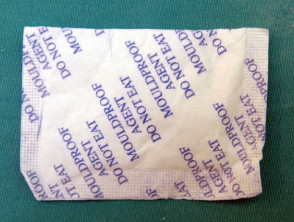
Dimethyl fumarate (DMF) is a sensitizer with strong allergenic potential, primarily used for its effective antifungal properties. Its function is to inhibit mold growth in finished products, especially leather goods like sofas or footwear. This compound appears as a fine crystalline powder, powder gel , packaged in small sachets reminiscent of silica gel packets used to control moisture. Unlike silica gel, which is inert and merely absorbent, DMF is used because it offers superior protection against mold on large leather pieces during storage and transport.
The sachets containing DMF are often attached to the wooden frame or hidden just beneath the upholstery of sofas, and they are also included in the packaging of items like shoeboxes. Although finished leather retains little moisture and is inherently mold-resistant, the risk increases significantly during transit between diverse climates. Confined and humid humid environments facilitate moisture buildup, promoting mold. The crystalline DMF powder combats this by progressively evaporating, a process that unfortunately allows the substance to permeate directly into the leather materials.
Risks and Prevention of Dimethyl Fumarate Allergy
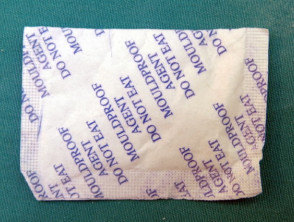
Dimethyl fumarate sachet
Manifestations of Dimethyl Fumarate Allergic Reaction
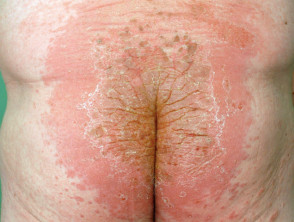
In susceptible individuals, contact with DMF causes a classic dermatitis allergic contact dermatitis. If the concentration is high, it can also trigger irritant contact dermatitis Seborrheic. The affected skin appears severely red, inflamed, scaly and intensely itchy. Frequently, the rash rash appears on the back of the legs, buttocks, and back of those who have been sitting on DMF-contaminated furniture, which has given rise to the common term «sofa dermatitis.» Even very low levels of DMF (less than 1 ppm²) can initiate a reaction in sensitive individuals. Since DMF can permeate fabrics, areas covered by clothing can also be affected. Repeated and continuous exposure systematically aggravates symptoms.
Between 2006 and 2008, a significant outbreak of furniture-related dermatitis was documented in European countries such as Finland, the United Kingdom, and France. In certain episodes, the condition was so severe that it mimicked mycosis fungoides or Unlike other septic infections (such as impetigo), requiring hospitalization. Extensive investigations revealed that all affected individuals had recently acquired leather furniture, and all cases were traced back to a Chinese factory using DMF as an anti-mold agent.
The use of footwear has also linked cases of dermatitis to dimethyl fumarate. One reported incident showed an acute and sharply acute and markedly demarcated eczema eczema that precisely matched the contact area of the shoe, after wearing a new pair for about eight hours. In this instance, the high concentration of DMF caused irritant contact dermatitis, rather than the allergic variety.
As recognition of its impact, dimethyl fumarate was designated as the Contact Allergen Contact Allergen of the Year 2011 by the American Contact Dermatitis Society (ACDS).
Dimethyl fumarate allergy: sofa dermatitis
Diagnosis of Dimethyl Fumarate (DMF) Allergy
The diagnosis of DMF allergy is confirmed through specialized skin tests, known as patch tests. For these tests, dimethyl fumarate concentrations ranging between 0.001% and 0.1% in petrolatum or an aqueous solution can be used. However, given the significant risk of causing irritation or active sensitization with DMF, some experts suggest limiting the maximum concentration to 0.003% or 0.005%.
Currently, DMF is not routinely included in standard patch test series, underscoring the need for further research to accurately establish the optimal concentration for precise detection of this sensitivity.
Effective Treatment for Dimethyl Fumarate Dermatitis
Once DMF allergy is confirmed, initial treatment focuses on the immediate elimination of the causal agent. Subsequently, management follows standard protocols applicable to any acute dermatitis or eczema. This generally involves the application of topical corticosteroids and the constant use of emollients.
For more severe cases, patient hospitalization may be necessary to administer systemic corticosteroid treatment, ensuring more robust control of the inflammatory reaction.
Prevention Strategies: How to Avoid Dimethyl Fumarate Exposure
In the European Union, the use of DMF has been strictly prohibited since 1998. This ban was extended in January 2009 to include the importation of items containing DMF, in response to severe cases of dermatitis associated with imported products.
However, it is important to note that neither the United States nor Australasia has specific regulations controlling products containing dimethyl fumarate.
Recently, Australia has reported incidents where DMF sachets were found inside imported children's school shoes. Tests conducted by the Council of Textile and Fashion Industries revealed that an alarming 25% of footwear purchased from major retailers contained this substance.
If you have been diagnosed with DMF sensitivity, it is crucial to avoid any contact with products that may have been contaminated. Small sachets labeled as "mold inhibitors" or "anti-mold" have a high probability of containing DMF and should be handled avoiding direct contact.
Be cautious with sachets frequently found in shoeboxes or other packaging, often labeled as "silica gel." It has been discovered that some of these packages contain both silica gel and DMF, but only indicate the presence of the former.
Items that have been in contact with DMF sachets, such as footwear, should be left to air out outdoors for several months before the residual DMF level can be considered safe. Unfortunately, in some shoes, the DMF may have incorporated itself into the material's structure, meaning evaporation to safe levels could take years, rather than just months.
Avoiding DMF presents a considerable challenge because contaminated products are rarely clearly identified. Therefore, it is essential that both patients and medical professionals maintain awareness of DMF allergy when unexplained skin reactions occur.
If you experience unexplained rashes, especially after acquiring new furniture or recent clothing that coincides with the onset of dermatitis, it is crucial to consult your specialist. Your dermatologist can provide detailed professional guidance, particularly if you suffer from dimethyl fumarate (DMF) hypersensitivity.
Common Names and Synonyms for Dimethyl Fumarate
- Fumaric acid
- Dimethyl ester
- Alomaleic acid dimethyl ester
- (E)-Dimethyl butenedioate
- Methyl fumarate
Additional Technical and Chemical Information
Molecular formula: C6H8O4
CAS Registry Number: 624-49-7
Potential Dermatological Cross-Reactions:
- acrylates and fumaric acid esters
Physical Appearance: Appears as a fine white crystalline powder.
Primary Sensitizing Agent: Dimethyl fumarate.
Standard Patch Test Protocol: A dilution ranging between 0.001% and 0.1% of dimethyl fumarate administered in petrolatum or an aqueous solution is recommended for diagnosis.