Dermatosis Papulosa Nigra: Exploring Dark Papules
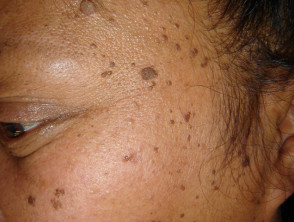
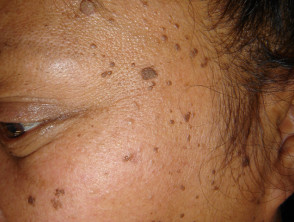
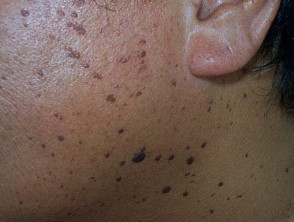
The Dermatosis Papulosa Nigra (DPN) is characterized by the appearance of multiple small, firm papules, ranging from 1 to 5 mm in diameter, which are black or very dark brown, located predominantly on the face and neck.
Who is more prone to developing Dermatosis Papulosa Nigra?
This condition is notably common in individuals with darker skin tones, particularly those classified with Fitzpatrick skin types 4, 5, or 6. It is estimated to affect up to 35% of the African American population in the United States, although prevalence is lower in those with lighter complexions.
DPN is also observed in dark-skinned Asians and Polynesians, although the exact frequency in these groups remains undefined. Clinically, greater involvement is observed in women than in men.
Generally, dermatosis papulosa nigra begins to manifest during adolescence. Over time, the incidence, the number and size of the lesions tend to increase proportionally with the patient's age.
What is the etiology of Dermatosis Papulosa Nigra?
The characteristic papules of DPN are histologically indistinguishable from small seborrheic keratosis seborrheic keratoses.
Dermatosis Papulosa Nigra is suspected to have a significant genetic basis, with family history reported in 40% to 50% of cases. The predominant theory suggests it originates from a developmental defect of a nevoid type localized in the delay of a nevoid type localized in the follicle hair follicle.
Distinctive Clinical Features of DPN
The pigmented papules tend to be located mainly on the cheeks and forehead, although their distribution can extend to the neck, upper back, and chest. It is important to note that none of the following processes are observed in these lesions: scratches, crusting o ulceration.
Although the papules are physically asymptomatic, their main impact lies in the cosmetic concern they generate in patients.
Clinical Manifestations of Dermatosis Papulosa Nigra
Black Papular Dermatosis
Black Papular Dermatosis
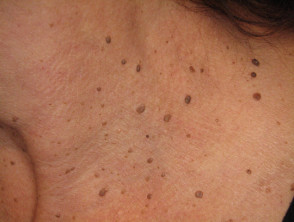
Black Papular Dermatosis
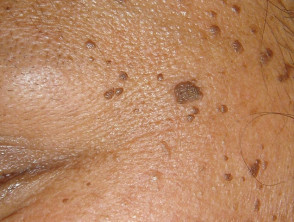
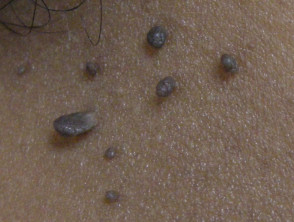
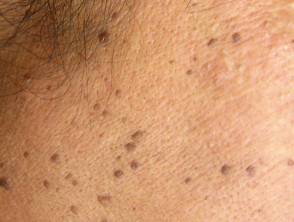
Diagnosis of Dermatosis Papulosa Nigra
The diagnosis of dermatosis papulosa nigra is established clinically, so additional tests are generally not required. If there is any diagnostic doubt, a biopsy skin biopsy can be performed. Histological analysis histological will reveal a seborrheic keratosis seborrheic keratosis with a notable increase in pigmentation S100 protein. basal layer. Lesions of the epidermis.
Treatment Options for Dermatosis Papulosa Nigra
Generally, it is preferable not to treat dermatosis papulosa nigra lesions. Complications associated with destructive local treatments may include pigmentation changes (increase or decrease), scarring, and the possible formation of keloids.
Nevertheless, several therapeutic alternatives are available, such as curettage, freezing with liquid nitrogen (cryotherapy) and electrodesiccation followed by curettage. Recently, it has also been reported that the laser Nd:YAG achieves excellent cosmetic results. It is essential that the treatment remains superficial to minimize the risk of any secondary complication.