
Bufexamac: Definition, Uses, and Adverse Reactions
Definition and Composition of Bufexamac
Bufexamac is classified as a topical nonsteroidal anti-inflammatory drug (NSAID)NSAIDscurrent. Generally, its topical formulation is enhanced with the addition of a local anesthetic local anesthetic and an antiseptic agent.
It is crucial to recognize that bufexamac is a known inducer of dermatitis allergic contact dermatitis at the site of application. Furthermore, this compound can precipitate polymorphic scars rash with a more widespread Isolated or.
Traditional Uses and Efficacy of Bufexamac
Traditionally, preparations containing bufexamac have been used for the symptomatic treatment of mild skin conditions such as insect bites, stings, superficial cuts, abrasions, sunburn, and various dermatosis inflammatory dermatoses [1,2]. Additionally, it was previously formulated as a suppository indicated for the management of hemorrhoids.
However, the clinical evidence that solidly supports the efficacy efficacy of bufexamac for these uses is notably scarce [3].
Global Availability of Bufexamac
Due to reports of significant adverse effects and its confirmation as a potent allergen contact allergen, bufexamac is no longer available in the following key markets as of August 2018 [1,4]:
- New Zealand
- Japan
- European Union (including the United Kingdom)
- United States
- Canada.
By 2020, its marketing was also withdrawn in Australia. However, bufexamac may still be found over the counter over-the-counter in other international territories.
Adverse Reactions Associated with Bufexamac Use
Bufexamac is well-documented as a cause of allergic contact dermatitis [4]. Furthermore, its use can trigger a variety of systemic and cutaneous adverse reactions [1,5–11], including:
- Hives
- Pruritus Pruritus (intense itching)
- Edema (swelling)
- Burning sensation
- Skin discharge or scaling
- phenotypes with an erythema multiforme-like reaction
- Acute pustulosis pustular generalized
- Juvenile pigmented edema
- Intertriginous and drug-related symmetric flexural exanthem flexion symmetrical (SDRIFE).
Diagnosis of Bufexamac Allergy
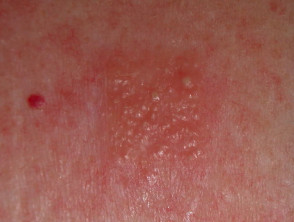
The diagnosis of an adverse An adverse reaction to bufexamac is established through detailed collection of the patient's clinical history, evaluation of the rash rash observed, and fundamentally, through patch testing. patch.
A diagnostic challenge lies in the fact that an allergic allergic reaction reaction to bufexamac can manifest very similarly to the original dermatological condition it was intended to treat, which can lead to these adverse reactions not being adequately reported.
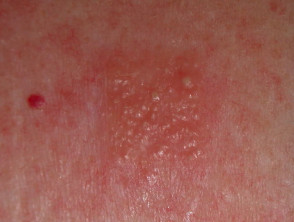
A patch test with a positive result indicates an allergic reaction.
Management and Treatment of Bufexamac Dermatitis
The essential treatment consists of the **immediate discontinuation** of bufexamac use and long-term avoidance of this compound to prevent future exposures.
Any resulting dermatitis, a manifestation of the adverse reaction, should be addressed with topical therapy. Generally, this involves the application of corticosteroids corticosteroids of adequate potency, supplemented with the regular use of emollients emollients to restore the skin barrier and relieve dryness and irritation.